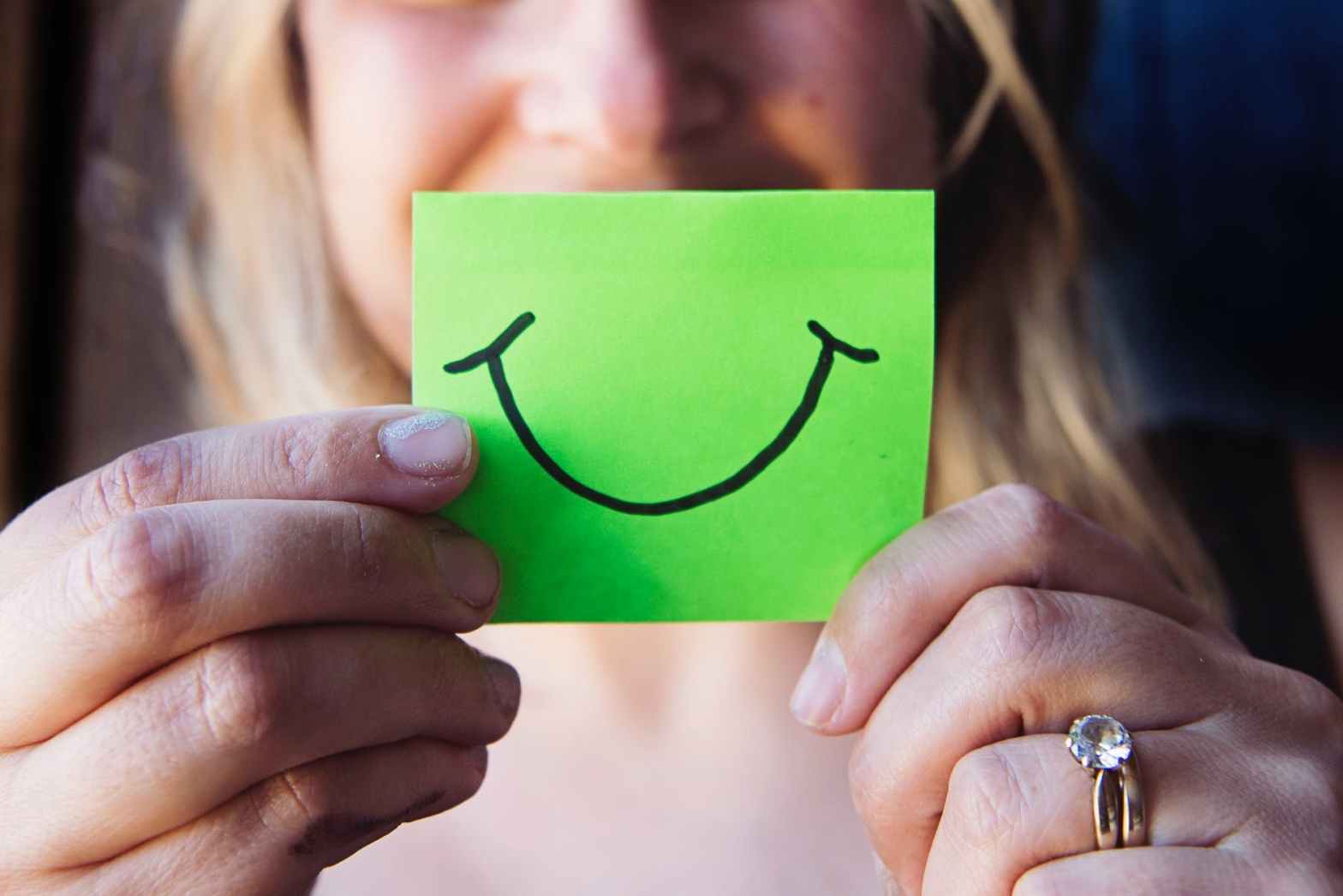
a day in the life: reflections

“The real man smiles in trouble, gathers from distress, and grows brave by reflection.”

– Thomas Paine

I was recently thinking about my past, reminiscing about friendships that seem like mirages of existence at this point. I decided it was best to use this great “hour of remembrance” in a constructive way and think about where I was five years ago.

Five years ago, I was 27, which was my golden birthday. I was wild then, wild and rearing to go be a part of any type of ignorant activity. I suffer from bipolar disorder if you guys didn’t know and even though I knew it at the time, I still used it to be the life of the party. I was still embarrassed (to an extent) about my condition, and it was easier to just be the wild one.

Five years ago, I worked at a television news station. It was a miserable job, and I would recommend it to no one. I was a digital content producer, which was just a fancy title for someone who wrote up police reports and posted them on Facebook. I’m a “journalist”, and CNN wasn’t calling so I needed to get my foot in the door. I worked at a print news station prior as a copy editor and it was just as miserable (I had interned there and was promised a job as a reporter but was just given a different one).

Five years ago, my middle son was barely one. Life for my wife and I was drastically different. We balanced our schedules and were lucky to have the time we did have. My wife was a correctional officer, and everything worked out perfectly. Our little boy is now almost six.

Five years ago, I asked a woman who has changed my life for the better to marry me. She did the following year, thank God, but the time we spent together that year as an engaged couple can never be changed or taken away.

Five years ago, I was blessed. Just as blessed as I am today. I have always tried to adopt a strict “don’t look back” policy, but it’s hard when looking back is sometimes the key to moving forward.

So Far, So Good

“You are not your illness. You have an individual story to tell. You have a name, a history, a personality. Staying yourself is part of the battle.”

– Julian Seifter

So far, so good.

Still sticking to a pretty self-care-oriented lifestyle. I haven’t been in the trenches of this new battle too terribly long, so fingers remain crossed.

Routine is key, and after a healthy breakfast, my day kicked off with a walk around the city park – my hometown’s only claim to fame (one of the seven Lincoln-Douglas debates took place there – kind of cool actually). The park is near the town square, but still as far away as ever too, tucked in all snug behind a thick tree line that leads to a forest of a park.

I walked the winding, manmade trails over tree roots and animal tracks. I had forgotten how many laps a mile was so I just decided to forget to keep track of how many laps I walked.

I walked down to the pond where the local ducks were congregating. Many people come out with loaves of bread just to feed the, at more often than not, large group of ducks. On this particular day I had no bread, but then again, the ducks weren’t even on my radar. I was more oblivious to them than I’m sure they had hoped.

I haven’t really actually “exercised” since football and wrestling in high school, and the last time I ran was probably from the cops, so I walked until boredom took over. I was pretty proud of myself for sticking to something, though. I discovered as the day progressed that you have to start with the little things, the kind of things most people take for granted and thus lose sight of down the line.

Again, routine is key, so I came home and did some laundry and cleaned up around the house (I’m still working out a consistent routine and I’m not quite ready to jump back into trying meditation again just yet).

I tried to do some breathing exercises and get a routine for that down. They’re no cure-all, but I’ve discovered they help to a certain extent. And you can only work with what you got.

This new declarative, self-acceptance is just that: new. I don’t like the word “positivity”, though that’s what it is.

This period of self-acceptance is different than any other. It’s not forced or phony. I’m genuinely in the game to get through certain things in my life. There are some things you can’t fix, however. You just have to face the music in that case.

I suffer from bipolar disorder, and it can take away all you have and then some at times. Both the “ups” and “downs” are miserable, but you weather the storm.

My disorder makes it harder for me to function in a rational sense at times. I am not my diagnosis, though, and if there are those who think otherwise, I feel sorry for them as ignorance has the tendency to blind and lead to nowhere good.

The secret, though, is to let go of any loose ends. I’ve recently had to do just that regarding some things going on and am better for it. I can’t control what other people think or assume so all I can do is continue to work on myself. I have a lot to learn, but it’s time to take action and evaluate my motivation and intentions in life.

I’ve had to be more introspective than usual lately (which is scary in and of itself with my brain), but it’s been helpful. The only thing I have control over is myself and I’m learning that, too. Replaying the past has been extremely hard on me. Now, I’m writing the script for the future, and I’m not looking back.

I’ve accepted my illness and realize its control over me. I have also finally accepted that the stigma isn’t going anywhere anytime soon. But that’s okay. I can only live by my actions. I can only focus on my own authenticity and truth. And it’s liberating just to jump on the notion of change. I will always be an advocate for mental health awareness. I’m not going anywhere.

Self-love and self-care are both important and are something I’m working on. I’m proud of myself for once. I feel this new wave of understanding and am taking advantage of it.

I am thankful and have no expectations.

I’m just moving forward.

To blog, or not to blog, is there really any question?

“Blogging is like work, but without coworkers thwarting you at every turn.”

– Scott Adams

I recently wrote a post about the health benefits that blogging can provide, and there are many. I’d like to cexplore this a little more in depth, though. The effects of this specific type of release are tremendous. It seems obvious on a very basic level, but the facts are in, and they speak for themselves.

According to the American Psychological Association, blogging is healthy in ways you may never have imagined. Mental health experts say that short-term, focused writing can “enhance immune function, lower blood pressure, decrease heart rate, reduce asthma and arthritis symptoms, and lessen sleep disturbances in patients with metastatic cancers”.

Again, the benefits are plentiful.

A 2013 study suggests blogging is more effective than basic journaling or writing.

There are four categories when it comes acknowledging the health benefits of blogging:

· Interaction with others

o There is both a sense of community and anonymity amongst bloggers.

· Inwardly oriented benefits

o Being able to vent or express oneself is a key benefit that blogging provides. There is less emphasis on certain aspects of differences in the blogging world.

· Providing a safe space apart from ‘real life’

o The blogging community, no matter how large it gets, still allows one to feel safe while still having a voice in the mix.

· Use of time spent blogging

o Blogging can be a constructive and therapeutic activity, while also offering a much-needed distraction.

Researchers at the University of Texas discovered other physical benefits of blogging, such as:

· enhance immune function

· lower blood pressure

· decrease heart rate

· reduce asthma and arthritis symptoms

· lessen sleep disturbances in patients with metastatic cancers

The American Psychological Association (APA) supports expressing thoughts and feelings in the arts, including blogging and journaling.

Blogging also promotes wellness, which provides people with certain skills needed to “recover”. Wellness helps us mend, restore, and to be whole.

Blogging can also help chip away at the stigma of mental illness, according to Ali Mattu, PhD, a clinical psychologist.

“As psychologists, it’s our job to model how to handle these things, and if we’re not willing to talk about some of our own difficulties and how we’ve sought help, how do we expect our patients to do it?”

Deborah Serani, PsyD, a New York-based psychotherapist, agrees.

“There’s a lot of science grounding expressive language writing and journaling as being an helpful piece for maintaining mental wellness,” she said. “You don’t want patients to use their 50-minute session to process what’s going on in their lives.”

Being able to appreciate the anonymity of blogging while still taking advantage of its communal perks only goes to show its influence.

It is important, but blogging isn’t a cure-all or should take the place of other healthy alternatives.

“Social media can be a good adjunct to treatment, but not a replacement,” says Colorado clinical psychologist Stephanie Smith, PsyD, who blogs about the importance of psychology and good mental health. Smith acknowledges that there are many people who can’t afford the treatment they need.

“If online support and resources are all that some folks can manage, then it’s important we support them in that.”

Despite all the health benefits, there are downsides to blogging.

“Negative comments are inevitable when blogging, and in fact, there are people who troll blogs to find something to argue, berate or taunt,” Serani says. “Resist talking back, arguing or trying to prove your point to the negative commenter. Instead, delete his or her existence once you discover it.”

Since blogging and other social media outlets are here to stay, it’s important for psychologists to understand how the technology is used in the best way for healthy blogging.

No Complaints

“Once you’re labeled, you can be treated. On other occasions, labeling leads to tyranny, like with childhood bipolar disorder in the U.S.”

– Jan Ronson

I chose the quote above because I feel it shows both the good and bad of the madness that is bipolar disorder. It’s true: once you receive your “label” you can begin a treatment plan. At the same time, however, once you get that “mental illness” label it never goes away. At least not completely, anyway.

I’m in a space (for the moment) where nothing seems to be able shake me. I’m not manic or depressed, but I felt an overwhelming sense of clarity and peace the other day that was, for me at least, an eye-opening and humbling experience. I haven’t looked back since.

I’m nihilistic by nature and a natural cynic at heart, so that has definitely played a role in my perspective and attitudes toward these types of “things”. Coping skills…well, even if they don’t work there’s no reason not to commit to something that could possibly be extremely beneficial.

I mentioned my cynicism, which is usually interpreted as pessimism by those closest to me. However, I’ve been able to turn that perspective around and use the change to my advantage. No, not all is perfect, but it’s an interesting and unexpected change and for once I’m not being the “negative” person bringing everyone else down.

Hope. Hope is an amazing feeling (I’ve never said anything remotely like that before in all of my life). To have hope is a great benefit, especially in your darkest hour.

So, I have no complaints, and I guess I’m better off for the wear. Like I said, if this new “attitude” isn’t as life-changing as I hoped, the commitment to a healthy routine can only be a good thing.

I shall keep all of you posted. And hopefully seeing a change in my perspective may be helpful to someone else.

I’ll take it.

And They’re Coming to Take Me Away Now: A Rant

opened door

“When you are mad, mad like this, you don’t know it. Reality is what you see. When what you see shifts, departing from anyone else’s reality, it’s still reality to you.”

– Marya Hornbacher, Madness: A Bipolar Life

As someone with bipolar disorder, I have a lot of experience in feeling awkward or out of place because of my condition, when said condition is known. It’s nothing new, and although it never “gets easier” you learn to go along with it. Sometimes you got to get ahead of the charade before you become the charade.

That being said, I think it’s a well-known fact that there are major flaws in the modern American healthcare system, especially on the mental healthcare side. In a world where you’re supposed to feel accepted and are taught to “treat everyone blah, blah, blah”……even in a world where I’m taught that I’m no different because of my illness, I STILL have had to jump through hoops, still have had to play the game to just get by. I have been extremely fortunate for the most part, I must say. One instance (that ironically ended up happening on several more occasions), however, was centered around a time I was in just enough control to try and take the reins before something really bad happened.

I was about as manic as one can get without being totally “gone” yet was aware and knew I was going to end up in jail or worse at the rate I was going. It was a type of mania where the amount of clarity provided was too much; I was on the brink, and I knew it. It was like a bad trip, but without the total loss of one’s basic faculties. I was more aware of what was going on than I ever had been, and that was not necessarily a good thing.

So, before things got any worse, I called my psych doctor. I pleaded with her to get me into the short-term facility at the hospital where most of my medical treatment was based out of. She agreed that I was going to end up in jail at the rate of things, and would end up being involuntarily committed. So, this was my dilemma: I needed to become legally adjudicated to “need” a stay in a short-term facility. So, that meant I needed to engage in odd and/or criminal behavior – which was exactly what I was trying to avoid – just to get me a bed at the Mulberry Center.

It was then explained to me that hospitalizations of this repute were generally geared towards the “depressed” and those on that end of the spectrum. I was then told that if I wanted a bed, I knew what I had to do.

Yes. Yes, I guess I did, but I didn’t think that it would come to that. In the end, I was given the ultimatum of entry by being a “threat” to myself based on the level of my “depression”. That or go on my merry way.

So, out of fear for myself and those closest to me, I feigned having “suicidal ideations” due to “depression” – the only way I could get the help I needed (or at least to get away from the general public).

I came out seven days later (this particular go-around, that is) with a stack of color sheets and lists of coping skills and positive affirmations. I was no longer dangerously manic, but only because of yet another med change.

This is just one instance where bipolar disorder has made me feel like an outsider (even in a clinical setting where I was supposed to be receiving treatment, I was an outsider). The whole of it is just a microcosm of a bigger issue. Just another crack in the healthcare system that I, as a member of the “bipolar community”, so depend on.