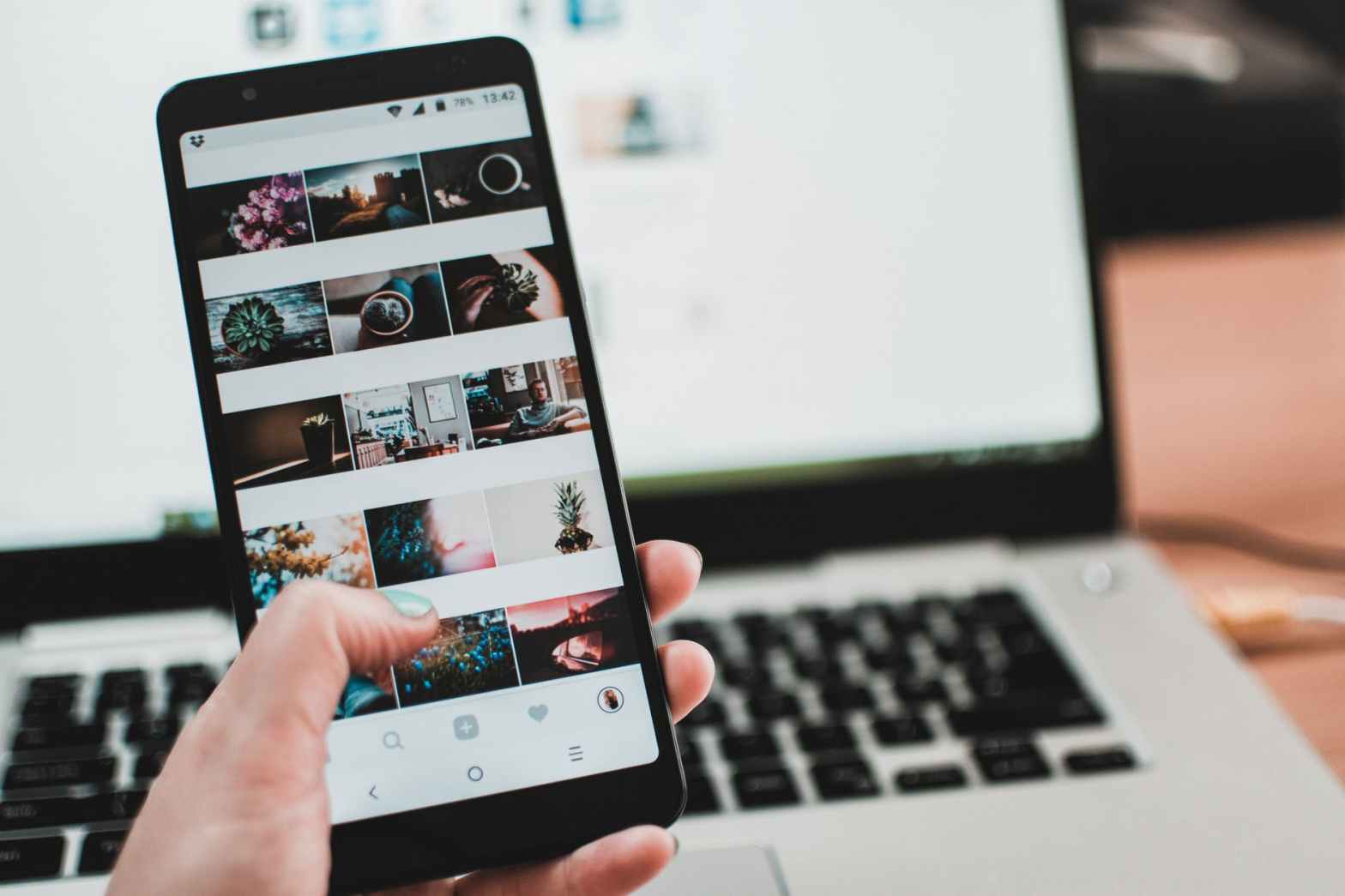
Social Media Totally Hijacked My Mental Health

“People who smile while they are alone used to be called insane until we invented smartphones and social media.”

– Mokokoma Mokhonoana

Not entirely or fully accurate, but the damage has been done. Forget the needle. In this day and age, it’s more like TikTok and the damage done.

Without doing any research on the topic, I am sure there has been a multitude of tests and studies conducted to compare the effects of drugs on the human brain to that of social media on the human brain. It’s quite clear neither is truly healthy for anyone (you can decide which is worse), but what direct effect does social media and its use have on our mental health and overall psychological well-being?

In 2021, there were around 3 billion active monthly users of various social media, and that only continues to grow. It shows that if it is indeed a problem, it’s not going away anytime soon.

Comparing the problem to being one “as big as climate change”, Facebook whistleblower Frances Haugen leaked thousands of documents that showed Facebook knew the harm it could cause as a social media platform and did nothing about it. Money above all else. Always. Thanks, Zuckerberg.

THE SCIENCE

One study conducted shows that “companies use mechanisms in our brain to hook us on social media.” A typical social media platform’s initial goal is to ultimately “hook” us, which in turn gives them a serious form of complex control. There’s also significant proof to suggest that irresponsible social media practices can lead to anxiety, depression, sleep disruption, and anti-social behavior.

As mentioned before, I knew there were obvious ramifications to us humans by the irresponsible, overuse of social media – I just never knew what they were specifically. I would have never initially guessed the correlation between social media use and anxiety and depression. It makes perfect sense, though. Sometimes you just need to see things through a different lens before fully understanding the scope of the matter.

“Social media is basically a way to drugify human connection,” Anna Lembke, MD, said. “One of the ways our brain gets us to make those connections is [to] release dopamine. Things that are addictive release a lot more dopamine in the brain.”

According to Lembke, the more we trigger that intense pleasure response we get from social media, “the more we crave it.” It begins to take hold like a drug, to where you continually need more and more of it to reach one’s desired (or required) level or “high”, for lack of a better word. It’s like gambling because you always return when your odds are very low. It is a constant need for validation by way of the internet which can quickly get out of control.         

THE DANGERS

Other than the ones already mentioned, the dangers of the overuse of social media can range from emotional to mental to physical. One of the more significant aspects of the damage being done stems from sleep issues caused by social media use. The effects that sleep, or a lack thereof, can have on both mind and body are scary and dangerous.

Recent studies suggest people who frequently use social media feel more depressed. Social media can make one feel isolated and alone. One study of young adults in the U.S. found that “occasional users of social media are three times less likely to experience symptoms of depression than heavy users.” However, the loneliness created by the isolation can cause depression and anxiety in anyone.

Another danger posed is the damage caused by how it can boost one’s self-esteem. Yes, you read that right. It’s the way people seek out that self-esteem boost that is damaging. This is done by commenting on or posting something with the goal of receiving some sort of unhealthy positive feedback. The search for confirmation by means of feigned or exaggerated circumstances is unhealthy in and of itself. The repercussions of this style of self-gratification can be serious and can also lead to severe psychological problems.

Online bullying is another possible danger. This could take shape in the form of general bullying, by use of offensive or insulting language, or any number of other hurtful behaviors. When this behavior happens on a social media platform, it is widely viewed and even shared. This makes it nearly impossible to reduce the impact.

YOUTH IS TRAGEDY

These are just some of the things that can be negatively impacted by social media. So, why do users keep coming back?

“When the outcome is unpredictable, the behavior is more likely to repeat,” Jacqueline Sperling, PhD, said. “One does not know how many likes a picture will get, who will ‘like’ the picture, and when the picture will receive likes. The unknown outcome and the possibility of a desired outcome can keep users engaged with the sites.”

This is especially true with teenagers and young people. One of the reasons is the fear of missing out. Say, you’re not on social media but all your friends are. This can create a sense of being left out or of missing out on something others in your peer group get to experience. However, the younger you are when you start, the stronger the impact will be down the line.

Sterling also points out that a filter attached to the digital world can cause confusion amongst young people. It can blur the line between what’s real and what’s not.

“Middle school already is challenging for students with all of their developmental changes,” Sterling said. “As they go through puberty, they’re tasked with establishing their identity at a time when the frontal lobes in their brains are not fully developed, and there is a lack of impulse control. All of this happens while their relationships with peers become more important. It’s a very vulnerable population to have access to something where there is no stopgap before they post or press the send button. I think that’s something of which to be mindful.”

SUGGESTIONS FOR PROTECTING YOUR MENTAL HEALTH

Below are a few suggestions to maintain mental health while using social media:

  • Limit your time on social media platforms. Some platforms, such Apple and Google, have settings to help you do this automatically on your phone.
  • Consider what sites and profiles you visit; if they make you feel bad, unfollow them
  • Before you post something about yourself or someone else, consider if you would make this comment in an in-person setting
  • Remember that what you post will be very hard to take back or remove
  • Remember that what people post, or what you see, may not be honest or real presentations of their experiences or lives
  • Leave or unfollow a profile/page/site if it is making you feel worse
  • Report posts that are hurtful or making you worried
  • Tell an adult you trust – a parent, teacher, school counselor – immediately if a friend is posting content that worries you or suggests that they may be in a serious situation

As someone who uses certain social media platforms professionally, I know they can be very useful resources. I am not someone who uses social media for personal use very often; I have 170 friends on my personal Facebook – not because I’m antisocial, but because I only accept friend requests from people I actually know. This makes it easier to stay outside the boxes constructed when it comes to my usage of social media.

That being said, the dangers of social media to one’s mental health can be disastrous and long-lasting. However, we do live in a world where it’s hard to “unplug” because of the convenience of advanced technology. It’s everywhere. And the risk will always be there, too.

It’s not impossible to live a positive and balanced life on social media. However, it’s through discipline and insight that true personal awareness can be obtained, which is necessary.

My Week-Long Hiatus

“Stress acts as an accelerator: it will push you either forward or backward, but you choose which direction.”

– Chelsea Eriaue

It has been one of “those weeks” to be sure. No, nothing genuinely terrible has occurred. It’s just been one of “those weeks” in the sense that when that phrase is used, all can be sure what is truly meant.

For me, the main thing was a classic case of “biting off more than I could chew”, an ailment that I’m too often afflicted with. I spent several days writing several freelance pieces that I had put off until the last minute, ultimately resulting in an intense, unnecessary level of stress that I’m surprised didn’t end up with me losing my hair.

I work best under pressure, I feel, but this was a little too heavy of a workload on top of everything going on. To purposefully put myself in that type of predicament, on top of kids and real life

Anyway, after finally completing my deadly deadline, I spent two days push mowing three acres of land. What started as a pet project quickly turned into a work overload. The yard had to be mowed, though, and I won’t let anyone else do it. It’s just how I was raised.

There’s not much to this post except to let everyone know I plan to stick to the main schedule I initially intended. When I missed Sunday and Monday, I didn’t want to change days just because of “personal strife”. It’s Thursday now, and I’m providing nothing of substantial value except that. I intend to do better by prioritizing and learning from my most recent lesson.

Whoever said “work smarter, not harder” sure knew what the hell they were talking about.

So Far, So Good

“You are not your illness. You have an individual story to tell. You have a name, a history, a personality. Staying yourself is part of the battle.”

– Julian Seifter

So far, so good.

Still sticking to a pretty self-care-oriented lifestyle. I haven’t been in the trenches of this new battle too terribly long, so fingers remain crossed.

Routine is key, and after a healthy breakfast, my day kicked off with a walk around the city park – my hometown’s only claim to fame (one of the seven Lincoln-Douglas debates took place there – kind of cool actually). The park is near the town square, but still as far away as ever too, tucked in all snug behind a thick tree line that leads to a forest of a park.

I walked the winding, manmade trails over tree roots and animal tracks. I had forgotten how many laps a mile was so I just decided to forget to keep track of how many laps I walked.

I walked down to the pond where the local ducks were congregating. Many people come out with loaves of bread just to feed the, at more often than not, large group of ducks. On this particular day I had no bread, but then again, the ducks weren’t even on my radar. I was more oblivious to them than I’m sure they had hoped.

I haven’t really actually “exercised” since football and wrestling in high school, and the last time I ran was probably from the cops, so I walked until boredom took over. I was pretty proud of myself for sticking to something, though. I discovered as the day progressed that you have to start with the little things, the kind of things most people take for granted and thus lose sight of down the line.

Again, routine is key, so I came home and did some laundry and cleaned up around the house (I’m still working out a consistent routine and I’m not quite ready to jump back into trying meditation again just yet).

I tried to do some breathing exercises and get a routine for that down. They’re no cure-all, but I’ve discovered they help to a certain extent. And you can only work with what you got.

This new declarative, self-acceptance is just that: new. I don’t like the word “positivity”, though that’s what it is.

This period of self-acceptance is different than any other. It’s not forced or phony. I’m genuinely in the game to get through certain things in my life. There are some things you can’t fix, however. You just have to face the music in that case.

I suffer from bipolar disorder, and it can take away all you have and then some at times. Both the “ups” and “downs” are miserable, but you weather the storm.

My disorder makes it harder for me to function in a rational sense at times. I am not my diagnosis, though, and if there are those who think otherwise, I feel sorry for them as ignorance has the tendency to blind and lead to nowhere good.

The secret, though, is to let go of any loose ends. I’ve recently had to do just that regarding some things going on and am better for it. I can’t control what other people think or assume so all I can do is continue to work on myself. I have a lot to learn, but it’s time to take action and evaluate my motivation and intentions in life.

I’ve had to be more introspective than usual lately (which is scary in and of itself with my brain), but it’s been helpful. The only thing I have control over is myself and I’m learning that, too. Replaying the past has been extremely hard on me. Now, I’m writing the script for the future, and I’m not looking back.

I’ve accepted my illness and realize its control over me. I have also finally accepted that the stigma isn’t going anywhere anytime soon. But that’s okay. I can only live by my actions. I can only focus on my own authenticity and truth. And it’s liberating just to jump on the notion of change. I will always be an advocate for mental health awareness. I’m not going anywhere.

Self-love and self-care are both important and are something I’m working on. I’m proud of myself for once. I feel this new wave of understanding and am taking advantage of it.

I am thankful and have no expectations.

I’m just moving forward.

When the Music’s Over, Turn Out the Lights

“The only truth is music.”

– Jack Kerouac

As a musician and just as a human being on a very basic level, music is a key part of my every day. I’m making no correlation between the madness and the necessity of music in one’s life, it’s just a fact: music is a key part of my life.

King of and fellow nihilist Friedrich Nietzsche said, “Without music, life would be a mistake.” Is this just another extreme observation made by the philosopher? Should we just take it with a poetic grain of salt? I don’t know. I don’t know if life would be a mistake without music, but I do know I don’t want to find out.

For me, music is an escape. I have found, compared to my wife and other peers, that I am one of the only people I know who devours and rates an album by an artist as a whole. A lot of people hit up the radio hits and go from there (I still can’t listen to Dylan’s Blonde on Blonde without starting from the bombastic beginning and plowing through all the way to the end. Every time.).

I have to say the way we ingest our music and media plays a role in the output we get. Artists and, more importantly, record labels know that all an “album” needs is a couple Top 40 hits. The rest can be filler because it’s the singles that’s going to sell the record. So, it’s a known and very-well practiced formula (unless you’re Billie Eilish and then all rules are thrown out the window).

So, what kind of music do I like?

Well, I of course have already mentioned Bob Dylan. There is a string of albums the man released back-to-back over just a few years in the 1960s that reach an almost impossible state of perfection.

I am more a predominately rock n’ roll guy but have found numerous albums and other styles of music that I add to the spectrum. For instance, The Miseducation of Lauryn Hill is definitely outside of my wheelhouse, but I honestly think it may be the last perfect album ever made. Now that’s an extreme opinion, but mine, nonetheless. With a list of “Favorite Albums” heavily clouded with Dylan, Beatles, and Rolling Stones records, the fact Lauryn Hill’s debut album cracks my Top 5 is saying a lot.

As both a musician and a fan, I have devoured The Beatles, Led Zeppelin, Aerosmith, The Doors, The Velvet Underground, etc. But still, some of my favorite albums fall outside the main party line.

Both Sufjan Stevens Illinois and Seven Swans are in my “Top Favorite Albums”. Stevens has been a folky/electronic music hero for some time, and deservedly so.

Yes, I seek out the “album’s” album. I think the Rolling Stones Exile On Main St. is perhaps THE best rock n’ roll album ever made. The raw grit of the songs, the songwriting process, and the album’s creation says it all. Check it out. You won’t be disappointed.

The White Album by the Beatles is definitely up there with Exile. It’s a perfect collection of songs, and a perfect representation of how the band was working together at the time (not well). That being said, John Lennon is a personal hero of mine and I think he’s responsible for some of the best songs and albums of the 1960s and 1970s. And, yes, I’ll take Lennon over McCartney any day of the week (Shit, I’ll even take Ringo over McCartney.).

I’m admittedly bias as hell when it comes to this next one…but The Strokes have yet to release a bad album. Just saying.

In an attempt to wrap things up, let me pause to reflect. I remember one of my grandmother’s telling me at age 13 that my interest in the 90s “grunge” movement would make me “depressed” because those artists sang about drugs and suicide. So, to prove a point, I played Roadhouse Blues by The Doors (another one of my favorite bands). Her response was immediate and positive. “Yeah! Now this is a lot better! Listen to that beat!” I guess it didn’t matter that the song is a declaration of living in the moment in as raw and simple of a way as possible (“I woke up this morning and I got myself a beer/the future’s uncertain and the end is always near”). From that moment on anyone else’s perception of my musical tastes mattered not.

So, all in all, music is a release and an appreciation process necessary for me to function. I’ve always said I’d rather go blind than be deaf, as I couldn’t live without being able to listen to or play music.

Hell, maybe Nietzsche was only half right: Life without music isn’t just a mistake, it’s an impossibility and an unnecessary evil that should be asked or expected of no one.

TOP 5 FAVORITE ALBUMS (As of this writing and in no particular order)

  • The White Album- The Beatles
  • Exile On Main St. – The Rolling Stones
  • Nevermind – Nirvana
  • Astral Weeks – Van Morrison
  • The Miseducation of Lauryn Hill – Lauryn Hill

a day in the life: manic monday

“If I can’t feel, if I can’t move, if I can’t think, and I can’t care, then what conceivable point is there in living?”

– Kay Redfield Jamison

It’s been a pretty “blah” week on my end of things, personally and professionally that is. My wife has been sick, so I’ve tried to pick up some extra slack around the house while also having two young boys (5 and 7 months) to wrangle. It’s no one’s fault, but it left very little time for creativity to exist in any sense, blog-related or no.

I come here as a “blogger” to decompress in a very matter-of-fact sense, as well as to offer knowledge of my circumstances and experiences and how it relates to this illness. I don’t know if I benefit from it any more than anyone else, but it sure can make me feel better at times.

The past week has been one of what I call “stifled mania” (medicated mania), where the unwarranted energetic part of things has been there, but common sense has somehow miraculously prevailed.

Until now.

We’re coming to the close of the first full week of March, and it was not only expected but planned for. However, it feels a little bit different than usual this go-around. Perhaps it’s just psychosomatic, or because I’m on a different medication regimen than last spring. I don’t know. But I feel not only more aware, but also in more control. This latter observation could very well be a part of the delusions that can be expected to come in the next few days or weeks. But it’s a different form of mania and, I’ll be honest, I’m not a big fan.

We’ve still got time, though. By this time next month I may be crashing the walls and bouncing off the ceilings. I sure hope not, but only depending on what the alternative may be. And I hope it’s not this.

But I mainly wanted to check in. I’ll be back a little later this week if not with anything but an update on this strange state of boring mania.

Happy Monday.

Old Age, or Something Like It

“Some people with memory loss really need to start writing down the stuff.”

– Anonymous

You know that expression “You don’t know what you got until it’s gone”? Well, boy, is it true! And applicable to damn near ANYTHING!

If the name of this blog (and literally all of my previous posts) didn’t give it away, it probably is no secret that I suffer from bipolar disorder. Not meaning (or attempting) to be funny, it’s a topic us mad ones have to laugh at or else we’d spend all day crying. Or worse.

There are many negative aspects to being bipolar. Believe me, I know. At the same time, I also feel (sometimes) that there are some good aspects of suffering from the illness. They’re not always obvious, but they are there.

But does the good outweigh the bad? Or is it the other way around? Ask me tomorrow and I’ll tell you something different.

“The older I get” has become a new, oft-used phrase of mine, almost a sad mantra of some sort. But over the last year alone I’ve experienced such a cognitive decline it’s more than noticeable. If only by me.

This is one of those instances where the good doesn’t outweigh the bad. There’s no other way to spin it, and it’s scary.

As someone famous once labeled themselves as being “well under the 30”, I cannot….but only by a little bit (the elders of the tribe would scoff if they knew my real age). Which makes it scarier! I shouldn’t be dealing with these types of things this early in life. Or so you might think.

I don’t mean to sound abrasive or whatnot, but it’s been a problem that scared me enough to keep it a secret. Until I couldn’t.

Before the forgetfulness got severe enough to scare me, I started having problems with basic motor skills. Just loss of coordination and perception. This went on for a couple of months before I got “busted” by my wife. After a few times of falling and losing balance one day, the jig was up.

It was strange having to discuss the issue like I had been hiding an affair or something equally dreadful. Of course, my wife wasn’t too happy and it actually kickstarted my deep personal fear of the problem. I was slipping, it felt like. You can take a hand. Hell, you can take the whole damn arm. Just don’t take my mind.

I then started forgetting what I was talking about mid-sentence. I’d forget the whole conversation, the whole subject even. I would get so embarrassed when this would happen with anyone other than my wife that I could almost cry. And sometimes I did. It’s like walking into a room and forgetting why. Except now I was forgetting to even walk into the room. It’s a metaphor, but accurate nonetheless.

I of course went to the doctor and got in with a neurologist. I’ve had at least three MRI’s, one suggesting there were two spots of white matter in my corona radiata and another suggesting there was no white matter at all. Things have been ruled out, just not ruled on.

I’m to have an even more extensive MRI done to hopefully determine something. It’s weird to want to know something is wrong rather than experience this type of loss and there be no cause to its effect.

Fortunately, upon doing some research, I’ve learned that bipolar disorder takes a toll on the ol’ brain. That’s what it is. Has to be. I’d almost bet the farm on it. Especially when it comes to loss of coordination and the cognitive decline.

Now this isn’t an everyday hindrance; 95% of the time I’m fine. Bipolar still, but fine. It’s the other five percent that’s troubling.

I can’t sit around and count the days until I’ve totally lost myself, though. But I’m still not excited about it. And maybe I won’t have to deal with it on a real serious level, but it’s the type of decline that’s been real gradual. Thankfully (knock on wood) I have not had any serious or even real noticeable “moments” in the last month or so. But it comes and goes. Which makes it even scarier.

I go back to the neurologist in April, and I don’t expect there to be any more of an answer than there was a few months ago. I’m not being negative, just reacting to what I’ve learned about this from the doctors so far: not much.

I’ll wrap this up before it turns into even more of a whiny, “woe is me” type of post, which was not my intention. But if I ever seem absent, and to a fault, fear not. I probably just forgot to remember it was blog day.

Again, us mad ones have to laugh or else we’d go crazy.

a day in the life: mind over mania

“You know how most illnesses have symptoms you can recognize? Well, with manic depression, it’s sexual promiscuity, excessive spending, and substance abuse—and that just sounds like a fantastic weekend in Vegas to me!”

– Carrie Fisher

It seems the older I get the less I enjoy the mania. At one point in my life, though, I would have clung to it up until it completely fizzled out, but not anymore. The mania…well, whatever being or entity is in control of things can just keep it.

“Mind over mania.” It’s almost an oxymoron of a mantra as there is no such thing. At least not for me. When in the full throes of a severe manic episode I have control over none of my mental or cognitive faculties. When manic, I exist only on an island of delusions.

It is nice to be able to look back and reflect on a period of mania and have a true perspective on things. That’s not always the case, and the lines between awareness and disregard can become pretty blurred at times.

When I usually try and look back on how a manic phase has affected me and/or those around me, I always end back up to the “bullet points”. I love the “bullet points” just about as much as I love the lists of “coping skills”. I know. I sound pretty cynical and bitter, but I’m not meaning to. The clarity genuinely makes some past chaos all the more meaningful.

Looking back on a period of mania without the type of clarity I’m trying to describe is like trying to look through a dirty window into another: you can get the gist of what’s going on, but as a whole it’s never really quite clear.

So, today I hope to remain productively reflective for as long as I possibly can. If “first thought” really is “best thought” then I’m going to go ahead and stop now.

SPOTLIGHT: Kurt Cobain

“The sun is gone, but I have a light.”

– Kurt Cobain, Dumb

Not all days are bad days, and sometimes I have nothing in particular I need or want to say. So, I started a little “Spotlight” segment in which I talk about someone of cultural prominence who suffers from bipolar disorder. The idea is to use a “poof”-style piece to shine a light on said chosen person. It’s a personal exercise and challenge, and also helps make this illness just a tad more relatable. This is my second “Spotlight” piece, the first of which was on Vincent Van Gogh.

This one is on Kurt Cobain.

Kurt Cobain was born in February of 1967 in Aberdeen, Washington. As a child he was diagnosed with ADD and developed bipolar disorder later on in life. Never pursuing treatment, though, Cobain struggled with severe depression throughout his entire life, often turning to drugs to self-medicate.

Cobain is best known as the front man and main creative force behind the rock band Nirvana.

Nirvana began playing together in the 1980s but would undergo countless name changes and at least four other drummers before permanently sticking with Dave Grohl in 1990.

Although their debut album, Bleach, was recorded and released in 1989, it was their sophomore effort, Nevermind, that really cemented their place in history. Driven by the hit song “Smells Like Teen Spirit”, as well as a slew of other rock radio staples, the album knocked Michael Jackson off the top of the charts and catapulted the band to near-overnight fame.

This really didn’t sit well with Cobain, though. He never intended or wanted to become as popular as he ultimately became. He was labeled the “Voice of his Generation”, which also did not sit well with him.

As mentioned above, Cobain often turned to drug use as a means to handle the sudden onslaught of fame, along with other various personal issues. Cobain’s drug of choice was heroin, and he became extremely addicted to the powerful substance, even to the point of overdosing around family and friends.

Nirvana went on to release only one other official studio album, In Utero. It was a drastic departure from the material on their previous album, and was the album Cobain was most proud of.

Cobain’s songwriting skills are his most notable and spoken of talents, as he is often lumped into many “best songwriters of all time” lists. He was moody, bright-eyed, and honest in his writing, creating a mass appeal in all he did.

Ultimately, though, between his severe depression, his inability to handle public pressures, and his extreme dependence on heroin, Cobain committed suicide in 1994 at the age of 27. He left behind a wife and daughter.

One thing I must express is that you don’t have to use drugs or suffer from a mental illness to be creative or productive. Suicide isn’t the answer, either, yet I have no room nor am I in any position to even speak on that.

I only add this little tidbit because the subject of the last “Spotlight” piece, Vincent Van Gogh, also committed suicide. There are many amazingly creative and genius people out there who do not follow the same path as either of these two men.

I promise we won’t end this series on a “Van Gogh” or a “Kurt Cobain”, if only just to prove my point. Sometimes it’s best to just stay in the light.

Until next time.

a day in the life: hope(ful)

“For too long we have swept the problems of mental illness under the carpet… and hoped that they would go away.”

– Richard Codey

Whoever said “hope springs eternal” never offered me any sound advice on the mantra.

Despite being someone who operates from a place of hopelessness, hope seems to be all I have at times.

Though it’s always been the case, I’m finding it harder and harder to accept. I don’t feel like I could ever know what “true” hope is without being phony on a level I could never be okay with.

No known cause. No existing cure. Just managing the in-between areas of the highs and lows. The aesthetics of the situation are dull, even repulsive at times.

That being said…there do seem to be more “easy” days than not. I’m doing my best to hold out hope that that remains to be.

As a husband and a father, I continue to hold out hope just for hope’s sake.

Even in times of sheer hopelessness, there is always some sliver of something, I’ve learned. If not hope then a mild form of something similar, and I’ll take it.

So, even when the darkness seems to be all encompassing, I’ll at least try to stay aware that hope exists somewhere outside the scope of my current field of “vision”.

I truly do hope that mantra is more than just an acquired confidence. But if not, it’s one I hope to acquire.

Memories of a Backyard Hanging: A True Story

  It was a late spring day, like any other.

In finding some forgiveness of loneliness, and with a strange acceptance of suffering, I can now look back on it all with a dim understanding. It happened at a time when creativity existed within me at an exhausting level. There was a maddening frenzy in the way things came out of me, pouring with sympathy, yet offering nothing.

     It was a late spring day, like any other. The afternoon sun hung in the sky, low and domineering, and the confused aromas of the season were in full force. Spring, a season with a natural thickness of rebirth in the air that creates its own swelter, is a season I’ve come to both love and hate.

     I could sense the onset of the stifling evening, and the heat wasn’t even a factor. There was something else in the air contributing to my restless unease. Little did I know that day would be the end of an innocence I can now only barely remember.

***

     We lived on a hill just below the county hospital, with a deep jungle of ditch lines in our backyard. On the other side of the ditch lived another family: a woman named Vanessa, her son, Allen, and her boyfriend Mike. As time passed my family formed some sort of relationship with “our neighbors to the south,” as they jokingly became known.  We would have cookouts and pool parties. We’d all even go fishing from time to time. So we became friends. At the very least we were friendly.

     Although our families had become rather close, no one noticed the shift in Mike’s behavior in the beginning.

     That may have been because there wasn’t much of a difference in his behavior; it was more of a slight, unexplainable change in his attitude. He had always been a naturally happy-go-lucky kind of guy who, out of nowhere it seemed, started acting like a totally different person, like a mean drunk.

     When the “change” in Mike did become somewhat noticeable, the people around him chalked it up to being nothing but a man going through a hard time, probably because of his job. Mike was a professional tree trimmer, and in that profession, it seems like you’re either raking it in or getting raked over.

     Mike wasn’t just your average tree trimmer, though. This man would tackle a tree, be hundreds of feet in the air, and be anything and everything but scared or nervous. He had these great big spikes that he would attach to the bottom of his boots, allowing him to scale any size of tree with nothing but a few ropes and his chainsaw. I had the chance to see him work a few times and would watch, sometimes in awe and others in fear. I had respect for him for that reason alone; he was one of the bests at what he did, no doubt about that.

     Little did anyone know, however, Mike was struggling with more than just a lack of work or with problems at home. Mike, along with my father, was a big drinker, mostly beer but an occasional bottle got passed around. My father and Mike both could become rambunctious, even hard to handle at times, but it was mostly innocent.

     There’s that word again.

     But then the occasional bottle turned into a steady supply. Still, though, no one was quite sure what caused this change in Mike. And no one asked. I think my family really believed it was troubles at work or home. I didn’t have any real opinion.

     All I can say now is that it was much more serious than work troubles.

***

     So as the stifling afternoon turned into an even more suffocating evening, I was eating dinner with my parents when the familiar red and blue flashes of police lights became noticeable through our dining room window. Usually none of us would have cared, let alone moved, but my dad jumped up when he realized which house the cops had gone to.

Mike’s.

     We all ran outside to try to find out what was going on. But before we could cross the ditch line, I saw a light even brighter than the cops’ lights (there were several squad cars at the house by this time). I got across the ditch and discovered the bright light I was seeing was a spotlight, pointed up and shining into one of the tallest trees in Mike’s yard.

     And what I saw next turned my full-on sprint into a disoriented jog. The light the police were using was shining on Mike, who had climbed as high as he could in the tree behind his house and appeared to be wearing a homemade noose around his neck.

     At first, I couldn’t be sure if what I was seeing was real. This had all happened so fast. There was just too much going on. Too many people shuffling around and talking. Too many voices coming from first responders, unsure of what to do.

     Too many lights.

     And Mike…

      The sight of Mike in that tree, standing on a branch with a noose around his neck…

     I was in shock.

     Mike started shouting down from the branch he was standing on. He wanted “everyone to leave and to just be left alone.” He was crying, yet somehow remained stoic as he continued his demands. My dad tried to talk to him, and Mike stopped yelling long enough to listen and say something I’ll never forget.

     “Just get out of here. It’s too late.”

     Before my dad could respond, a fire truck pulled into the yard. Immediately, Mike threatened to jump if it didn’t leave. 

     As this scary scene continued to unfold I noticed the big spike boots I had seen him wear before. Wow, I remember thinking, he’s serious. He’s beyond serious.

     He was so high in that tree I wasn’t sure if the ladder on the fire truck could even reach him. If it even came to that.

     No one seemed to be in any big hurry. I didn’t understand then, but I do now. Any sudden or dramatic actions could, and most likely would have, provoked Mike to jump.

     No question about that.

As the fire truck pulled in and parked in the yard as close to the tree as necessary, a “crisis team” from an area counseling center showed up. My backyard had become some sort of neon nightmare with all the lights flashing across the sky, across the night throughout the neighborhood.

     I wasn’t sure how this was going to play out by this point and honestly had become beyond fearful. It was an emotion I didn’t recognize at first, but yes, fear was what it was.

     This was real.

     By this time, of course, there was already a crowd of onlookers outside, steadily growing. I could hear police talking about the “tactics” they were undoubtedly trained for in these “types of situations.”

     I may not have been alone in my concern for this man, but it sure was starting to feel like it.

     The noise continued but through it all, through all the yelling and commotion, what I could hear most clearly was Mike, crying.

     An officer approached my dad and I, apparently noticing the only person Mike would carry some sort of rapport with was my dad. They talked in voices I couldn’t hear, frankly not wanting to. But I didn’t want to leave either, which is what happened next. A desk-type cop barked at me to go back to my house and my dad made sure I did just that.

     My dad rushed me across the ditch line and told me to go inside. I wasn’t happy with his demand, but I didn’t argue; this wasn’t the time or place. Before I could comply, though, my dad was gone, across the ditch and back over in Mike’s backyard.

     But by the time he got back, it was too late.

     By the time he got back Mike’s patience and belligerence had run its course, which were the only things keeping his feet on that tree branch he had climbed up to.

     What was keeping his neck inside that homemade noose before he jumped I’m afraid we’ll never know.

     But in one last bout of gusto, it was all over. Mike shouted something I couldn’t make out and jumped off of the tree branch.

     And I wish there was something more to say.

***

     Mike’s body hung in that tree for more than six hours after he killed himself. I’m sure the police and investigators would have some sort of explanation about “proper procedures and protocol.” But it didn’t make much sense to me, not then or now.

     I remember as I woke up for school the next day (if I had even slept at all) there were still police in Mike’s backyard. Mike’s body had just been cut and lowered from the tree after dangling all night.

     I stood in my backyard as Mike’s sheeted body was being loaded up. Seeing that made me realize I hadn’t yet processed any of this. There had been no tears, no time for tears. Tears were not part of the “proper procedures and protocol,” not for these “types of situations,” anyway.

     My dad was outside, too, and came up to me. We looked at each other, the silence between us almost comforting. Exhaustion had become him, and I could tell that he hadn’t had any time for tears either.

     I could see the morning sun shining through the trees, perched up in the sky as if being held up by the wood line and nothing else. It was as if the sun was even sad.

     My dad wiped a single tear from his left eye and stood up. All of the police and emergency vehicles were gone at this point.

     “They left the rope,” my dad said, pointing up to the tree. 

     And they had. I didn’t see it at first, but they had. Most of the thick, blue rope Mike had used to hang himself with was still up in the tree.

     “Can you believe that? They left the rope.”

     No time for tears, no time for questions. 

     We stood there in the backyard in silence for a long time. My dad finally spoke, telling me it was time for him to get ready for work for me to get ready for school.

     School? How could I go to school just hours after seeing a man hang himself in my backyard practically?

     My apprehension must’ve been on display on my face because my dad began one of his familiar speeches.

     When my dad finished, he hugged me and sent me back into the house, and again told me it was time to get ready for school.

     It was a late spring day, just like any other.