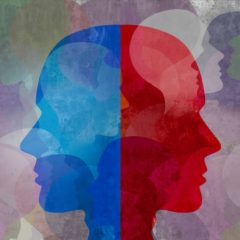
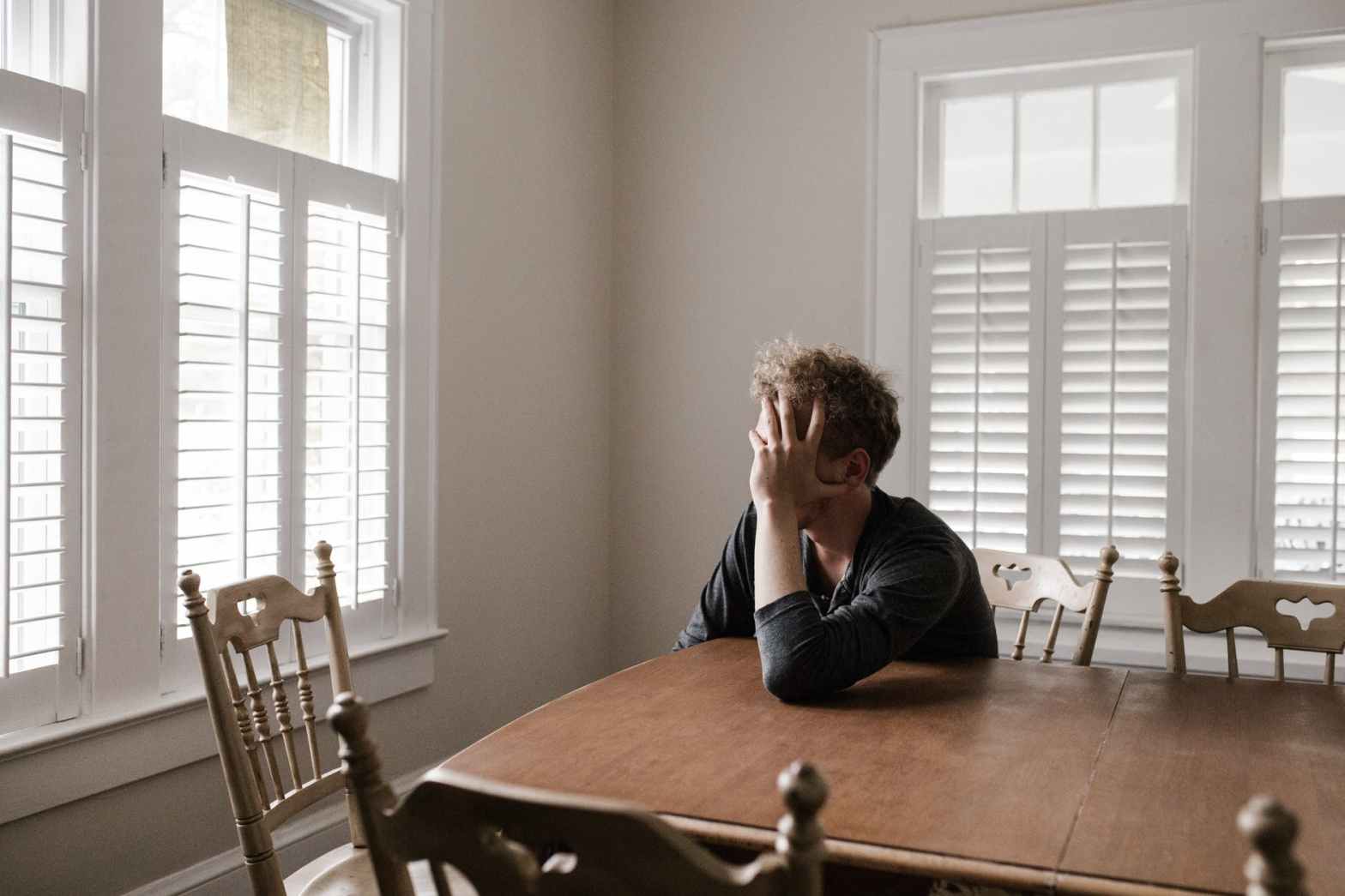
Bipolar Brain Fog: Seeing Thru the Haze

“When it’s foggy in the pulpit it’s cloudy in the pew.”

– Cavett Rober

I’ve touched upon this topic once before in an “a day in the life” post, but it’s something that bears repeating. Because I might forget.

Over the last year or so, I have been experiencing some semi-serious memory issues and some problems with basic motor skills and coordination. I was able to hide these specific problems from my wife for nearly three months before having to officially let the cat out of the bag.

And I only had to do that because I was stumbling around the house one day my wife and I were both home. It was a particularly bad day for me; I had no sense of perception or balance, and was bumping into furniture and running into walls. After about the third obvious misstep, though (no pun intended) I just looked over at my wife. In return, I was pretty much given the “Okay, let’s hear it” look and so I proceeded to tell her what I had been trying so hard to avoid.

It was almost painless…except for the part that wasn’t. I was embarrassed, and I had been forgetting everything, short-term and long-term. I would get hung up in a conversation and not know how to navigate back into it. How did I even manage to keep this a secret for this long? It didn’t matter how to my wife, only why.

WHY did you keep this a secret for so long?

I guess other than being embarrassed (and a little scared) I’m not sure myself. I knew, though, that when one of those “moments” would occur I would leave the room as quickly as possible and go to the bathroom and cry. I initially started this as a method of returning from the edge. I would hope that staring at myself while flooding the counters with my boxed-up tears would act as a trigger to “come back to”. This rarely worked, if ever.

The first thing was first, though, and that was to get in with the doctor ASAP. I had already wasted enough time and had finally accepted what was going on. To a certain extent, anyway.

I already see a neurologist because of a seizure disorder, so it didn’t take too long to get that appointment scheduled. I had both a CT scan and an MRI before the appointment, so I was looking forward to getting some answers.

Of course, it’s not that simple, is it?

The MRI did show two small areas on my corona radiata, an area between the cortex and brain stem. A second MRI was then ordered, and I started to worry. By this point, I was unsure of why another MRI was necessary after I had demonstrated my inability to do what the neurologist was asking of me, both mentally and physically. The physical test’s results indicated I had no reflexes in either foot/ankle, and my whole left side was significantly weaker than my right. The second part of the physical test required me to walk toe-to-toe down a long hallway – which I failed miserably at.

So, I expected some sort of answer. Things were ruled out, such as mini strokes and multiple sclerosis, but nothing was ruled on. I suppose finding out what it wasn’t should have acted as some sort of relief or buffer, but it didn’t.

It was time to get back to the drawing board.

After more lab work, another MRI on the books, and visits with other doctors, I was given at least a little bit of start. As more things continued to be ruled out, we had to at least be getting a little bit closer to an answer, right?

I have experienced all the symptoms and feelings and moods that come with along with bipolar disorder, so I thought I had the game down. But as always, this was not the case. At this point, I was just hoping to forget I was even sick, bipolar or not.

As for where I stand right now, I personally do believe what’s been going on is (more than likely) related to my illness.

Specifically, it’s referred to as “bipolar brain fog”. I guess it’s real enough. I look at it as another rung on the ladder for me, a ladder where the climb is overwhelming and never-ending.

Bipolar brain fog is described as having the “inability to focus on a task, retrieve simple memories or words, or tune out distractions.”

Fortunately – for me, anyway – I hate sympathy (even just sitting here writing this is making me cringe a little), so that in and of itself just acts as a motivator for me to not be like “why me?” or to seek out attention in any other way. Sympathy of any kind just makes me feel uncomfortable, so instead of showering in those negative waters, I decided to just hang out in Lake Out-of-Sight-Out-of-Mind. Back to avoiding the truth again. It was either that or go crazy, and I just couldn’t afford that.

As I tread forward, though, it truly does feel like it may be my bipolar disorder causing everything. From the initial MRI to now, it appears that there are areas in my brain that have shrunk in size. This seems to be indicative of these issues stemming from bipolar disorder.

Memory issues caused by bipolar disorder can be traced to the seriousness of the extreme highs and lows associated with the illness. The excessive and intense repetition of cycling is major causation of memory issues in someone with bipolar disorder.

Now, to clarify, these are not constant issues. I do deal with them daily, but not 24/7 like many others.

It’s still scary. One study suggests that bipolar disorder may cause progressive brain damage. It can even lead to early-onset dementia or Alzheimer’s disease. Now, does that mean that those things are going to happen for sure? No. Does it make sense why I might be scared at times? I’d like to think so.

Bipolar disorder and memory loss are linked to “deficits in regions of the brain,…each of which plays a role in memory as well as movement, learning, reward, motivation, emotion, and romantic interaction.”

My next appointment with the neurologist is later this month so, fingers crossed for another MRI, I guess.

To be in my early 30s and to already be seeing doctors for memory loss concerns is scary. I don’t want to lose anything else I already don’t have.

So, take away anything else. Take whatever you want.

Just don’t take my mind. Don’t take the one thing that’s truly mine.

Leave me my mind.
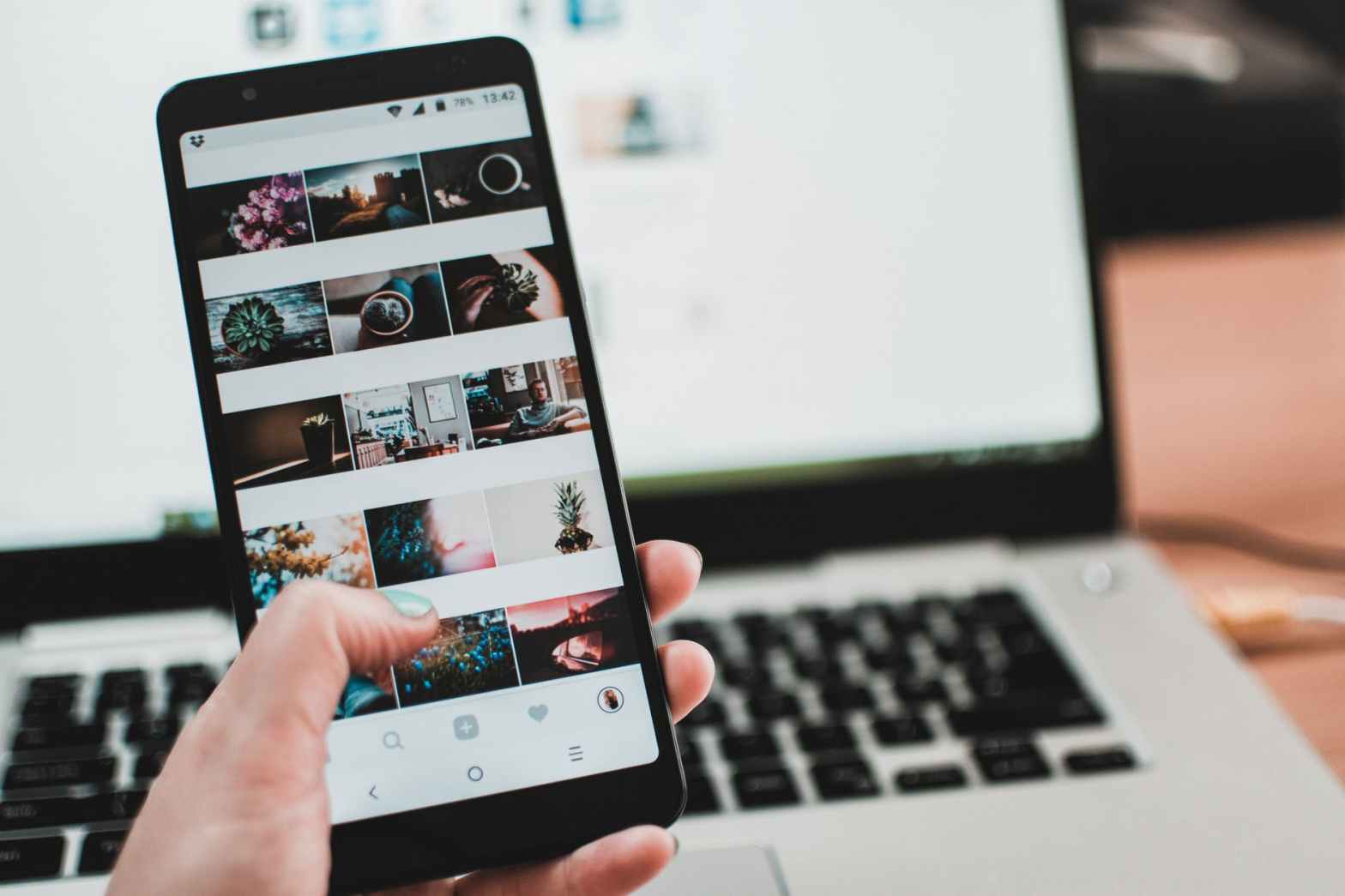
Social Media Totally Hijacked My Mental Health

“People who smile while they are alone used to be called insane until we invented smartphones and social media.”

– Mokokoma Mokhonoana

Not entirely or fully accurate, but the damage has been done. Forget the needle. In this day and age, it’s more like TikTok and the damage done.

Without doing any research on the topic, I am sure there has been a multitude of tests and studies conducted to compare the effects of drugs on the human brain to that of social media on the human brain. It’s quite clear neither is truly healthy for anyone (you can decide which is worse), but what direct effect does social media and its use have on our mental health and overall psychological well-being?

In 2021, there were around 3 billion active monthly users of various social media, and that only continues to grow. It shows that if it is indeed a problem, it’s not going away anytime soon.

Comparing the problem to being one “as big as climate change”, Facebook whistleblower Frances Haugen leaked thousands of documents that showed Facebook knew the harm it could cause as a social media platform and did nothing about it. Money above all else. Always. Thanks, Zuckerberg.

THE SCIENCE

One study conducted shows that “companies use mechanisms in our brain to hook us on social media.” A typical social media platform’s initial goal is to ultimately “hook” us, which in turn gives them a serious form of complex control. There’s also significant proof to suggest that irresponsible social media practices can lead to anxiety, depression, sleep disruption, and anti-social behavior.

As mentioned before, I knew there were obvious ramifications to us humans by the irresponsible, overuse of social media – I just never knew what they were specifically. I would have never initially guessed the correlation between social media use and anxiety and depression. It makes perfect sense, though. Sometimes you just need to see things through a different lens before fully understanding the scope of the matter.

“Social media is basically a way to drugify human connection,” Anna Lembke, MD, said. “One of the ways our brain gets us to make those connections is [to] release dopamine. Things that are addictive release a lot more dopamine in the brain.”

According to Lembke, the more we trigger that intense pleasure response we get from social media, “the more we crave it.” It begins to take hold like a drug, to where you continually need more and more of it to reach one’s desired (or required) level or “high”, for lack of a better word. It’s like gambling because you always return when your odds are very low. It is a constant need for validation by way of the internet which can quickly get out of control.         

THE DANGERS

Other than the ones already mentioned, the dangers of the overuse of social media can range from emotional to mental to physical. One of the more significant aspects of the damage being done stems from sleep issues caused by social media use. The effects that sleep, or a lack thereof, can have on both mind and body are scary and dangerous.

Recent studies suggest people who frequently use social media feel more depressed. Social media can make one feel isolated and alone. One study of young adults in the U.S. found that “occasional users of social media are three times less likely to experience symptoms of depression than heavy users.” However, the loneliness created by the isolation can cause depression and anxiety in anyone.

Another danger posed is the damage caused by how it can boost one’s self-esteem. Yes, you read that right. It’s the way people seek out that self-esteem boost that is damaging. This is done by commenting on or posting something with the goal of receiving some sort of unhealthy positive feedback. The search for confirmation by means of feigned or exaggerated circumstances is unhealthy in and of itself. The repercussions of this style of self-gratification can be serious and can also lead to severe psychological problems.

Online bullying is another possible danger. This could take shape in the form of general bullying, by use of offensive or insulting language, or any number of other hurtful behaviors. When this behavior happens on a social media platform, it is widely viewed and even shared. This makes it nearly impossible to reduce the impact.

YOUTH IS TRAGEDY

These are just some of the things that can be negatively impacted by social media. So, why do users keep coming back?

“When the outcome is unpredictable, the behavior is more likely to repeat,” Jacqueline Sperling, PhD, said. “One does not know how many likes a picture will get, who will ‘like’ the picture, and when the picture will receive likes. The unknown outcome and the possibility of a desired outcome can keep users engaged with the sites.”

This is especially true with teenagers and young people. One of the reasons is the fear of missing out. Say, you’re not on social media but all your friends are. This can create a sense of being left out or of missing out on something others in your peer group get to experience. However, the younger you are when you start, the stronger the impact will be down the line.

Sterling also points out that a filter attached to the digital world can cause confusion amongst young people. It can blur the line between what’s real and what’s not.

“Middle school already is challenging for students with all of their developmental changes,” Sterling said. “As they go through puberty, they’re tasked with establishing their identity at a time when the frontal lobes in their brains are not fully developed, and there is a lack of impulse control. All of this happens while their relationships with peers become more important. It’s a very vulnerable population to have access to something where there is no stopgap before they post or press the send button. I think that’s something of which to be mindful.”

SUGGESTIONS FOR PROTECTING YOUR MENTAL HEALTH

Below are a few suggestions to maintain mental health while using social media:

  • Limit your time on social media platforms. Some platforms, such Apple and Google, have settings to help you do this automatically on your phone.
  • Consider what sites and profiles you visit; if they make you feel bad, unfollow them
  • Before you post something about yourself or someone else, consider if you would make this comment in an in-person setting
  • Remember that what you post will be very hard to take back or remove
  • Remember that what people post, or what you see, may not be honest or real presentations of their experiences or lives
  • Leave or unfollow a profile/page/site if it is making you feel worse
  • Report posts that are hurtful or making you worried
  • Tell an adult you trust – a parent, teacher, school counselor – immediately if a friend is posting content that worries you or suggests that they may be in a serious situation

As someone who uses certain social media platforms professionally, I know they can be very useful resources. I am not someone who uses social media for personal use very often; I have 170 friends on my personal Facebook – not because I’m antisocial, but because I only accept friend requests from people I actually know. This makes it easier to stay outside the boxes constructed when it comes to my usage of social media.

That being said, the dangers of social media to one’s mental health can be disastrous and long-lasting. However, we do live in a world where it’s hard to “unplug” because of the convenience of advanced technology. It’s everywhere. And the risk will always be there, too.

It’s not impossible to live a positive and balanced life on social media. However, it’s through discipline and insight that true personal awareness can be obtained, which is necessary.