
The Father, the Son, & the Easter Bunny

I used to believe in Santa Claus, the Easter Bunny, and Tom Cruise, too”

– Barbara Bretton

It’s Easter, and that’ll be the theme of the day. Whether it be the Resurrection of Jesus or the story of Peter Cottontail, Easter, in some form or another, will be on the forefront of most people’s day.

I won’t pretend to know much about Easter, especially on how an egg-laying bunny got involved in the whole mess. I’m sure there’s a reason, but I had never truly sought out any real answer before now. Some things are just better left to mystery.

But, hey, if you can incorporate an egg-laying bunny into the same celebrations surrounding the Resurrection of Jesus Christ and still have something meaningful in the end, then I want to know more (I mean to offend no one, but I can only go so far.).

Below are just a few facts about Easter:

  • Easter is the celebration of the Resurrection of Jesus Christ in the Christian religion.
  • Eggs have been seen as ancient symbol of fertility, while springtime is considered to bring new life and rebirth.
  • Americans spend $1.9 billion on Easter candy. That’s the second biggest candy holiday after Halloween.
  • 70% of Easter candy purchased is chocolate.
  • 76% of Americans think the ears of a chocolate bunny should be the first to be eaten.
  • Egg dyes were once made from natural items such as onion peels, tree bark, flower petals, and juices.
  • There’s much debate about the practice of dyeing chicks. Many hatcheries no longer participate, but others say that it isn’t dangerous to the chick’s health because the dye only lasts until the chicks shed their fluff and grow their feathers.
  • The first story of a rabbit (later named the “Easter Bunny”) hiding eggs in a garden was published in 1680.
  • Easter takes place on a Sunday, after the 40-day period called Lent. Lent is referred to as a time of fasting, but participants focus more on giving up one significant indulgence.
  • Holy Week is the celebrated during the week leading up to Easter. It begins on Palm Sunday, continues to Maundy Thursday, Good Friday, and then finally, Easter Sunday.
  • “The White House Easter Egg Roll” event has been celebrated by the President of the United States and their families since 1878.

I wasn’t surprised to see some of the above as facts, but more shocked on the predominancy of chocolate over Jesus. Upon performing simple “research”, the facts on the “Easter Bunny” part of the holiday seemed to be more significantly covered than that of the Christian aspects.

Like I said, I don’t know much about the holiday, but am still curious about Peter Cottontail and where he fits into all of this. I still don’t understand the connections completely.

Hell, I don’t understand at all.

According to one Christian source, though, “In the end, the Easter bunny has nothing to do with Jesus directly. There is nothing in the Bible or Christian tradition that links the two together.”

I’ll just have to accept that, or else go crazy.

I do like the concept of resurrection, though. A rebirth, and not one simply applicable to Jesus Christ. Maybe it’s the writer/reader in me, but the concept of resurrection can be a crucial element to any story, biblical or not. Crucial or convenient. Either way, it’s a word worth its weight.

Everyone has had their own moments of personal doubt. In turn, people seek out personal growth on that elusive life-changing level known as “resurrection”.

I’ve never been so lucky as to have had a real personal rebirth, but if Jesus can do it, so can I.
OPINION: Mental Health & the Divine? (Just a Pitch)

A look into Mental Health & Spirituality

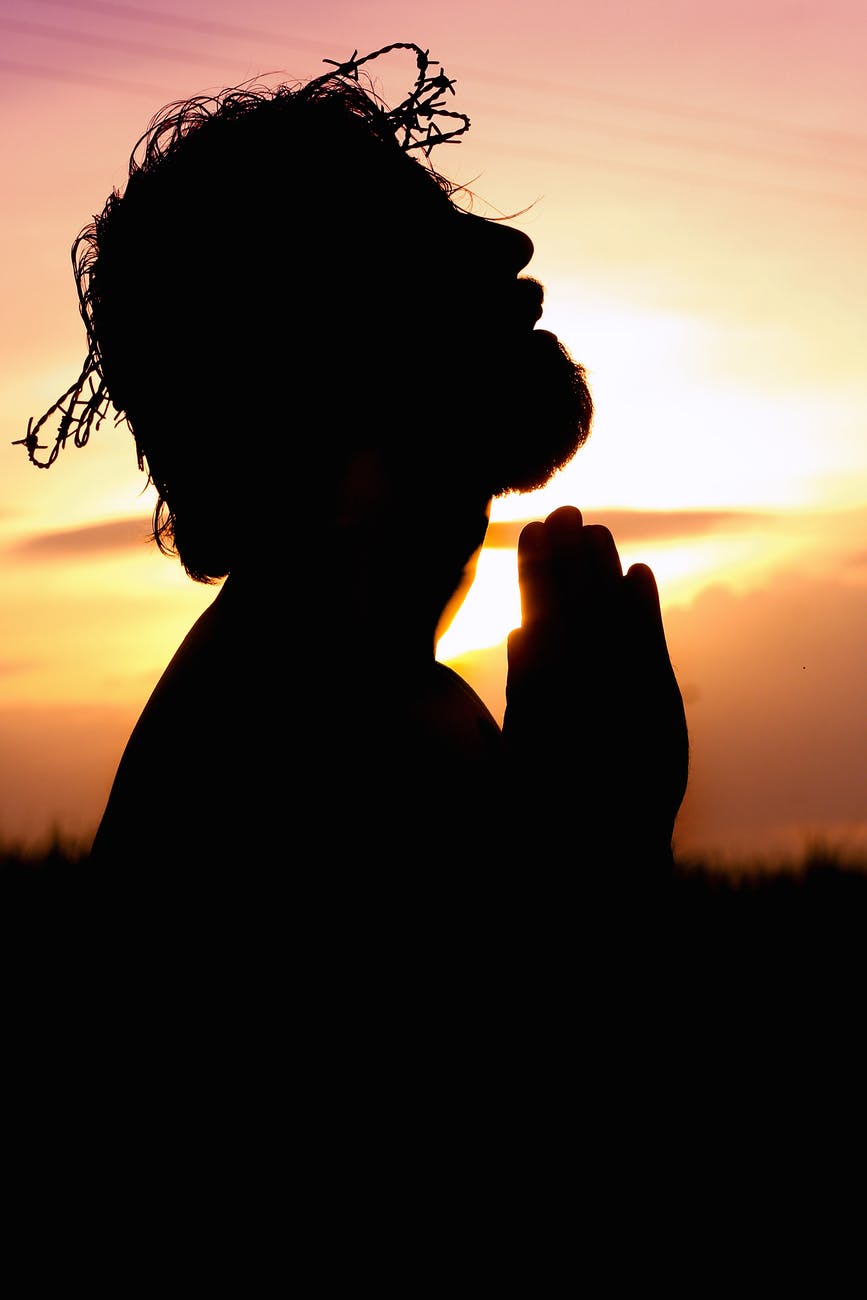
silhouette image of person praying

“Just because you don’t understand it doesn’t mean it isn’t so.”

– Lemony Snicket

A newly released study is tying people’s religious uncertainty and lack of faith in the divine to poor mental and psychological well-being.

This study, entitled Attachment to God and Psychological Distress: Evidence of a Curvilinear Relationship, was conducted by Matthew Henderson and Blake Kent. The conclusion came about based on a national survey’s worth of data from the 2010 Baylor Religion Survey.

Henderson, an assistant professor at Union University, spoke out about his perception of the end results of the study.

“A lot of research has been able to demonstrate that religious practices, like prayer and religious service attendance, can have positive effects on mental and physical health,” he said.

According to Henderson and Kent, the study confirms that people with a strong connection to God will have a significantly better psychological well-being.

Kent, an assistant professor at Westmont College, said the amount of literature tying both religion and health together is immense and is only growing.

“Attachment to God has emerged as one of the most significant, powerful influences of mental health and oftentimes more important than actual religious attendance,” he said.

It’s an interesting case to make, but one that makes sense.

Kind of.

Having just the minimal knowledge I have of the study and its findings doesn’t take away from the strength of the research. I don’t think it’s too far out of left field to see a correlation between the two. Having pure blind faith in something may seem silly to some but can offer many a sense of purpose and discipline that may have a very powerful effect on their mental and psychological well-being.

People turn to religion for all sorts of different reasons, but the reason ultimately doesn’t matter and has no negative bearing on a person’s choices. In fact, it has quite the opposite effect. So, it makes sense that having a strong faith in God (ANY God or entity) could impact both one’s spiritual and psychological happiness.

I remember asking my grandma when I was a kid what would happen if she were a “true” Christian and had been praying to the wrong God this whole time. What would happen then? Would she be damned? But her response sort of summed up, in a similar regard at least, this study’s conclusions. She told me that even on the off-chance I was right with my concern that “living by the Lord and his positive message” is still the best way to live one’s life. I thought of her and that specific instance when going through some of the research that went into this study. The positivity that can surround one’s faith and belief systems can be infectious and inspiring. So, to me it makes perfect sense that there may be a scientific connection between one’s faith and mental health.

I, however, would like to point out that I do not believe it has to necessarily be a Christian God. I think any higher power will do. So, knock yourselves out, guys.

The study does have legs and can stand on its own. So much so that two social work professors at Baylor University have received a $843,647 grant from the University of South Alabama to study faculty views regarding training students to address a patient’s spirituality in mental health treatment.

Dr. Holly Oxhandler and Dr. Clay Polson are researching this as part of four sub-projects of the university’s Spiritual and Religious Competencies Project, which aims to provide mental health professionals with the basic abilities to focus on religious and spiritual qualities in their patients’ lives.

“What we see in the research is that when clients’ religion or spirituality is ethically and effectively integrated into mental health treatment – meaning the mental health care provider assessing for this area of their lives and asking them how it relates to their mental health care or circumstances or situations, how they’re leaning on it to cope or maybe ways in which it’s been a source of pain for them in the past,” Oxhandler said.

If an uncertainty in God/Gods or a shakiness in one’s faith can have such a negative impact on one’s psychological well-being, why hasn’t someone made the connection before now? Oxhandler and Polson both feel the role of religion in one’s mental health treatment hasn’t always been addressed due to the lack of research surrounding the topic.

“Without this level of funding, I think even envisioning a project this comprehensive would be challenging,” Polson said. “This makes it possible for us to do such a large project, looking at all the disciplines.”

Both professors say the final goal of the project is to be able to help mental health professionals realize the need to integrate religion and spirituality with mental health treatment.

“We want awareness, but ultimately, the goal is to see more comfort, to see practitioners using their skills and knowledge to do this better,” Polson said.

Being aware of the power of one’s faith and beliefs may have a bigger impact on your health than you could have ever imagined. The results aren’t completely in, but they look good. Mostly. If the effects of the uncertainty of a higher power have proven to be negative and damaging to one’s mental state, it makes perfect sense. Blind faith can lay the bedrock down for a clearer and more constructive personal core. In fact, a strong faith in a higher power may very well be your best bet when trying to maintain a stable and positive psychological well-being.

OPINION: Religious Radicalism Leads to Extremist Attack on Texas Synagogue

Antisemitism is nothing new in a world still all too familiar with the haunting images of the concentration camps of WWII and the emaciated survivors of the Holocaust. However, after the atrocities perpetrated by the Nazis on the Jewish people, it should be harder to believe we haven’t come a little bit farther as human beings.

Is it really that hard to believe, though?

Religion and violence have been intertwined since the beginning of time. And without violence and suffering where would the modern idea of religion be?

This could not have been more evident than this past Saturday after a radical antisemite held four people hostage at a Texas synagogue.

A British national, Malik Faisal Akram, 44, wasn’t on the radar of authorities despite having already made terroristic comments regarding 9/11. In fact, the F.B.I. initially reported that the attack was “not related” to the Jewish community. This, however, did not prove to be the case. Moreover, the F.B.I. is now investigating the attack as an act of terrorism.

Many non-Jewish people were also taken aback by the F.B.I.’s quick dismissal of antisemitism and religious extremism being behind the attack.

It is true that Akram wanted to use the four hostages as leverage for the release of a Pakistani woman sentenced to 86 years in a Fort Worth prison for trying to kill American soldiers in Afghanistan. It wasn’t his only reason for targeting the synagogue, though.

Akram entered the synagogue armed and was heard on a livestream of the attack speaking ill of Jewish people, stating that the U.S. “only cares about Jewish lives.” Akram’s radical beliefs were on full display as he targeted the Colleyville, Texas synagogue, setting out on a conspiratorial, antisemitic agenda.

As aforementioned, antisemitism is nothing new, and the Holocaust is a prime example of that. Stemming from a great conspiracy theory of global proportion, antisemites typically despise Jewish people for attaining some semblance of “world domination”.

According to the F.B.I., conspiracy theories are only adding fuel to the fire when it comes to religious extremism. In 2019, a F.B.I. office in Arizona issued a bulletin stating that conspiracy theories are inspiring more domestic terrorists than ever. Such antisemitic, discriminatory thinking only normalizes extremist behavior, furthering an already drastic way of thinking.

This is nothing new, though, and intense radicalism often leads to extremist behavior. Whether it be out of religious persecution or something equally sinister, these types of beliefs can be destructive, and in the worst possible way. One becomes blind to any other religions or religious affiliations, and mere tolerance becomes impossible.

Akram was killed by an F.B.I. team eleven hours into the standoff, however. Fortunately, no one else was injured or hurt. The ordeal definitely could’ve ended under very different circumstances.

Attacks on Jewish people are actually on the rise, though, according to the Anti-Defamation League. Most incidents involve harassment and vandalism, but there have been six occasions where attacks have turned fatal since 2016 alone.

Faith-based communities will also continue to be targets of violence, according to the deputy director of the F.B.I. and the top intelligence official at DHS. Although these attacks will come from both domestic and foreign adversaries, radicals and extremists will most definitely be leading the way.

With a backbone hidden under the guise of a moralistic nature, radicals are almost militant in their adamancy of their beliefs.

Such radicalization marginalizes both sides of the aisle; extremists usually follow a strict, discriminatory set of ideals that in turn sidelines those on the other end of their wrath. Such thinking can be self-destructive in and of itself, creating delusions of grandeur based off a strategic selfishness in order to not only create and push propaganda, but also to annihilate the other side’s principles and views.

Many religious radicals adopt an almost kamikaze-like approach to standing up for their beliefs. It’s all or nothing with extremists, which in turn creates an even more hostile environment for those on the other end of the wheelhouse.

I will again say that this is nothing new. There has always been contention between certain religions or sects of certain religions. Religious extremism has always existed on some level, but as the world continues to progress and change so do the methods and far-reaching consequences. According to one report, extremists were praising the attack on the Texas synagogue as a triumph while discussing future plans and attacks. Some even said they wished the hostage-taker had been a white Christian.

This type of divisiveness is extreme in and of itself. It seems almost impossible to believe we live in a world where religious radicalism is becoming a little too normal. And normalizing the radical is dangerous and threatening to us as a human collective on a whole other level. It is one thing we cannot afford to let happen. We must stand up against religious extremism. If we don’t, it is at our own peril.

OPINION: A Timeless Debate, “Prayer In School” Remains A Divisive Issue

*An opinion piece I published in another publication*

The debate over prayer in school has been one of high contention for decades now, and with the dispute still making headlines it only makes me wonder if any real progress or headway has been made. Or will ever be made.

It was recently announced that the Supreme Court will hear the case of a high school football coach who was fired over holding postgame prayers at the 50-yard line. A federal appeals court ruled that the school board could force said coach from holding these after game prayer circles. This may be an offshoot of the actual “prayer in school” debate, but it is a slippery slope and here is where we are. This is definitely a case to keep an eye on.

It’s important to note in this particular case the fact that the Supreme Court has never outlawed prayer in school, so long as it is done privately, willingly, and in a way that is not forced or disruptive. However, the debate was first heard by the Supreme Court in 1962 in a case called Engel v. Vitale. The ruling handed down determined that prayer in school was a direct violation of the First Amendment to the U.S. Constitution. At the same time, many in favor argued that disallowing or banning prayer in school is a direct violation of religious freedoms also protected by the U.S. Constitution.

An issue I once considered pretty cut-and-dry as a matter of personal opinion is actually one dictated by politics more so than morals and religion. But of course, that’s the way it goes. The principle is lost behind an agenda of “right fighters”, all claiming to have the answer based off whatever they feel they need to say to keep their jobs. I’ve often wondered how serious an issue this really should be considered and feel that maybe it should have remained a little more cut-and-dry.

When I say “cut-and-dry” I merely mean to each their own. If you are against prayer in school, you probably want to have your cake and eat it too; as long as it’s not the white, Christian God then pray away, right? And if you are for prayer in school, you have to consider all religions instead of making it a Christian and non-Christian debate.

The California Board of Education and Department of Education (CDE) just recently settled a lawsuit with parents over a certain Ethnic Studies program that required students to recite certain prayers and chants to Aztec gods. According to the suit, the CDE infringed upon California Constitution’s establishment clauses and state law banning government aid in promoting or teaching any religion in any particular fashion. This is a side of the issue that makes sense to me. If the recitation of these prayers and chants were taught as part of the educational curriculum provided by the state then I would have to side with the parents in the suit: religion should not be imposed upon someone in school per se, especially if it is a requirement and for a grade.

See? A slippery slope, indeed.

My feelings surrounding the matter are slanted, for sure. Although that may sound like I want to have my cake and eat it, too, I assure you that’s not what I mean by “slanted”.

Although a very polarizing, “Conservative vs. Moderate” issue most of the time, each and every circumstance is different and must be analyzed based on its own merit. A football coach getting fired for praying after a game, as long as it not forced upon the players, is an extreme that is less of a slippery slope and more of a nosedive into sheer ignorance. That being said, I honestly feel prayer in school should be done at the individual’s discretion, if at all, and in a way that doesn’t isolate or make other students uncomfortable. School is supposed to serve a singular purpose, and that’s not to divide the aisles any more than they already are by personal religious beliefs. There are already enough divisive issues our children are going to have to face in the school environment. Should we really add another one?

I also feel if you’re going to hang up a picture of Jesus Christ in your school (I attended a school in which this was the case), then it’s only fair to hang one up of Buddha, Mohammed, etc. If we’re going to pray in school, let’s keep it fair.

Prayer in school should not be a forced part of any school’s curriculum. The world and current cultural norms are only becoming more diverse, so for prayer in school to even be part of any discussion all voices must be heard.

It is ironic to me, however, how a majority of the proponents for prayer in school are pretty close-minded in their beliefs and how those beliefs should be carried out. Is this an across-the-board fact? No. And I wouldn’t dare to speak on an issue in such a blanketed, black-and-white way. I will, however, remain steadfast in my belief that the motives for or against prayer in school are skewed and usually exist for the wrong reasons.