If the mind is truly like a muscle, then blogging must be the last leg of a 10-mile race. That might seem like hyperbole, but it’s actually based in some reality.
The health benefits of writing have been known for decades, but only in recent years have the specific impact of blogging been analyzed. For example, research suggests that writing in a more anonymous format, such as blogging, helps one reframe their relationship with their mental health. On the same note, however, blogging can be beneficial in the amount of self-worth it can provide by offering a public element to one’s writing. It seems convenient, but it makes perfect sense.
As bloggers, you already know how empowering writing can be and is. For us, it’s the writing that provides that essential sense of purpose.
There is also research to suggest that this type of “communal communication” has its own benefits, such as lowering anxiety by offering a constructive way to process thoughts.
I started to think about blogging last night and how I have personally been affected by both producing and consuming content. When you’re blogging, you have to give a little bit of yourself away with each post. It’s totally necessary but can still be exhausting. One can get a lot of shade thrown their way just for being open and transparent.
Yes, there are certain downsides to blogging. With social media being such a prevalent part of our collective existence, there will always be haters with their own negativity.
So, like with anything, there are pros and cons to blogging. As writers and creators and truth-tellers, we just have to decide if the good outweighs the bad.
*An opinion piece I published in another publication*
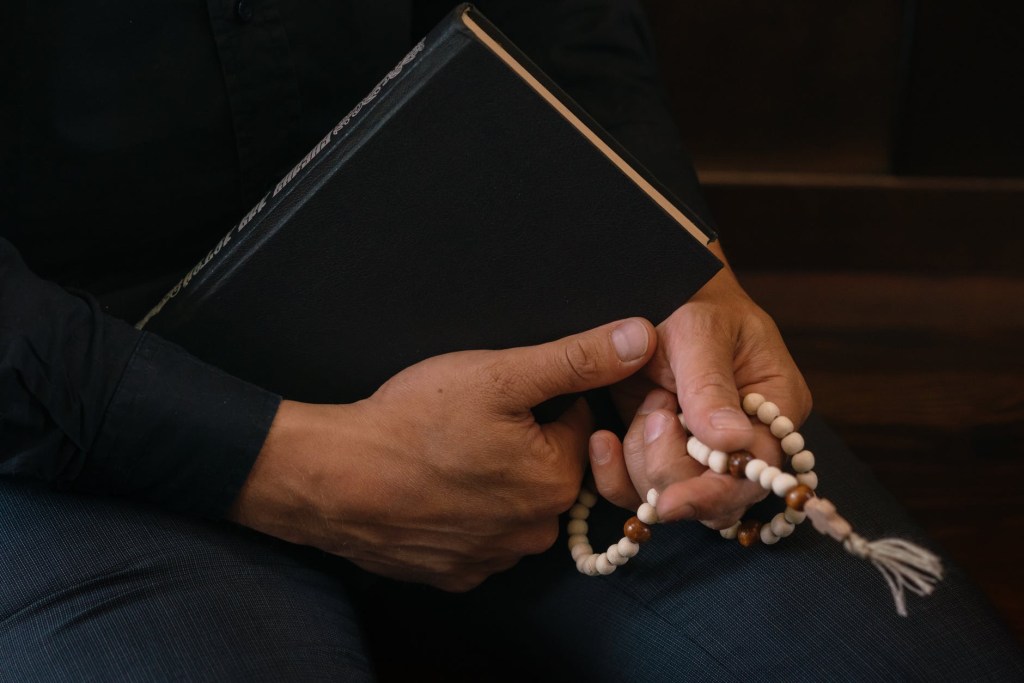
The debate over prayer in school has been one of high contention for decades now, and with the dispute still making headlines it only makes me wonder if any real progress or headway has been made. Or will ever be made.
It was recently announced that the Supreme Court will hear the case of a high school football coach who was fired over holding postgame prayers at the 50-yard line. A federal appeals court ruled that the school board could force said coach from holding these after game prayer circles. This may be an offshoot of the actual “prayer in school” debate, but it is a slippery slope and here is where we are. This is definitely a case to keep an eye on.
It’s important to note in this particular case the fact that the Supreme Court has never outlawed prayer in school, so long as it is done privately, willingly, and in a way that is not forced or disruptive. However, the debate was first heard by the Supreme Court in 1962 in a case called Engel v. Vitale. The ruling handed down determined that prayer in school was a direct violation of the First Amendment to the U.S. Constitution. At the same time, many in favor argued that disallowing or banning prayer in school is a direct violation of religious freedoms also protected by the U.S. Constitution.
An issue I once considered pretty cut-and-dry as a matter of personal opinion is actually one dictated by politics more so than morals and religion. But of course, that’s the way it goes. The principle is lost behind an agenda of “right fighters”, all claiming to have the answer based off whatever they feel they need to say to keep their jobs. I’ve often wondered how serious an issue this really should be considered and feel that maybe it should have remained a little more cut-and-dry.
When I say “cut-and-dry” I merely mean to each their own. If you are against prayer in school, you probably want to have your cake and eat it too; as long as it’s not the white, Christian God then pray away, right? And if you are for prayer in school, you have to consider all religions instead of making it a Christian and non-Christian debate.
The California Board of Education and Department of Education (CDE) just recently settled a lawsuit with parents over a certain Ethnic Studies program that required students to recite certain prayers and chants to Aztec gods. According to the suit, the CDE infringed upon California Constitution’s establishment clauses and state law banning government aid in promoting or teaching any religion in any particular fashion. This is a side of the issue that makes sense to me. If the recitation of these prayers and chants were taught as part of the educational curriculum provided by the state then I would have to side with the parents in the suit: religion should not be imposed upon someone in school per se, especially if it is a requirement and for a grade.
See? A slippery slope, indeed.
My feelings surrounding the matter are slanted, for sure. Although that may sound like I want to have my cake and eat it, too, I assure you that’s not what I mean by “slanted”.
Although a very polarizing, “Conservative vs. Moderate” issue most of the time, each and every circumstance is different and must be analyzed based on its own merit. A football coach getting fired for praying after a game, as long as it not forced upon the players, is an extreme that is less of a slippery slope and more of a nosedive into sheer ignorance. That being said, I honestly feel prayer in school should be done at the individual’s discretion, if at all, and in a way that doesn’t isolate or make other students uncomfortable. School is supposed to serve a singular purpose, and that’s not to divide the aisles any more than they already are by personal religious beliefs. There are already enough divisive issues our children are going to have to face in the school environment. Should we really add another one?
I also feel if you’re going to hang up a picture of Jesus Christ in your school (I attended a school in which this was the case), then it’s only fair to hang one up of Buddha, Mohammed, etc. If we’re going to pray in school, let’s keep it fair.
Prayer in school should not be a forced part of any school’s curriculum. The world and current cultural norms are only becoming more diverse, so for prayer in school to even be part of any discussion all voices must be heard.
It is ironic to me, however, how a majority of the proponents for prayer in school are pretty close-minded in their beliefs and how those beliefs should be carried out. Is this an across-the-board fact? No. And I wouldn’t dare to speak on an issue in such a blanketed, black-and-white way. I will, however, remain steadfast in my belief that the motives for or against prayer in school are skewed and usually exist for the wrong reasons.


 Mirrored Madness: The Monster In Me