“Stress acts as an accelerator: it will push you either forward or backward, but you choose which direction.”
– Chelsea Eriaue
It has been one of “those weeks” to be sure. No, nothing genuinely terrible has occurred. It’s just been one of “those weeks” in the sense that when that phrase is used, all can be sure what is truly meant.
For me, the main thing was a classic case of “biting off more than I could chew”, an ailment that I’m too often afflicted with. I spent several days writing several freelance pieces that I had put off until the last minute, ultimately resulting in an intense, unnecessary level of stress that I’m surprised didn’t end up with me losing my hair.
I work best under pressure, I feel, but this was a little too heavy of a workload on top of everything going on. To purposefully put myself in that type of predicament, on top of kids and real life
Anyway, after finally completing my deadly deadline, I spent two days push mowing three acres of land. What started as a pet project quickly turned into a work overload. The yard had to be mowed, though, and I won’t let anyone else do it. It’s just how I was raised.
There’s not much to this post except to let everyone know I plan to stick to the main schedule I initially intended. When I missed Sunday and Monday, I didn’t want to change days just because of “personal strife”. It’s Thursday now, and I’m providing nothing of substantial value except that. I intend to do better by prioritizing and learning from my most recent lesson.
Whoever said “work smarter, not harder” sure knew what the hell they were talking about.
“What mental health needs is more sunlight, more candor, and more unashamed conversation.”
– Glenn Close
One of the most important things us mentally ill folks can do is practice consistent, and proper self-care. Self-care is an important approach to managing long-term health conditions, especially when it comes to one’s mental and emotional health. Plus, it’s just downright good for you.
But what exactly is self-care? It is something generally described as the process of taking care of oneself, promoting good health and the management of illness.
According to Harbor Light Hospice, self-care promotes a “healthy relationship with yourself to the benefit of your physical, mental, and emotional health”.
Not being able to take care of oneself makes it harder to take care of others. As a husband and a father to three boys, I don’t have the option of not being there for them.
That’s why practicing self-care is such an integral part of self-maintenance and self-preservation. It can improve both one’s overall health and well-being, and can also help manage stress, lower the risk of illness, and increase energy.
Here are some tips from NIMH to help you get started with self-care:
Get regular exercise. Just 30 minutes of walking every day can help boost your mood and improve your health.
Eat healthy, regular meals and stay hydrated. A balanced diet and plenty of water can improve your energy and focus throughout the day. Also, limit caffeinated beverages such as soft drinks or coffee.
Make sleep a priority. Stick to a schedule, and make sure you’re getting enough sleep.
Try a relaxing activity. Explore relaxation or wellness programs or apps, which may incorporate meditation, muscle relaxation, or breathing exercises.
Set goals and priorities. Decide what must get done now and what can wait. Learn to say “no” to new tasks if you start to feel like you’re taking on too much. Try to be mindful.
Practice gratitude. Remind yourself daily of things you are grateful for. Be specific.
Focus on positivity. Identify and challenge your negative and unhelpful thoughts.
Stay connected. Reach out to your friends or family members who can provide emotional support and practical help.
Self-care can even help support one’s treatment and recovery, if true recovery is even possible.
Sometimes, however, even self-care can seem like an impossible task to take on.
Appetite changes that result in unwanted weight changes
Struggling to get out of bed in the morning because of mood
Difficulty concentrating
Loss of interest in things you usually find enjoyable
Inability to perform usual daily functions and responsibilities
More Tips for Practicing Proper Self-Care
Take breaks to unwind through yoga, music, gardening, or new hobbies
Find new ways to safely connect with family and friends, get support, and share feelings
Take care of your body and get moving to lessen fatigue, anxiety, or sadness
Treat yourself to healthy foods and get enough sleep
Self-care has become a more popular, mainstream concept in recent years. According to Google Trends, the number of searches for “self-care” has more than doubled over the last five years.
Marni Amsellem, PhD, a licensed psychologist, describes self-care as “anything that you do for yourself that feels nourishing.”
“It can be something that’s relaxing or calming, or it can be something that is intellectual or spiritual or physical or practical or something you need to get done,” she said.
So, self-care can mean and be something different to everyone.
Turning off the TV instead of watching another episode because the alarm is going off at 5am so you can get to the gym.
Declining the second drink at the office holiday party.
Saying “no” to the thing you don’t want to do even if someone is going to be angry at you.
Maintaining financial independence.
Doing work that matters.
Letting other people take care of themselves.
Bottom line: You have to take care of yourself. And in more than one way. We weren’t built to last. There are enough negative factors surrounding our illnesses as it is, so self-care is the least we can do to try and maintain some semblance of sanity and balance. There’s still going to be bad days, but we just have to try and push through. It’s all we can do.
“Books are the quietest and most constant of friends; they are the most accessible and wisest of counsellors, and the most patient of teachers.”
– Charles W. Eliot
Well, after the week I’ve had I thought I might do something a little more light-hearted. I’ve already discussed the power of music and the artists and albums that shaped a great part of who I am. So, I thought I might talk about some of the books that have also molded me into the person I am today.
I’m pretty eclectic, enjoying Steinbeck as much as Stephen King. I could go on and on about authors and pick them apart, so I’m going to stick with specific books (I’m still trying to conquer Infinite Jest, so…yeah).
The first book that had a profound effect on me was Crime and Punishment by Dostoevsky in the 7th grade. I was, in a way, shunned by the school librarian, almost looked down upon as if I were some sort of creep or sicko (the school only went up to the 8th grade so who could check out that book without facing some sort of scrutiny?). It’s a great book and laid out and told in a unique fashion, of course, but I’m pretty sure it was the being looked at as “weird” or, most likely, feeling out of my depth that affected me the most.
Then I discovered Stephen King, and after reading Pet Sematary I knew Dean Koontz was nothing but a footnote in the world of modern fiction, an author that my father for some reason professed as being one of the best. I respectfully disagree.
When I was 13, Pet Sematary was the first book I bought with my first mowing money (that and Dreamcatcher which was not one of my better decisions). Even as a young kid I was a horror fanatic, but Pet Sematary really scared me. The movie, as well. It’s a hard story not be affected by.
I was then on a Stephen King kick and got lucky in that the next two of his books I read was The Stand and It, both of which are amazing stories as King knows how to develop a slew of memorable characters in a way that their personal development is more entertaining than the plot. My King kick continued, and although there are many duds, I own every single one of them.
When one speaks of Kerouac, On the Road is the first three words you will always hear. And although it is a great book and a perfect introduction to the work that was to come, it was Big Sur, Desolation Angels, and The Dharma Bums (“When you get to the top, just keep climbing!”) that cemented my belief as a writer that “first thought-best thought” was the way to go…that is until I re-read some of my writing and soon realized I was no Kerouac.
Howl by Allen Ginsberg, actually a long-form poem, opened up my eyes just as much as any book. The first time I read the poem, I became instantly aware of a new style of writing that changed the landscape of 20th century poetry and beyond. The raw, yet technical beauty of the words is jaw-dropping. I decided immediately that Frost nor Dickinson had nothing on this guy.
The Razor’s Edge by Somerset Maugham will always be on the list (it was the first book I read “under the influence”). I just love the story, even when I’m sober. I highly recommend it.
I, of course, grew up with the Harry Potter series so sue me, they’re great books, Plus, they got millions of kids who would otherwise not even touch a book excited about reading. And who can deny that power? But it didn’t take long for Tolkien to make his entrance into my life, easily knocking Rowling down a few rungs. It’s a toss-up at times; ask me today and I’ll say Tolkien, ask me tomorrow and who knows what I might say.
But back to Infinite Jest…my first question: is David Foster Wallace crazy? Such a mammoth of a novel, and with 300 pages of footnotes to boot! To answer the question, though, no, he’s not crazy. His brain just worked in amazing ways. If you’re interested in checking out Wallace’s work, I would recommend starting out with A Supposedly Fun Thing I’ll Never Do Again or Consider the Lobster. One day I will finish Infinte Jest, and then I just may retire from reading altogether. Go out with a bang (kidding, kidding)! Ol’ Stephen King said that if you do not have the time to read you will never have the tools to be able to write. Pretty astute, yet common sense, if you think about it.
I could go on, and I know I’m missing many books that I could include, some even in my “Top 10”. But I don’t review books for a living, nor are any of these recommendations. These are books (and different styles of writing) that have shaped me and have a place in my heart, almost like little literary milestones. These aren’t just favorites, they’re the books that triggered growth in me as a person and a writer (no, I’ll never attempt to sit down and rewrite On the Road, but the impact it had on my life is there).
Books, just like music or whatever else it may be, are an escape for me, as they are for many. They are eye-opening in the sense that it’s clear that creativity and dedication really do pay off. You may not write the next Infinite Jest, but dedication and a little magic can go a long way.
MY TOP 5 LIFE CHANGING BOOKS (in no particular order)
East of Eden – Steinbeck
It – King
Big Sur – Kerouac
Madness (memoir) – Hornbacher
Brave New World – Huxley
What are some of the books that have shaped who you are and how you approach your writing?
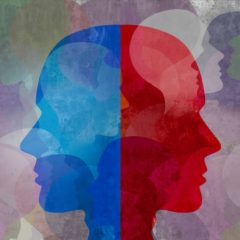



 Mirrored Madness: The Monster In Me