“Resting and relaxing is as important as going out there and making it happen.”
– Hiral Nagda
So, we decided to stay another night just to have a full evening of recovery and relaxation (reading for me) before we make the seven-hour plus drive home. We’ve had a full day of family fun and it seemed like a no-brainer to take a night to unwind before we headed home; no need in going home so worn out that the trip becomes something we want to forget. Also, we all seemed to be excited at the idea of just getting to sit around and read or write or color.
Tomorrow, we return to reality (my wife has to work, and we both have two other children to return to). Not some futuristic definition of reality, just back to our everyday routine. There is nothing wrong with that; reality is, I assume, preferable to the alternative.
This post isn’t going to be too long, so I won’t take much, if any, of your time (assuming you’re even reading this). We’ve all enjoyed this little trip but are also excited about a night of nothing. Even though we’re doing things we can do just as easily at home doesn’t mean we always get to. Life can always get in the way of you being able to finish the last chapter of that book you’ve been reading for two months.
So, I guess my point (other than providing another unnecessary update) is to appreciate the simple things. Real original, right? But seriously, no vacation in the world can make up for the little things that are always right in front of us.
“You’re distracted and stressed because you’re not mindful. But the statement should be in reverse – you’re not mindful because you’re distracted and stressed.”
– Unknown
I’ve never had much luck with using or finding any coping skills that work. To me, they’ve always been akin to bullet points on a piece of paper given out at AA meetings or therapy sessions. They just have never been helpful to me and so I keep my distance.
Though I’ve never found any of the generic “coping skills” to work for me, I have noticed that meditation seems to be on every list.
Just another bullet point: mediation.
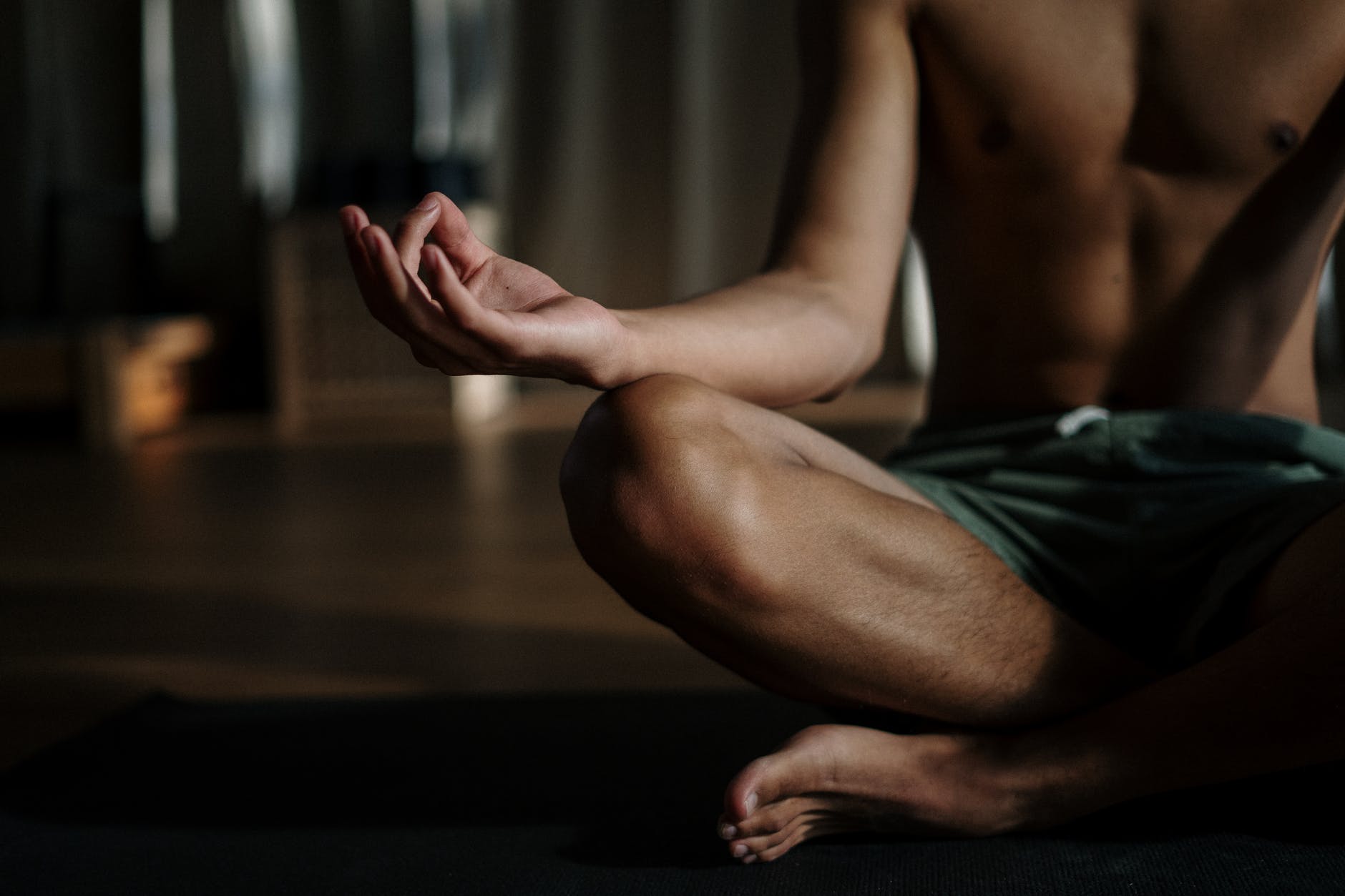
For all intents and purposes, to meditate, according to Oxford Dictionaries, is to “think deeply or focus one’s mind for a period of time, in silence or with the aid of chanting, for religious or spiritual purposes or as a method of relaxation”. Well, I’m here to tell ya that I’m just not hardwired for something like that, although there is a known direct connection between meditation and bipolar disorder.
Meditation is known to provide a sense of calm, peace, and balance. It can also help carry you more calmly through your day and may help you manage symptoms of certain medical conditions.
There are many different kinds of meditation, usually all focusing on areas such as posture, breathing, attention, and relaxation
To me, meditation actually seems…daunting. Like a task or something you really dread but have no choice in doing – except you do. I just don’t know that I have the capacity to slow my brain down enough to even an begin to try to meditate.
However, more than 60% of the top health problems for which people use meditation are stress, anxiety, and depression.
It only takes a little research (and some common sense) to discover and understand the benefits of meditation.
That sounds good and all but, come on. Give me a break.
I must stress to everyone reading this that I am in no way dogging or downplaying meditation as a coping strategy, ideology, or practice if it works for you. I’m not saying it doesn’t work for people. Not at all. It just hasn’t worked for me.
It’s true, though, that meditation isn’t for everyone. There is some research that found that more than a quarter of those who regularly meditate have had a “particularly unpleasant” psychological experience while doing so, including feelings of fear and distorted emotions.
The study found that psychologically unpleasant experiences can occur during meditation. Even some traditional Buddhist texts allude to intense accounts of similar experiences.
A similar study found meditation can sometimes make people more neurotic, depressed, anxious, and can even trigger unresolved trauma.
For those who can’t properly meditate (myself included), there are a variety of reasons why including:
Racing mind
No consistency
Wandering minds
Keep falling asleep
Body aches and pains
Boredom
Having great ideas or thinking of important things
Trouble finding time
Expectations set too high
Hope of immediate results
There are, however, different methods for those who traditional meditation doesn’t work. Experimenting with personal variations, practicing in a different or a group setting, and keeping your mediations short are just a few of these ways.
Maybe I’m jealous to some extent because it sounds like an awesome concept, at least in theory; it may be difficult and frustrating in ways I haven’t even considered. In the end, you have to go with what works for you. You have to go with your gut.
For me, it’s not something I find any relief in but have not given up on. I’d like to be able to meditate; out of all the coping skills I know of meditation is the most appealing and seemingly reasonable to me. Maybe I’m just fascinated by the idea of it. I hope to one day be able to put the idea into practice and benefit from it. The science is there. Now I just got to catch up.
“In America, there are two classes of travel: first-class and with children.”
– Robert Benchley
Just checking in.
We’re on day three of what has turned out to be a nice little vacation. My wife, son, and I are in the hills of Tennessee in a nice little cabin with all the “essentials” needed to survive out here with a 5-year-old boy and yes, that means free Wi-Fi, too (it’s inescapable these days, though I do find it amazing how it’s possible to even have electricity and running water in such an isolated area – let alone free Wi-Fi).
We’ve done very little as far as “touristy” things go, to be honest, but that’s been just fine with me. I come down here enough to know that this is the part of the trip that matters. My son has been fascinated by just us staying in a place that’s not a hotel. I’ve also been able to work and mess around on a few things while here, and my wife has her endless supply of “things to do” with her, too.
So, it truly has been a getaway. 75% of what we’ve done on this trip could’ve very well been done at home, so I’m glad this hasn’t been a vacation with a lot of bells and whistles (my wife hasn’t demanded as near as many as pictures as I would’ve expected). It’s been nice to just have a change of scenery and to be able to live on a slower (though not by much) plane of existence, if only for such a short amount of time.
Yes, we will be leaving and going home tomorrow. The end of a trip, especially a good trip, is always heartbreaking. Rolling back into town can be utterly depressing. But that’s how it goes. In the meantime, I’m going to enjoy the afternoon at the arcade with my wife and son before a nice dinner and night back here at the cabin.
“Just because you don’t understand it doesn’t mean it isn’t so.”
– Lemony Snicket
A newly released study is tying people’s religious uncertainty and lack of faith in the divine to poor mental and psychological well-being.
This study, entitled Attachment to God and Psychological Distress: Evidence of a Curvilinear Relationship, was conducted by Matthew Henderson and Blake Kent. The conclusion came about based on a national survey’s worth of data from the 2010 Baylor Religion Survey.
Henderson, an assistant professor at Union University, spoke out about his perception of the end results of the study.
“A lot of research has been able to demonstrate that religious practices, like prayer and religious service attendance, can have positive effects on mental and physical health,” he said.
According to Henderson and Kent, the study confirms that people with a strong connection to God will have a significantly better psychological well-being.
Kent, an assistant professor at Westmont College, said the amount of literature tying both religion and health together is immense and is only growing.
“Attachment to God has emerged as one of the most significant, powerful influences of mental health and oftentimes more important than actual religious attendance,” he said.
It’s an interesting case to make, but one that makes sense.
Kind of.
Having just the minimal knowledge I have of the study and its findings doesn’t take away from the strength of the research. I don’t think it’s too far out of left field to see a correlation between the two. Having pure blind faith in something may seem silly to some but can offer many a sense of purpose and discipline that may have a very powerful effect on their mental and psychological well-being.
People turn to religion for all sorts of different reasons, but the reason ultimately doesn’t matter and has no negative bearing on a person’s choices. In fact, it has quite the opposite effect. So, it makes sense that having a strong faith in God (ANY God or entity) could impact both one’s spiritual and psychological happiness.
I remember asking my grandma when I was a kid what would happen if she were a “true” Christian and had been praying to the wrong God this whole time. What would happen then? Would she be damned? But her response sort of summed up, in a similar regard at least, this study’s conclusions. She told me that even on the off-chance I was right with my concern that “living by the Lord and his positive message” is still the best way to live one’s life. I thought of her and that specific instance when going through some of the research that went into this study. The positivity that can surround one’s faith and belief systems can be infectious and inspiring. So, to me it makes perfect sense that there may be a scientific connection between one’s faith and mental health.
I, however, would like to point out that I do not believe it has to necessarily be a Christian God. I think any higher power will do. So, knock yourselves out, guys.
The study does have legs and can stand on its own. So much so that two social work professors at Baylor University have received a $843,647 grant from the University of South Alabama to study faculty views regarding training students to address a patient’s spirituality in mental health treatment.
Dr. Holly Oxhandler and Dr. Clay Polson are researching this as part of four sub-projects of the university’s Spiritual and Religious Competencies Project, which aims to provide mental health professionals with the basic abilities to focus on religious and spiritual qualities in their patients’ lives.
“What we see in the research is that when clients’ religion or spirituality is ethically and effectively integrated into mental health treatment – meaning the mental health care provider assessing for this area of their lives and asking them how it relates to their mental health care or circumstances or situations, how they’re leaning on it to cope or maybe ways in which it’s been a source of pain for them in the past,” Oxhandler said.
If an uncertainty in God/Gods or a shakiness in one’s faith can have such a negative impact on one’s psychological well-being, why hasn’t someone made the connection before now? Oxhandler and Polson both feel the role of religion in one’s mental health treatment hasn’t always been addressed due to the lack of research surrounding the topic.
“Without this level of funding, I think even envisioning a project this comprehensive would be challenging,” Polson said. “This makes it possible for us to do such a large project, looking at all the disciplines.”
Both professors say the final goal of the project is to be able to help mental health professionals realize the need to integrate religion and spirituality with mental health treatment.
“We want awareness, but ultimately, the goal is to see more comfort, to see practitioners using their skills and knowledge to do this better,” Polson said.
Being aware of the power of one’s faith and beliefs may have a bigger impact on your health than you could have ever imagined. The results aren’t completely in, but they look good. Mostly. If the effects of the uncertainty of a higher power have proven to be negative and damaging to one’s mental state, it makes perfect sense. Blind faith can lay the bedrock down for a clearer and more constructive personal core. In fact, a strong faith in a higher power may very well be your best bet when trying to maintain a stable and positive psychological well-being.
“The road must eventually lead to the whole world.”
– Jack Kerouac
A week ago today would’ve been Jack Kerouac’s, father of the Beat generation, 100th birthday and I’m surprised I haven’t addressed it yet.
When I was 14 (as cliché as this is going to sound), I read a series of books that either opened up doors for me or that I just liked. And again (as cliché as it sounds), On the Road was one of them. Of course, it was a book that changed the playing field, but for me, it was the introduction to a bigger world. Some of Kerouac’s other books such as Desolation Angels and Tristessa, blew me away just as much, if not more, than On the Road.
However, many of your cultural icons, such as Bob Dylan and Jim Morrison, credit On the Road as being a major influence on them and their work. I credit that book as being a door-opener to a wave of other writers, musicians, etc. More than that, I have to credit the man himself, not only because of the way he wrote but because of the way he lived.
No one ever again will ever truly have those types of experiences, life on the road, getting by just by getting by. No one again will ever have a lifestyle of that type. And not just because of the obvious reasons.
If you don’t know what happened to Kerouac, he ultimately drank himself to death. Another tragic, typical story of an artist who crashed or burned out. There’s no way he would’ve made it to 100. And not just for the obvious reasons.
There’s no way you would’ve made it to 100, Jack. That’s no matter. Happy birthday. Your mark on the world will be felt for eternity,
If this were of any consequence and if I were a person of any significance, this one certain belief/opinion I have regarding a specific matter I hold would most likely be considered controversial or just plain ignorant. No, it’s not political, or derogatory in any other fashion. It’s a simple idea on what some may call a “philosophical” matter, but for me, it’s really a non-issue.
It’s regarding shame and regret, and simply put I do not believe anyone can truly be ashamed of anything. This is usually where the two camps of thought get together and meet to either attack my “negativity” or speak of my stunted and simple intelligence.
Now to clarify, the emotions stemming from what I would call “genuine shame” are very real: the embarrassment, the humiliation, and all the other awkward emotions. Shame tends to take form on outward reactions.
I just don’t believe people can do something they would be ashamed of, not on a primal, base-line level anyway. What I’m trying to say is that I understand why my “belief” is not of the majority and is considered to either be arrogant or ignorant. So, I’ll at least try and explain.
According to verywellmind, shame can be described as “a feeling of embarrassment or humiliation that arises in relation to the perception of having done something dishonorable, immoral, or improper”. Although I agree that those emotions exist within us at certain times, especially after that personal sense of humiliation sets in, I think they are more so interrelated with how we feel about ourselves.
Shame, however, in the minimalist and misinterpreted way it exists, can be used as a tool for both good and bad purposes.
Arlin Cuncic, a therapist and author, writes, “Since we want to be accepted, shame is an evolutionary tool that keeps us all in check.”
I agree with that ideology, but I always go back to the idea of human nature and how something like “shame” fits on Mother Nature’s “emotional food chain”. I just don’t believe people can truly do something they are ashamed of. It’s an under-the-surface issue in which I predict semantics will play a role in the outcome of said debate.
It’s a bold statement to make, I know, but here goes: I’ve never done anything I was ashamed of, and I only say that simply because I believe human nature disallows us from doing something we would be ashamed of. I don’t doubt that the emotions tied to shame exist and are real. I feel shame is like a selfish, personal Band-Aid. Being ashamed is being humiliated after the fact. Would you do that one thing that caused you so much shame again? No. You’d stifle it and hope you have the strength to keep the lion in its cage.
Regret is an “intelligent and/or emotionl dislike for personal past acts and behavior”. One may say, “Well, what’s the difference between the words?”. There is one major difference: Shame is about personal humiliation. Regrets are about guilt. It may not seem like a big difference, but I assure you it is.
Many think the words “shame” and “regret” can be used interchangeably, but that would be incorrect. They both express different meanings. To sum it up, regret is about wrong actions, while shame is about being wrong as a person.
So, although shame and its surrounding emotions do exist, it does only in a certain context. One can feel shame and its sister emotions, but, in my opinion, we can never truly do anything we are ashamed of. It’s human nature on a primal level. Regret is the awareness that you’ve done wrong, and you feel remorse for having done it.
Below is a clear example of the differences:
Regret: I did something bad.
Shame: I am something bad.
Shame is a feeling of humiliation after having done something whereas regret is a feeling of guilt after doing something wrong.
“There is a crack in everything, that’s how the light gets in.”
– Leonard Cohen
As I write this early Tuesday morning, I can in good faith look back and reflect on how good yesterday was. Not that I can sit here all “woe is me” like I never have good days, but yesterday felt like a fresh start.
First off, work is picking back up as the warmer weather is (maybe) finally starting to settle in. I work for both a lawncare and a construction company. Yards will need to be mowed; houses will need to be built or repaired. Things are about to pick up and get busy. It’ll be mornings of rushing to get the kids shipped out to whoever is watching them on that day by 6 am. It’ll be the “get-up-and-go” this household really needs.
On another note, I had my second ketamine treatment last night and the relief was immediate. No, there was no “high” or “buzz”, as I’m often asked. It takes a few minutes to wake up and come to after the infusion, but there is nothing other than that if you’re someone trying to chase the dragon. I just felt all of the stress go away. I’m less tense and uptight, and I can even handle some of my OCD/superstitions that could laughably be debilitating. But that in and of itself is proof there is something to this ketamine regimen.
I am thankful for my family and am slowly starting to realize to not push them away. I’m learning how personally devastating it is to be bitter and to hold onto those little feelings every day. Let it go. I have an amazing wife and three beautiful sons that need me. And they need me to be me, not the person I have been and will still (unfortunately) become at times.
But even after writing that last sentence I still can find some level positivity in the situation, if only by not dwelling on the issue. That is new for me. My usual moody attitude would’ve normally kicked into full gear, and I would’ve ended up dead or in jail.
It’s nice to be able to reflect in a positive sense, not having to worry about getting fixated on a topic that concerns me in no way. That’s an intense state of mind and I’m happy for the relief. At this point in time, I’ll take whatever I can get.
Just remember when you wake up every morning to find or think of a few positive things right off the bat. Easier said than done, right? But it can be done. I’m doing it as I’m typing these words right now. If I didn’t know better, I would think I’m in the beginning stages of a cycle. Fortunately, I am not on any drugs, and I am lucid and have been for some time now. So that’s a nice feeling, too.
Well, it’s early and it’s about time for work (don’t you know there are yards to be mowed and houses to be built?). I just wanted to check in and remind anyone who needed reminding that, even through the madness, there is light. You may have to look a little bit harder some times, but it’s always there.
“Death is as natural as life. It’s part of the deal we made.”
– Mitch Albom
It’s a subject as old as time, and a personal dilemma everyone experiences at some point in their lives: the fear of death and dying.
It would almost be negligent to let on that I’ve never fixated on the thought of dying and, of course, what’s to come after.
I’m not of the belief in a “Christian God” or a “White Jesus”…but on the same token I’m terrified of going to hell. It doesn’t make any sense, I know. But it’s true.
I’m not scared to die, though. I think I’d die for anybody. I would just want it to be quick, painless (who wouldn’t, right?). Don’t get me wrong. I in no way want to die, but you have to accept dying as a part of life or you’ll get too hung up on it, and that can be dangerous.
I get hung up on a specific fear of dying: drowning. I’m outright terrified of water…yet it never stops me from getting in; I’ve been in pools, ponds, lakes, and two oceans. But the entire time I am I’m in a state of anxiety and fear like no other. I hate water. I’d rather burn alive than spend my last moments in that type of fear accompanied with drowning.
The fear of drowning is called aquaphobia. In fact, aquaphobia is the irrational fear of drowning. I would say, partly because of my “condition”, most of my fears are totally irrational. For instance, I have to have the volume on the TV on an even number. I know it’s insane, but it’s a true fear. I honestly believe your shooting dice with the Devil if you have your TV volume on an odd number. I’m as neurotic as they come.
Fears can either teach or they can torture. They say you have to “face your fears” to conquer them. Most people try to avoid them completely so as to not have to even bother with the thought of it. I mean, how can the fear of death and dying be conquered? At best, it can only be accepted.
The fear of the possibility. That is a true fear I suffer from, and it can be debilitating. The anxiety that comes with just the possibility of something bad is phenomenal, except not in a good way.
The fear of death and dying is definitely a rational fear. It’s the fear of the unknown. The fear of what you have to leave behind. It’s rational, I just “handle” it irrationally.
I’ve decided to avoid the time spent on thinking about death by just never dying. I never want to die so that’s the plan. It may be irrational, but whatever gets me through the night, right?
But am I scared of dying? I don’t WANT to die, of course. but it is a part of life. And I have accepted that.
I agree the idea of not dying may not be a good plan, but it’s all I got (If I didn’t laugh all I would do is cry). We’re all going to die. And I’d like to believe we just drift off into the stratosphere, but as a nihilist, I honestly believe that after we die it’s all just black, an eternal void.
If I’m wrong, I just hope that when I die I make it to hell before the Devil knows I’m dead.
If the mind is truly like a muscle, then blogging must be the last leg of a 10-mile race. That might seem like hyperbole, but it’s actually based in some reality.
The health benefits of writing have been known for decades, but only in recent years have the specific impact of blogging been analyzed. For example, research suggests that writing in a more anonymous format, such as blogging, helps one reframe their relationship with their mental health. On the same note, however, blogging can be beneficial in the amount of self-worth it can provide by offering a public element to one’s writing. It seems convenient, but it makes perfect sense.
As bloggers, you already know how empowering writing can be and is. For us, it’s the writing that provides that essential sense of purpose.
There is also research to suggest that this type of “communal communication” has its own benefits, such as lowering anxiety by offering a constructive way to process thoughts.
I started to think about blogging last night and how I have personally been affected by both producing and consuming content. When you’re blogging, you have to give a little bit of yourself away with each post. It’s totally necessary but can still be exhausting. One can get a lot of shade thrown their way just for being open and transparent.
Yes, there are certain downsides to blogging. With social media being such a prevalent part of our collective existence, there will always be haters with their own negativity.
So, like with anything, there are pros and cons to blogging. As writers and creators and truth-tellers, we just have to decide if the good outweighs the bad.
“Bipolar robs you of that which is you. It can take from you the very core of your being and replace it with something that is completely opposite of who you truly are.”
– Alyssa Reyans, Letters from a Bipolar Mother
So, I go in for my second ketamine treatment on Monday, and boy, am I relieved!
I did my first round a few months ago and I could tell an immediate difference. But the farther apart each treatment is the less effective it will be. In fact, it’s recommended to do six rounds in three to six weeks. At $450 a pop, however, that was just not realistic at the time.
WHAT IS KETAMINE?
Ketamine got its start in Belgium in the 1960s as an anesthetic for animals. Ketamine has since been FDA-approved as a safer form of anesthesia for people, as it doesn’t slow down breathing or heart rate.
But most notably, ketamine is getting a lot of attention as a more serious, long-term treatment for depression, PTSD, and bipolar disorder. It causes what doctors call a “dissociative experience”.
John Krystal, MD, chief of psychiatry at Yale-New Haven Hospital and Yale School of Medicine in Connecticut, described what this dissociation may feel like.
“Ketamine can produce feelings of unreality; visual and sensory distortions; a distorted feeling about one’s body; temporary unusual thoughts and beliefs; and a euphoria or a buzz.”
However, the drug’s potential as a treatment for depression and antidote to suicidal ideations has piqued the interest of many researchers. It has been studied and administered to people for decades with mostly positive results.
“We’re reaching out in a new way to patients who have not responded to other kinds of treatments and providing, for some of them, the first time that they’ve gotten better from their depression,” Krystal says.
BRINGING IT BACK HOME
After my first ketamine infusion, I felt an immediate sense of relief and release. It was so nice to not even be able to remember what being depressed felt like. But if you don’t get the full recommended treatment plan up front, the effects of the ketamine ultimately wears off. And you’ll know it when it does.
It’s also recommended that talk therapy should commence as soon as the patient “comes to” after the infusion. Ken Stewart, MD, expressed this same sentiment.
“It’s my sense that this is important,” Stewart says. “When people come out of this really profound experience, they have a lot to say, and these are people who have a lot of baggage and a lot of experiential pain. A lot of times, ketamine leads to an unpacking of that baggage.”
My upcoming ketamine appointment couldn’t have been scheduled at a better time. When in the throes of mania or in a bout of depression, reality can be fragmented and frightening.
Bouncing around between mania and depression isn’t easy, and if the ketamine infusions are proven to help then I’m going to do what I need to do to achieve some semblance of normalcy and relief.
“Try to understand the blackness, lethargy, hopelessness, and loneliness they’re going through. Be there for them when they come through the other side. It’s hard to be a friend to someone who’s depressed, but it is one of the kindest, noblest, and best things you will ever do.”
– Stephen Fry
It’s been one of those days, and if it’s anything like the last half of yesterday then you can count me out.
It’s just one of those days.
I’d rather be down than manic, though. The mania can be dangerous and is exhausting on a whole other level. I in no way benefit from the mania anymore.
It’s strange because March/April is when I usually cycle and experience my mania. So, to be “depressed” or just down is unexpected and, to be honest, seemingly out there in left field.
Even my dreams lately (and I rarely remember my dreams) seem to be a place of ruin where nothing comes together, and sleep becomes a place of complete dissolution. This endless cycle is a prison, and also the only home I’ve ever known.
I have adjusted and adapted to this idea of “normalcy” rather well, but even that is not enough. In the end, it’s all just a matter of timing. Just got to wait for things to catch up.
When depressed, every day winds down to the same thing, the same occurrences, the same happenings, the same void that I go through on repeat. It returns with an almost obligatory vengeance.
My brain beats to a drum, it doesn’t tick to a clock. Still, I’ll remain on this eternal schedule of Hell. And they wonder why I don’t speak of God.
Blame it all on temperament, personality, or a chemical imbalance. In the end, it still falls back on me.













 Mirrored Madness: The Monster In Me