“Though I am often in the depths of misery, there is still calmness, pure harmony and music inside me. I see paintings or drawings in the poorest cottages, in the dirtiest corners. And my mind is driven towards these things with an irresistible momentum.“
– Vincent Van Gogh
I’ve mentioned before in this blog the possible link between creativity and bipolar disorder and the first person who comes to mind when thinking about this theory is Vincent Van Gogh.
Of course, there was no one “official” diagnosis given while Van Gogh was living. However, it is historically accepted the artist suffered from the disorder. In fact, World Bipolar Day is on March 30th because it is Van Gogh’s birthday.
According to The Van Gogh Gallery, his extreme enthusiasm combined with his amazingly excessive output suggested mania was a big fixture in Van Gogh’s life. But these periods of mania were also accompanied or followed by periods of depression.
A 2020 article in the International Journal of Bipolar Disorders lays out the idea of Van Gogh having bipolar disorder based off of alleged rapid mood swings along with periods of both mania and depression. Van Gogh’s brother even said it was as if he was made up of two different personalities, “the one marvellously gifted, sensitive and gentle, and the other self-loving and unfeeling”.
Vincent Van Gogh was born on March 30, 1853 in Holland. The son of a pastor, Van Gogh believed his true calling was to preach. It wasn’t until later he discovered his true passion as an artist.
Perhaps the most infamous moment in both Van Gogh’s personal life is the “ear incident”. In December 1888, the artist cut off one of his ears with a razor during part of a mental breakdown. He gave the severed ear to a cleaner at a local brothel and would spend the majority of the next two years in hospitals and asylums.
From Lilacs to The Starry Night, Van Gogh painted some of his most well-known masterpieces while hospitalized for his nervous temperament. The Starry Night was inspired by a view from one of Van Gogh’s rooms in an asylum. Most of the artist’s finest and well-known paintings were done in the last two years of his life.
Van Gogh’s death is shadowed in some mystery yet still is officially regarded as a suicide. He died on July 29, 1890 — two days after a self-inflicted gunshot wound to the chest. According to his brother, Vincent’s last words were, “The sadness will last forever.”
Van Gogh was not a critical or commercial success in his lifetime, having sold only one painting. He never wavered in his conviction as an artist, however, painting consistently, even in his darkest periods of life.
Even with a reputation of mental instability it was clear Van Gogh had true artistic strengths and creativity. And with a talent beyond measure, Van Gogh is considered to be one of the most influential artists in history.
Despite his mental illness, Van Gogh is credited with helping create the foundation of what we know as modern art.
“Life is like a piano; the white keys represent happiness and the black show sadness. But as you go through life’s journey, remember that the black keys also create music.”
– Ehssan
Although the exact cause of bipolar disorder is still unknown, it is also unclear at times which is more important: finding the root cause of the disorder or determining how to treat the effects and symptoms. One would probably argue the first, but some of this disease’s symptoms and the extremes one can experience can, at times, outweigh the immediate need to know why.
Being a lifelong disorder there are bound to be some effects only noticeable and problematic over time. I have already addressed many of the general statistics relating to bipolar disorder in this blog so I’m not going to be focusing on those here.
Time takes its toll on everything, and the main changes bipolar disorder affects involve the brain. Research shows bipolar disorder damages the brain over time and can affect one’s memory, attention and ability to concentrate, and impulse control.
More research is needed, of course, but it is believed those with bipolar disorder have a higher likelihood of developing dementia later on in life. One study also showed bipolar disorder may cause progressive brain damage due to a lowered level of amino acids occurring over time in the brain.
Another study suggested a long-term effect is the frequency and severity of both manic and depressive episodes. The research showed the more time spent in a depressive state increased the likelihood of staying ill longer. The research showed those who spent more time in a manic state had increased chances of hospitalizations.
Research has also shown bipolar disorder can reduce gray matter in the brain over time. Gray matter helps you process information and thoughts, have better impulse control, and overall better cognitive and motor skill function. The greatest deficits found were in the frontal and temporal lobes, the regions of the brain responsible for cognitive function and thought process.
Interestingly, the results of a 2016 study suggested the blood of bipolar patients is toxic tobrain cells, seriously affecting the connectivity ability of neurons.
Another major reason bipolar disorder can wreak havoc on one’s body isn’t because of the disease itself, but the medication used to fight the symptoms and stave off both manic and depressive episodes. There are a variety of types of medication prescribed for bipolar disorder including:
mood stabilizers
antipsychotics
antidepressants
combination antidepressant-antipsychotics
antianxiety medications
All medications cause side effects of some sort, but those acquired by lifelong use can be different and more serious.
Lithium is the main go-to medication prescribed for bipolar disorder and one I myself take. It is a mood stabilizer and can be extremely effective for those with bipolar disorder yet damaging to the kidneys over time.
Other medications prescribed can have less serious side effects, but still be damaging in various ways over time.
Those with bipolar disorder also have an increased risk for developing the following illnesses:
thyroid disease
migraines
heart disease
chronic pain
diabetes
obesity
It is also important to note that any type of bipolar disorder left untreated is dangerous and detrimental to one’s overall health.
A disease with lifelong effects like bipolar disorder requires lifelong management, usually involving a medication regimen and some sort of therapy. Although no one has all of the answers, those of us with bipolar disorder can still apply what is known to our lives in hopes of managing our illness in the best way we can.
“Anxiety does not empty tomorrow of its sorrows, but only empties today of its strength.”
Charles Spurgeon
It goes without saying those dealing with bipolar disorder have to handle themselves on a day-to-day basis. Second-to-second, at time. Although I wouldn’t have began the day describing it that way, I could sense the resolve of Christmas and the weekend happening at the same time and knew there would surely be some major, stressful shift in my life. Had to be.
Of course, naturally, there was already a shift of some sort happening in everybody’s lives: the Christmas holidays were ending, bring on the new year. But I knew lingering on this type of thinking could be a trigger for me. A trigger for something a little more grandiose.
It usually begins to manifest itself in the form of worrying. Extreme worrying. Worrying and anxiety that I have never been able to accurately describe.
As the day went on though, I sort of just stayed “hidden” from the idea of something happening. It was genuinely like I was playing hide-and-seek with just the notion of something possibly happening. I was handling myself fine, but I still felt like I was barely getting by. It’s the emotional equivalent of having too much toast and not enough butter: less serious than you can imagine but deathly worrisome, and in the worst way.
I was beginning to feel like this was one of those days I should’ve stayed in bed. My silent worrying was turning into silent paranoia, and I wasn’t sure if it was showing or not. I was really just trying to stay hidden, hoping I was protected from this day’s unpredictable bullshit by some sort of cosmic invisibility.
However, that was not the case and I knew it. But I also had no idea of what I was trying to keep at bay. My worrying and anxiety, of course, but more so from where it was coming from. Which was where?
I was trying to keep whatever dread was going on just below the surface, though. And I did. A true shift of the paradigm. I made it through the silent chaos in my brain.
I always do, but that doesn’t mean each time isn’t just as difficult as the last. What exactly did I do anyway? Stress about something that even I knew wasn’t real?
That’s how it goes, though. But the main takeaway was that I caught the trigger before it got pulled. I spent the day worried and anxious over an invisible fear, but I did not let it turn into something more personally destructive.
Sometimes I feel like I’m headed for a hopeless destination. And if life is the journey then why I even be on it? You’re getting nowhere fast. And where you are going is worse than the route you took.
But I conquered the day and was able to get into my bed and hide under the covers, feeling safe and accomplished.
Yet already dreading tomorrow to see what little tricks I could pull on myself if I played my cards just right.
Even so, it’s a day-to-day journey and you can’t skip ahead any. And why would you want to? There’s no point. Stress and anxiety, mania and depression, they don’t have to follow you; they know exactly where you are at all times. But we must push through. It’s all we can do.
Plato once said, “Nothing in the affairs of men is worthy of great anxiety.”
“I grew up in this kind of fishbowl existence and I figured, if people were going to say it about me, then I was going to say it first and I was going to say it better. It’s my way of trying to own a situation.”
– Carrie Fisher
I couldn’t have said it better myself and I won’t sit here and try to pretend I can.
My personal battle with the big, bad bipolar disorder has been a long one. Seventeen years, in fact. I was 15 when I was first diagnosed. I was 17 when I was diagnosed for the second time. But it wasn’t until I was 24 that I first started to seek out treatment. And by then enough damage had been done.
I love the above quote because it was with a similar attitude that I initially approached my openness about my disorder. I didn’t care. Everyone else seemed to know I was bipolar before me and it didn’t appear to be bothering them too much. So why should I care now? Why should I try and change anything now?
I, to my sad misfortune would later learn, was first diagnosed with bipolar disorder as a teenager — a prime time for such a discovery to be made! And then, for some reason, I found myself content just sitting in the soup for the next ten years.
I was “diagnosed” for the first time at 15. My parents and the doctor were not in agreeance, however. So, at 17 my when my parents kicked me out, I was diagnosed again. Two years had passed, though, and I no longer cared how my behavior affected anyone else. Not even myself. It’s not that I was angry or acting out of defiance or anything. I truly didn’t care what people thought about me, which at the time seemed like a good thing.
Looking back now, not so much.
Someone once told me that not caring what people thought about me was one of my best, and worst, qualities. Once I became aware of that, however, it became a game to me. I went out of my way to make people feel uncomfortable when they were around me.
This went on for years with me thinking the feelings and behaviors I was exhibiting was just an inherent part of who I was.
Which, in a way, I guess ended up being somewhat true.
Carrie Fisher said it best, though: own your situation, don’t let it own you.
“I hate when I tell someone I have bipolar and see a look of terror in their eyes.”
– Christine Kirtin
For me, coping skills are, for lack of a better phrase, a bunch of bullshit. I have no concept of any sort of coping skills, especially in the moments I need these supposed skills to cope.
Coping skills have always been, for me, a piece of paper with bullet points on it, handed to me by a doctor or therapist of some sort.
A list.
Take a walk. Journal. Practice your breathing. Count to 100.
It’s aways a list, and one that has never been applicable to bipolar disorder.
For me, anyway.
But there are many triggers that can be identified for bipolar mood swings and the most common ones for are:
Stress from major life events, both positive and negative
Learn the warning signs of a manic episode and get early treatment to avoid disruption in your life.
Take medicines as instructed by your doctor to help reduce the number of manic episodes.
To help prevent a manic episode, avoid triggers such as to caffeine, alcohol or drug use, and stress.
Exercise, eat a balanced diet, get a good night’s sleep, and keep a consistent schedule. This can help reduce minor mood swings that can lead to more severe episodes of mania.
Have an action plan in place so that if you do have a manic episode, those who support you can follow the plan and keep you safe.
And here is a list of general coping skills for people with bipolar disorder:
breathing deeply from the diaphragm
repeating calming words or phrases
visualizing a relaxing experience
reframing a situation logically
listening actively to another person
making an action plan
using humor to defuse a situation
taking time out alone
going for a run or walk to redirect energy
Just another standard list of what should be considered common sense, yet one that I can’t use or doesn’t apply to me when I’m having an episode.
I don’t mean to sound pretentious. Hell, I wish I could find a way to cope or a way to handle things better. It just seems most “coping skills” for bipolar disorder are more for preventative measures and do not include something I can use during an episode.
This isn’t meant to be an educational post and I know everyone and every situation is unique, but after everything, I still haven’t found any coping strategies that work for me.
In finding some forgiveness of loneliness, and with a strange acceptance of suffering, I can now look back on it all with a dim understanding. It happened at a time when creativity existed within me at an exhausting level. There was a maddening frenzy in the way things came out of me, pouring with sympathy, yet offering nothing.
It was a late spring day, like any other. The afternoon sun hung in the sky, low and domineering, and the confused aromas of the season were in full force. Spring, a season with a natural thickness of rebirth in the air that creates its own swelter, is a season I’ve come to both love and hate.
I could sense the onset of the stifling evening, and the heat wasn’t even a factor. There was something else in the air contributing to my restless unease. Little did I know that day would be the end of an innocence I can now only barely remember.
***
We lived on a hill just below the county hospital, with a deep jungle of ditch lines in our backyard. On the other side of the ditch lived another family: a woman named Vanessa, her son, Allen, and her boyfriend Mike. As time passed my family formed some sort of relationship with “our neighbors to the south,” as they jokingly became known. We would have cookouts and pool parties. We’d all even go fishing from time to time. So we became friends. At the very least we were friendly.
Although our families had become rather close, no one noticed the shift in Mike’s behavior in the beginning.
That may have been because there wasn’t much of a difference in his behavior; it was more of a slight, unexplainable change in his attitude. He had always been a naturally happy-go-lucky kind of guy who, out of nowhere it seemed, started acting like a totally different person, like a mean drunk.
When the “change” in Mike did become somewhat noticeable, the people around him chalked it up to being nothing but a man going through a hard time, probably because of his job. Mike was a professional tree trimmer, and in that profession, it seems like you’re either raking it in or getting raked over.
Mike wasn’t just your average tree trimmer, though. This man would tackle a tree, be hundreds of feet in the air, and be anything and everything but scared or nervous. He had these great big spikes that he would attach to the bottom of his boots, allowing him to scale any size of tree with nothing but a few ropes and his chainsaw. I had the chance to see him work a few times and would watch, sometimes in awe and others in fear. I had respect for him for that reason alone; he was one of the bests at what he did, no doubt about that.
Little did anyone know, however, Mike was struggling with more than just a lack of work or with problems at home. Mike, along with my father, was a big drinker, mostly beer but an occasional bottle got passed around. My father and Mike both could become rambunctious, even hard to handle at times, but it was mostly innocent.
There’s that word again.
But then the occasional bottle turned into a steady supply. Still, though, no one was quite sure what caused this change in Mike. And no one asked. I think my family really believed it was troubles at work or home. I didn’t have any real opinion.
All I can say now is that it was much more serious than work troubles.
***
So as the stifling afternoon turned into an even more suffocating evening, I was eating dinner with my parents when the familiar red and blue flashes of police lights became noticeable through our dining room window. Usually none of us would have cared, let alone moved, but my dad jumped up when he realized which house the cops had gone to.
Mike’s.
We all ran outside to try to find out what was going on. But before we could cross the ditch line, I saw a light even brighter than the cops’ lights (there were several squad cars at the house by this time). I got across the ditch and discovered the bright light I was seeing was a spotlight, pointed up and shining into one of the tallest trees in Mike’s yard.
And what I saw next turned my full-on sprint into a disoriented jog. The light the police were using was shining on Mike, who had climbed as high as he could in the tree behind his house and appeared to be wearing a homemade noose around his neck.
At first, I couldn’t be sure if what I was seeing was real. This had all happened so fast. There was just too much going on. Too many people shuffling around and talking. Too many voices coming from first responders, unsure of what to do.
Too many lights.
And Mike…
The sight of Mike in that tree, standing on a branch with a noose around his neck…
I was in shock.
Mike started shouting down from the branch he was standing on. He wanted “everyone to leave and to just be left alone.” He was crying, yet somehow remained stoic as he continued his demands. My dad tried to talk to him, and Mike stopped yelling long enough to listen and say something I’ll never forget.
“Just get out of here. It’s too late.”
Before my dad could respond, a fire truck pulled into the yard. Immediately, Mike threatened to jump if it didn’t leave.
As this scary scene continued to unfold I noticed the big spike boots I had seen him wear before. Wow, I remember thinking, he’s serious. He’s beyond serious.
He was so high in that tree I wasn’t sure if the ladder on the fire truck could even reach him. If it even came to that.
No one seemed to be in any big hurry. I didn’t understand then, but I do now. Any sudden or dramatic actions could, and most likely would have, provoked Mike to jump.
No question about that.
As the fire truck pulled in and parked in the yard as close to the tree as necessary, a “crisis team” from an area counseling center showed up. My backyard had become some sort of neon nightmare with all the lights flashing across the sky, across the night throughout the neighborhood.
I wasn’t sure how this was going to play out by this point and honestly had become beyond fearful. It was an emotion I didn’t recognize at first, but yes, fear was what it was.
This was real.
By this time, of course, there was already a crowd of onlookers outside, steadily growing. I could hear police talking about the “tactics” they were undoubtedly trained for in these “types of situations.”
I may not have been alone in my concern for this man, but it sure was starting to feel like it.
The noise continued but through it all, through all the yelling and commotion, what I could hear most clearly was Mike, crying.
An officer approached my dad and I, apparently noticing the only person Mike would carry some sort of rapport with was my dad. They talked in voices I couldn’t hear, frankly not wanting to. But I didn’t want to leave either, which is what happened next. A desk-type cop barked at me to go back to my house and my dad made sure I did just that.
My dad rushed me across the ditch line and told me to go inside. I wasn’t happy with his demand, but I didn’t argue; this wasn’t the time or place. Before I could comply, though, my dad was gone, across the ditch and back over in Mike’s backyard.
But by the time he got back, it was too late.
By the time he got back Mike’s patience and belligerence had run its course, which were the only things keeping his feet on that tree branch he had climbed up to.
What was keeping his neck inside that homemade noose before he jumped I’m afraid we’ll never know.
But in one last bout of gusto, it was all over. Mike shouted something I couldn’t make out and jumped off of the tree branch.
And I wish there was something more to say.
***
Mike’s body hung in that tree for more than six hours after he killed himself. I’m sure the police and investigators would have some sort of explanation about “proper procedures and protocol.” But it didn’t make much sense to me, not then or now.
I remember as I woke up for school the next day (if I had even slept at all) there were still police in Mike’s backyard. Mike’s body had just been cut and lowered from the tree after dangling all night.
I stood in my backyard as Mike’s sheeted body was being loaded up. Seeing that made me realize I hadn’t yet processed any of this. There had been no tears, no time for tears. Tears were not part of the “proper procedures and protocol,” not for these “types of situations,” anyway.
My dad was outside, too, and came up to me. We looked at each other, the silence between us almost comforting. Exhaustion had become him, and I could tell that he hadn’t had any time for tears either.
I could see the morning sun shining through the trees, perched up in the sky as if being held up by the wood line and nothing else. It was as if the sun was even sad.
My dad wiped a single tear from his left eye and stood up. All of the police and emergency vehicles were gone at this point.
“They left the rope,” my dad said, pointing up to the tree.
And they had. I didn’t see it at first, but they had. Most of the thick, blue rope Mike had used to hang himself with was still up in the tree.
“Can you believe that? They left the rope.”
No time for tears, no time for questions.
We stood there in the backyard in silence for a long time. My dad finally spoke, telling me it was time for him to get ready for work for me to get ready for school.
School? How could I go to school just hours after seeing a man hang himself in my backyard practically?
My apprehension must’ve been on display on my face because my dad began one of his familiar speeches.
When my dad finished, he hugged me and sent me back into the house, and again told me it was time to get ready for school.


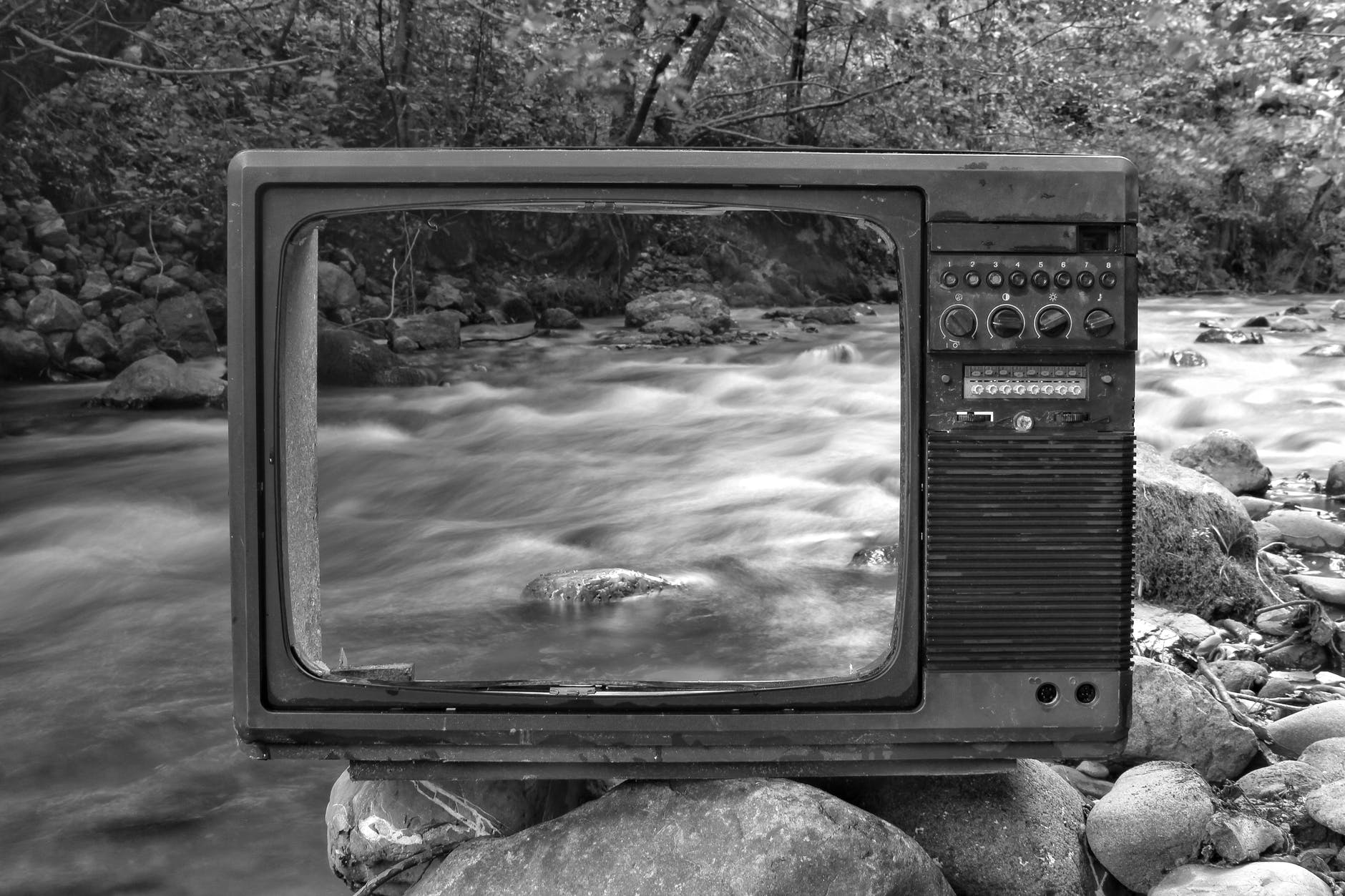




 Mirrored Madness: The Monster In Me