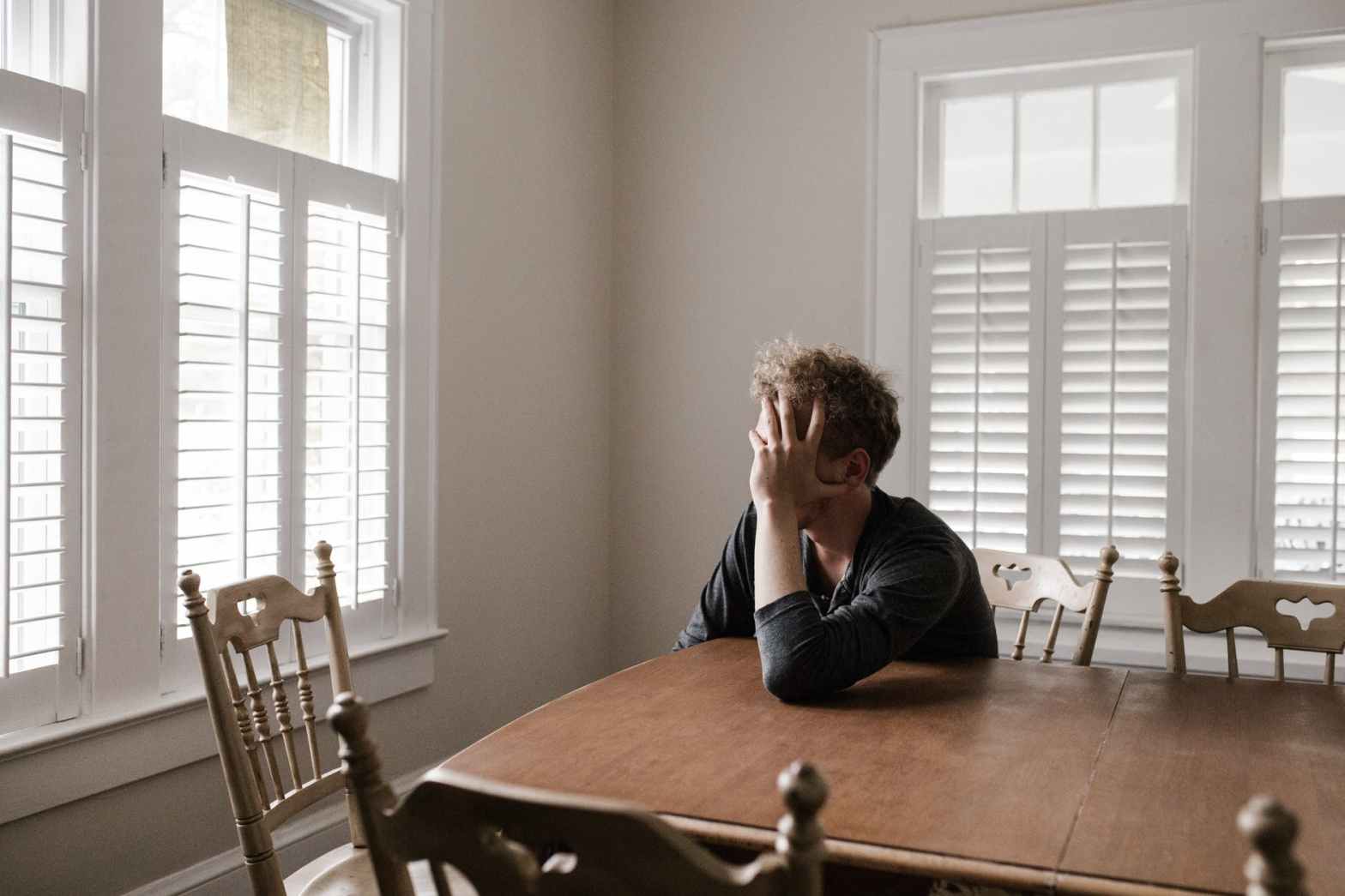
Smells Like Mental Health Awareness Month

“The experience I have had is that once you start talking about experiencing a mental health struggle, you realize that actually you’re part of a quite a big club.”

– Prince Harry

The guitar Kurt Cobain played/used in the video for “Smells Like Teen Spirit” just sold at auction for $4,500,000.00, about $4,000,000.00 more than expected, by Colts owner Jim Isray. That places it as the fourth most expensive piece of “known” music memorabilia ever (Kurt also takes the top spot for his guitar from the MTV Unplugged show, which sold for more than $8,000,000.00 at auction).

When I heard about this auction a month or so ago, I was kind of like “yeah, yeah, yeah, someone needs money”. The guitar had been on display somewhere for quite a while before the announcement, so I thought hey, let’s let it be.

It was expected to sell between $400,00.00 and $600,00.00. It far exceeded that goal, I’d say.

But I just recently found out that the guitar was auctioned in honor of May being Mental Health Awareness Month. Not only that, but a huge portion of the money also goes to an organization ran by the Colts and the Isray family called Kicking The Stigma, which gives away grants to Indiana-based mental health programs.

Isray even spoke on the guitar’s important place.

“This guitar is big, and it relates so much to stigma,” he said. “When you have mental illness, people die. These are fatal diseases — bipolar, schizophrenia, post-partem depression, alcoholic addictions. With fatal diseases, people die, and they don’t choose to die. … Those of us who are alive, we’re not stronger or better. We didn’t get our act together more. We didn’t have more character. That’s where it’s so false.”

Whatever his motives may be, I don’t care. I appreciate the gesture, even if that’s all it is.

I don’t think Kurt Cobain would have been too ecstatic about two of his guitars selling for more than $12,000,000.00. I could understand how that would seem unreasonable or outright insane to a person. But I do think he would definitely approve of some of that exorbitant amount of money spent going to an organization called Kicking the Stigma, an organization with the goal of raising awareness about mental illness.

Happy MHAM!

Smells Like Mental Health Awareness Month

“The experience I have had is that once you start talking about experiencing a mental health struggle, you realize that actually you’re part of a quite a big club.”

– Prince Harry

The guitar Kurt Cobain played/used in the video for “Smells Like Teen Spirit” just sold at auction for $4,500,000.00, about $4,000,000.00 more than expected, by Colts owner Jim Isray. That places it as the fourth most expensive piece of “known” music memorabilia ever (Kurt also takes the top spot for his guitar from the MTV Unplugged show, which sold for more than $8,000,000.00 at auction).

When I heard about this auction a month or so ago, I was kind of like “yeah, yeah, yeah, someone needs money”. The guitar had been on display somewhere for quite a while before the announcement, so I thought hey, let’s let it be.

It was expected to sell between $400,00.00 and $600,00.00. It far exceeded that goal, I’d say.

But I just recently found out that the guitar was auctioned in honor of May being Mental Health Awareness Month. Not only that, but a huge portion of the money also goes to an organization ran by the Colts and the Isray family called Kicking The Stigma, which gives away grants to Indiana-based mental health programs.

Isray even spoke on the guitar’s important place.

“This guitar is big, and it relates so much to stigma,” he said. “When you have mental illness, people die. These are fatal diseases — bipolar, schizophrenia, post-partem depression, alcoholic addictions. With fatal diseases, people die, and they don’t choose to die. … Those of us who are alive, we’re not stronger or better. We didn’t get our act together more. We didn’t have more character. That’s where it’s so false.”

Whatever his motives may be, I don’t care. I appreciate the gesture, even if that’s all it is.

I don’t think Kurt Cobain would have been too ecstatic about two of his guitars selling for more than $12,000,000.00. I could understand how that would seem unreasonable or outright insane to a person. But I do think he would definitely approve of some of that exorbitant amount of money spent going to an organization called Kicking the Stigma, an organization with the goal of raising awareness about mental illness.

Happy MHAM!

A Brief Thought on Dying

“It matters not how a man dies, but how he lives. The act of dying is not of importance, it lasts so short a time.”

– Samuel Johnson

Someone close to me recently brought forth the question of whether or not I was curious about what people will say or think about me after I die. I couldn’t help but laugh a little and try and be anecdotal, but nothing that came to mind sounded right.

When they asked me again if I had ever pondered on the issue, I had to be honest and say “no”. I’m of the inclination that this is it. It’s all black after these lights go out…so I’m still trying to plan how I’m going to sneak in a little bit when I get to the “other side”.

I guess in a way I’m so preoccupied with “what’s next” rather than who is saying what about me after I’m gone. I’m a nihilist through and through, but I still don’t have a good enough grasp on the afterlife to be comfortable going now.

Now, I’ve always known what I’ve wanted on my tombstone if that counts: “The future’s uncertain and the end is always near.” A line from “Roadhouse Blues” by The Doors. If you take away the Morrison myth it’s not a bad quote, one of ultimate summation, I think.

What do you want to be remembered for after you’ve left this earthly plane? What do you want your friends and family to say about you? Do you even care? What’s next after we die?

I’m interested to know your feelings on the topic.

a day in the life: reflections

“The real man smiles in trouble, gathers from distress, and grows brave by reflection.”

– Thomas Paine

I was recently thinking about my past, reminiscing about friendships that seem like mirages of existence at this point. I decided it was best to use this great “hour of remembrance” in a constructive way and think about where I was five years ago.

Five years ago, I was 27, which was my golden birthday. I was wild then, wild and rearing to go be a part of any type of ignorant activity. I suffer from bipolar disorder if you guys didn’t know and even though I knew it at the time, I still used it to be the life of the party. I was still embarrassed (to an extent) about my condition, and it was easier to just be the wild one.

Five years ago, I worked at a television news station. It was a miserable job, and I would recommend it to no one. I was a digital content producer, which was just a fancy title for someone who wrote up police reports and posted them on Facebook. I’m a “journalist”, and CNN wasn’t calling so I needed to get my foot in the door. I worked at a print news station prior as a copy editor and it was just as miserable (I had interned there and was promised a job as a reporter but was just given a different one).

Five years ago, my middle son was barely one. Life for my wife and I was drastically different. We balanced our schedules and were lucky to have the time we did have. My wife was a correctional officer, and everything worked out perfectly. Our little boy is now almost six.

Five years ago, I asked a woman who has changed my life for the better to marry me. She did the following year, thank God, but the time we spent together that year as an engaged couple can never be changed or taken away.

Five years ago, I was blessed. Just as blessed as I am today. I have always tried to adopt a strict “don’t look back” policy, but it’s hard when looking back is sometimes the key to moving forward.

a day in the life: snapshots & hand-me-downs

“The past beats inside me like a second heart.”

– John Banville

I recently had the luxury of finding an old notebook, one that had been used simply for creative purposes. It was about fifteen years old, but you couldn’t tell by its condition. However, the age of the notebook became more than evident after opening it up. To me, anyway.

Upon looking at the chicken scrawl that was my teen handwriting, and the pages and pages of pretentious writing that were also mine…I had a serious cringe moment. I don’t think of myself as a regular Hemingway, but my immaturity was on full display in those pages. It was also real clear that I had no real insight fifteen years ago. Just based on some of the passages I could stomach reading.

“…of the stiff, suspicious statues –

I stumbled along in agonizing anticipation

The voices were hollow and near

hiding in the plaguing darkness

I stopped –

and took in the sky…”

(2007)

There is absolutely no meaning to that. I had no idea what it meant then, and I still don’t. And I won’t try to pretend to spin it now.

The notebook is full of writing that makes me grimace. But its writing shows a side of me, one that I had yet to even define at that point.

It’s only one of many notebooks I could dig out and have the same feeling over (I have even at times thought about getting all the “old stuff” together in a chronological fashion of some sort, but life hasn’t allowed for that to happen). They’re the notebooks that are the basis for anything I am now.

They include song lyrics:

A worried man’s got his worried mind

And sees with two eyes that have gone blind

I been standing in the back just trying to get her name

When you’re that hard-up for a little fix

You ain’t clean, just a sober addict

You’re a million miles away, and everything’s changed

And poetry:

“I bought a brand-new mirror

and I hung it on the wall

I knelt before it every night

And prayed it wouldn’t fall…”

And then I stumbled upon this last little piece. It’s a poem that, at even twelve years old, I have found some merit in.

The Day I Left

the day I left,

in shackles and hand-me-downs,

the hardest thing –

that once remembered dream of

Passion,

I left the beach

I left, strangled and oblivious,

the curtain of hope decaying,

a penned elegy in my place

she was a sad-eyed mystery,

who was whatever I wanted,

sacred remnant

(left the beach for this?)

Instead of diamonds for sand and the sun for a father,

we have this –

Bombs for beachballs, tanks for cruise ships,

war for fun-in-the-sun

I see it all thru concave,

                  visions of mass deception,          

a summertime loss

this wavy clarity takes away

my security

the truth and enlightenment we need is found

in nuclear warfare,

and in our God,

bomb

Blessed,

I left in sleep

Cursed,

I left her

I push this way,

you pull the other

The day I left.

I found salvation

But not the kind I hoped to find

I found loneliness

I was blessed

on the day that I left

I guess if I had a point in today’s ramblings it would be to be careful what you hold onto and what you throw away. It may be old and it may be immature, but it also might contain the plotline for the next great American novel.

Sleep, or the Lack Thereof

“I love sleep. My life has the tendency to fall apart when I’m awake, you know?”

– Ernest Hemingway

Sleep is perhaps one of the most important fundamentals in a person’s life. The Sleep Foundation describes sleep as an “essential function”, one that allows “your body and mind to recharge, leaving you refreshed and alert when you wake up.”

It’s extremely important that most adults get seven to nine hours of sleep a night. A lack of sleep is linked to a higher risk for obesity, type 2 diabetes, high blood pressure, heart disease, stroke, early death, and poor mental health.

According to the Mental Health Foundation, there are a variety of reasons you may not be getting the sleep you need, including:

  • Stress or worry
  • A change in the noise level or temperature of your bedroom
  • A different routine
  • Too much caffeine or alcohol
  • Shift work
  • Physical or mental health problems
  • Side effects of certain medications

There are several types of sleep disorders, but the most prevalent is insomnia. According to the American Academy of Sleep Medicine, insomnia is defined as the “difficulty either falling or staying asleep that is accompanied by daytime impairments related to those sleep troubles.” Research from the Mayo Clinic suggests 30% of all adults will experience short-term insomnia and 10% of adults will experience long-term insomnia.

Insomnia symptoms may include:

  • Difficulty falling asleep at night
  • Waking up during falling asleep at night’s sleep
  • Waking up too early
  • Not feeling well-rested after a night’s sleep
  • Daytime tiredness or sleepiness
  • Irritability, depression or anxiety
  • Difficulty paying attention, focusing on tasks or remembering
  • Increased errors or accidents
  • Ongoing worries about sleep

Insomnia is not uncommon. In fact, it’s the most common sleep disorder, and one that can be very dangerous.

That’s never stopped me, though. Of course, I shouldn’t be proud of that, and I’m not. But I do suffer from serious insomnia.

I suffer from chronic insomnia (which recently has come in handy with the birth of my youngest son). Being bipolar doesn’t help the matter any. When manic, I’ve stayed up for days without “needing” to rest. That’s not an everyday occurrence, thankfully, but it’s happened enough for me to be used to it.

To the lucky 75% of those who recover from their insomnia, I applaud you and wonder, “what’s your secret?”

I’ve been on all the meds: Ambien. Sonata. Belsomra. Trazadone. Restoril. Lunesta. I’ve stuck with Lunesta because it works some of the time. It’s hit or miss, which at this point is all I can hope for.

Insomnia is usually caused by bad sleep habits, depression, anxiety, and chronic illness. It can even be caused by certain medications.

According to the Mayo Clinic, there are ways to fight insomnia, including:

  • Stick to a schedule: Keep your bedtime and wake time consistent from day to day, including on weekends.
  • Stay active: Regular activity helps promote a good night’s sleep. Schedule exercise at least a few hours before bedtime and avoid stimulating activities before bedtime.
  • Check your medications: If you take medications regularly, check with your doctor to see if they may be contributing to your insomnia. Also check the labels of OTC products to see if they contain caffeine or other stimulants, such as pseudoephedrine.
  • Avoid or limit naps: Naps can make it harder to fall asleep at night. If you can’t get by without one, try to limit a nap to no more than 30 minutes and don’t nap after 3 p.m.
  • Avoid or limit caffeine and alcohol/Don’t use nicotine: All of these can make it harder to sleep, and effects can last for several hours.
  • Don’t put up with pain: If a painful condition bothers you, talk to your doctor about options for pain relievers that are effective enough to control pain while you’re sleeping.
  • Avoid large meals and beverages before bed: A light snack is fine and may help avoid heartburn. Drink less liquid before bedtime so that you won’t have to urinate as often.

Suffering from a mental illness can make falling asleep no easy task. It is usually easier said than done for me since other factors play a role. I’ve always had trouble sleeping. I struggle with falling asleep, not staying asleep. If I can get there, I’m there. It’s the getting to sleep that so often eludes me.

No matter, insomnia and other sleep disorders can be extremely damaging, especially to those with a mental health disorder. Mental health disorders tend to make it harder to sleep well, in general.

Disorders Affected by Lack of Sleep:

  • Depression
  • Seasonal Affective Disorder
  • Anxiety Disorders
  • Bipolar Disorder
  • Schizophrenia
  • ADHD
  • Autism Spectrum Disorder

There is research to suggest that “brain activity during sleep has profound effects on emotional and mental health.” A 2021 study also suggests that issues with insomnia are “associated with significantly increased odds of frequent mental distress.”

Overall, sleep helps maintain cognitive abilities, including learning, memory, and emotional regulation. This is especially important to note to those who suffer from any kind of mental illness or psychiatric condition.

So, I guess that poet was wrong: Sleep isn’t just for dreamers.

The Father, the Son, & the Easter Bunny

I used to believe in Santa Claus, the Easter Bunny, and Tom Cruise, too”

– Barbara Bretton

It’s Easter, and that’ll be the theme of the day. Whether it be the Resurrection of Jesus or the story of Peter Cottontail, Easter, in some form or another, will be on the forefront of most people’s day.

I won’t pretend to know much about Easter, especially on how an egg-laying bunny got involved in the whole mess. I’m sure there’s a reason, but I had never truly sought out any real answer before now. Some things are just better left to mystery.

But, hey, if you can incorporate an egg-laying bunny into the same celebrations surrounding the Resurrection of Jesus Christ and still have something meaningful in the end, then I want to know more (I mean to offend no one, but I can only go so far.).

Below are just a few facts about Easter:

  • Easter is the celebration of the Resurrection of Jesus Christ in the Christian religion.
  • Eggs have been seen as ancient symbol of fertility, while springtime is considered to bring new life and rebirth.
  • Americans spend $1.9 billion on Easter candy. That’s the second biggest candy holiday after Halloween.
  • 70% of Easter candy purchased is chocolate.
  • 76% of Americans think the ears of a chocolate bunny should be the first to be eaten.
  • Egg dyes were once made from natural items such as onion peels, tree bark, flower petals, and juices.
  • There’s much debate about the practice of dyeing chicks. Many hatcheries no longer participate, but others say that it isn’t dangerous to the chick’s health because the dye only lasts until the chicks shed their fluff and grow their feathers.
  • The first story of a rabbit (later named the “Easter Bunny”) hiding eggs in a garden was published in 1680.
  • Easter takes place on a Sunday, after the 40-day period called Lent. Lent is referred to as a time of fasting, but participants focus more on giving up one significant indulgence.
  • Holy Week is the celebrated during the week leading up to Easter. It begins on Palm Sunday, continues to Maundy Thursday, Good Friday, and then finally, Easter Sunday.
  • “The White House Easter Egg Roll” event has been celebrated by the President of the United States and their families since 1878.

I wasn’t surprised to see some of the above as facts, but more shocked on the predominancy of chocolate over Jesus. Upon performing simple “research”, the facts on the “Easter Bunny” part of the holiday seemed to be more significantly covered than that of the Christian aspects.

Like I said, I don’t know much about the holiday, but am still curious about Peter Cottontail and where he fits into all of this. I still don’t understand the connections completely.

Hell, I don’t understand at all.

According to one Christian source, though, “In the end, the Easter bunny has nothing to do with Jesus directly. There is nothing in the Bible or Christian tradition that links the two together.”

I’ll just have to accept that, or else go crazy.

I do like the concept of resurrection, though. A rebirth, and not one simply applicable to Jesus Christ. Maybe it’s the writer/reader in me, but the concept of resurrection can be a crucial element to any story, biblical or not. Crucial or convenient. Either way, it’s a word worth its weight.

Everyone has had their own moments of personal doubt. In turn, people seek out personal growth on that elusive life-changing level known as “resurrection”.

I’ve never been so lucky as to have had a real personal rebirth, but if Jesus can do it, so can I.

The Perks (or So I’m Told) of Bipolar Disorder

“In the terms of ‘Mental Illness’ isn’t stable a place they put horses that wish to run free?”

– Stanley Victor Paskavich

If you follow my blog regularly, don’t worry if I’ve strayed from my personal journey of positive thinking. I haven’t. But I am wondering if someone’s playing a joke on me. I’m behind the computer as we speak, waiting for someone to jump and shout, “GOTCHA!” Just know I went in with the idea for this post relieved and even a little bit excited. By the time I was done, though, I couldn’t tell if I was baffled, underwhelmed, or downright appalled.

It may seem ignorant (or arrogant, depending on which way you look at it) to suggest that there is any kind of upside to the bipolar condition. I would not be able to see past the question before giving an answer that was less than friendly. Understanding that now does do a lot of good but makes up for very little.

That said, I’ve always had my personal beliefs about any connections between bipolar disorder and intelligence, creativity, etc. They were in no way unbiased, universal, or set in stone. It turns out, though, there is research to suggest that being bipolar doesn’t always have to be all bad.

Many people think genetics is the only factor that plays a role in this disorder’s existence. One study on the matter suggests that “despite the clear contribution of genetics to the etiology of bipolar disorder, little of the genetic architecture is currently understood.”

That same study also found five positive psychological traits dominant in those with bipolar disorder:

· Spirituality

· Empathy

· Creativity

· Realism

· Resilience

These traits “are generally viewed as valuable and beneficial morally or socially.”

I can only speak for myself, but I wouldn’t have guessed those to be the traits amplified in a positive light by bipolar disorder.

One of the psychiatrists who worked on the study, Nassir Ghaemi, is turning some heads with some of his research.

Ghaemi, psychiatrist and author of A First-Rate Madness: Uncovering the Links between Leadership and Mental Illness, has evidence supporting the study’s contentious findings.

“Depression enhances empathy and realism, and the mania enhances creativity and resilience … so when people have bipolar disorder, they have the full gamut of benefits.”

According to Ghaemi, those with bipolar disorder “are better equipped for times of crisis.”

This is playing semantics as far as I’m concerned. I personally don’t find it offensive but would understand why someone else suffering from bipolar disorder might. The word “crisis” is applicable in many different ways and on many different levels. To suggest that someone with bipolar disorder has the “full gamut of benefits” is offensive in general and, even more so, inaccurate.

The idea of resilience being a positive trait of this illness kind of makes sense to me, but the cynic in me can see how that might be offensive to others, as well. It may also be the cynic in me and not the bipolar disorder that makes me think, “Resilience? At what cost?”

Ghaemi said he believes exposure to adversity can provide a kind of “mental vaccine” against future adversity, in turn creating a kind of organic resilience.

“People with bipolar disorder … have traumatic manic or depressed episodes, and then it goes away. They actually recover from these episodes,” he said.

This is a misleading, reckless statement. I’m walking proof that that isn’t a rational assumption. I can only speak for myself, but even when I “come out” of a depressive or manic state I am always reminded that I only have a certain number of tools to work with – and they’re never enough. And they never will be. That’s part of the disorder: When you go into remission, you think you’ll be ready for next time. And then next time comes and you realize too late you were far from ready.

I can’t speak to the sense of spirituality that inflates by the madness; I myself am not a spiritual person so I can’t speak to the idea’s logic or lack thereof. The idea is that someone with bipolar disorder may “rely” on spirituality to help them through. Although this makes sense to me, I still cannot relate.

David Miklowitz, director of the Child and Adolescent Mood Disorders Program at UCLA’s Semel Institute, believes traits such as spirituality, in fact, are worth developing as safeguards.

He says, “for people with bipolar disorder to think about their personal goals for recovery—not taking medication and only taking medication, but are there other things that could be helpful to their long-term quality of life?”

This is true, but we must not lose sight of where, and in what order, our priorities need lie. “Recovery” in the land of mental illness and make-believe doesn’t mean “recovery” in the standard, typical sense here on dry land. For me, recovery is like the pot of gold at the end of the rainbow: the idea is fun, but that’s about it. If you’re going to worry about being resilient or creative, you better have the “basic” stuff (like a medication regimen and therapy) MORE than down pat beforehand. Remember, this is war.

But, Miklowitz does note the danger in romanticizing the “mad genius” concept.

“…where we get into trouble … is when it’s implied that bipolar people are more creative than other people and then the logical leap that people make is, ‘Well, if I go off my medications, then I’ll be really creative.’ And that’s when disasters tend to occur.”

It seems like Miklowitz wants to have his cake and eat it, too. He seems to be nailing down the importance of maintaining a healthy lifestyle while at the same time entertaining a hypothesis that, from where I’m sitting, seems a little too unrealistic.

So, what about depression? Does one’s close nature with suffering allow them to tap into a secret vault of empathy? Well, according to the study, kind of.

“I…think that people with bipolar disorder have a unique way of perceiving the world,” Roumen Miley, psychiatrist and clinical director of the Providence Care Mood Disorder Research and Treatment Service, said. “They have increased sensitivity. When people are depressed, they experience the world in a different way. They become more sensitive to the world and to the pain in the world.”

This ideology does make me wonder if I’m a bipolar anomaly in that I disagree. Sure, I see the world through a lens that only I can. And someone with breast cancer sees the world through a lens only they can. It makes me feel like a spectacle. I don’t want to be interesting or knowledgeable in that regard. I don’t want to be “fun” to be around if what I’ve gone through continues to be the price. I’m flattered, but no thanks.

There has been a known correlation between creativity/intelligence and bipolar disorder for decades now, but no one can point to the reason why. It’s been common knowledge for some time that there is an extreme genetic component to the illness, but no one knows anything about which gene that is and why.

I’m not in complete disagreement with some of the conclusions these researchers came to, but I question the unusual directions they followed to reach said destinations.

I’m not offended to a point of irrational defiance, and granted, I know very little about the professional backgrounds of the researchers involved…but their intentions weren’t entirely in the right place.

On another note, the study also puts out the idea that having a “positive cognitive bias” shows people without a mental illness often misjudge both their own capabilities and control. They also tend to interpret events with too much of a positive attitude. So, are people without bipolar disorder different than “us” because they’re too positive and lack a certain kind of control?

The study aside, even the title of Dr. Ghaemi’s book, A First-Rate Madness: Uncovering the Links between Leadership and Mental Illness, makes me wonder about some of the connections made. I’m sure the research is there, but it sounds silly taken at face-value.

A catalyst for Ghaemi’s research, Tom Wootton founded what’s called the Bipolar Advantage in 2003. Its mission is to “focus on learning how to thrive DURING manic and depressive episodes. Those who achieve remission end up in crisis the next time it happens. Those who learn to thrive never have to worry about their next episode again.” I never knew a mission statement could be so irresponsible and potentially dangerous. But, hey, for the right price you can learn to harness delusional mania or that earth-shattering depression to your advantage.

Do I believe that’s possible to a certain extent? Yes, but only to an extent.

It’s the language that scares me. Not everyone’s brain chemistry is going to change by taking some overpriced web seminar.

This illness is like walking through fire. You become stripped down to your most raw, bare form and then you feel. You’ll feel feelings that you could’ve gone your whole life without. Feeling them in a way you know no one else can relate to or tolerate. I’m not special. I already deal with the disorder so don’t belittle me by trying to fit me inside one of your boxes because I’ll get out.

To quote the study, “By gaining a better appreciation for the positive aspects of mental illness and exploring methods to enhance these traits, we may improve clinical outcomes.”

Maybe they’re right. Through all the research maybe they’ve found the way in and cracked the code. But just because we can’t start the book on page one doesn’t mean we have to rewrite the first three chapters. I understand there is no linear approach when researching and treating bipolar disorder, but the conditions in which these conclusions were drawn are unusual and self-serving.

Like I said at the beginning, I approached doing this post with a proud enthusiasm; I was ready to be able to have something of tangible, evidentiary value that there was an upside to my downside. And there is, of course. I’m just not sure Dr. Ghaemi or any other researcher here pointed it out.

“In the storm of crisis, complete sanity can steer us astray, while some insanity brings us to port,” he said.

Needless to say, I won’t ever be getting on a boat with Dr. Ghaemi, proverbial or otherwise.