Caesar Meet Brutus

“If I can’t be my own, I’d feel better dead”

– Alice In Chains, Nutshell

I think I’m losing my mind.

The week started out grand – with my computer crashing at just two months old, my car battery completely crapping out (along with a broken terminal), and a missed freelance deadline.

Hours on the phone with HP and three business days later finally led to my computer resolution. For only having my writing saved on it I question what makes a brand-new laptop crash. I’m not extremely tech savvy, but my suspicions have been raised.

It’s kind of funny how a day can start off one way and then end in a totally different one, isn’t it? It’s our lives. We go through so many changes and come upon so many crossroads that it’s amazing we even have the ability or time to think at all. It’s the sort of thing I happen to be all too familiar with yet really would rather not be. To know the ins and outs of human emotion to this extent isn’t always the greatest of gifts. I’d trade it to be sad any day.

But we still get up every day, doing the same thing over and over. And then we go off, telling ourselves and others whatever lies we must in order not to go completely insane.

It’s a vicious cycle we’re born into. We may not necessarily be born insane; in fact, I feel we’re all born with the pretense to run from insanity. This may be our best natural asset, even when we are having to make up things to run from.

And strangely it somehow works out, albeit usually messily in the end.

I think my favorite part of who I am is attacking itself. My brain is no longer my best friend, and my mind never was. My brain is a traitor. I’m losing track of myself and someone on the inside seems to be enjoying it.

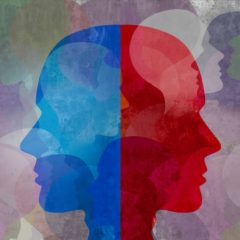
Caesar meet Brutus.

That’s just cryptic immaturity on display, but not completely inaccurate.

The mowing season is in full swing and has been keeping me busy, taking away quite a bit of time from my writing. Which is why I haven’t been here in a few days (along with my many other reasons, of course). It’s hard to prioritize which “projects” to be working on when your time is limited, and I’m trying to be as ambitious as possible without completely losing my head (haha).

But it seems to be to no avail. I’m blinded to the days of the week anymore. I am consciously keeping myself in check because I can’t keep up. It’s Saturday night, but it feels like it’s Tuesday. I don’t know why. This will somehow be my fault, though.

I’m remembering things in fragments and snapshots. Some days I am blessed with the gift of being able to string real thoughts together, other days not so much. Lately, all of my writing has become diaries of fog. I get stranded in the cliché “sea of words”, and if it doesn’t come out sounding like rambling gibberish, it comes out very corny, full of phrases like “sea of words”.

I have written some poetry I’m semi-proud of lately, though. I hate writing poetry, but feel it is a necessary evil. Sometimes the spirit just takes over and I abandon prose for a moment, getting lost in what is more than likely pretentious and semi-fraudulent. There is good poetry, however. I just do not recognize it in my own writing.

I still play my guitar every day, which is a mental exercise built perfectly to my advantage. I only play acoustic guitar anymore and haven’t picked up my bass in longer than I’d like to admit. I don’t know if “music equals life” like the t-shirts say, but without it I’m not sure where my life would be.

I’ve never had my shit together. I’ve just been able to use my illusion to get by. Now, all of that seems to be catching up to me. I don’t have the ability anymore to fake it or pull one over on people by faking it. If this is a dance, I no longer remember the steps and have never been one for dancing anyway.

I seem to be finding more and more ways I am “restrained” in life but continue keeping up the good fight of not staying in any boxes created by the “powers that be”. I am proud of myself for that. Most people who know me say I have no filter, which at times can be true, dangerous, and cruel. However, I am not afraid to stand on my own two legs and say what’s on my mind. It’s been called both my best and worst quality.

I’m going to have to wrap this up because I can see the fog coming in. It’s getting late, anyway. Although I mainly complained, I am proud to have put together a group of cohesive words from a train of broken thoughts. I made it this far and, surprisingly, even I know when to quit.


A Brief Thought on Dying

“It matters not how a man dies, but how he lives. The act of dying is not of importance, it lasts so short a time.”

– Samuel Johnson

Someone close to me recently brought forth the question of whether or not I was curious about what people will say or think about me after I die. I couldn’t help but laugh a little and try and be anecdotal, but nothing that came to mind sounded right.

When they asked me again if I had ever pondered on the issue, I had to be honest and say “no”. I’m of the inclination that this is it. It’s all black after these lights go out…so I’m still trying to plan how I’m going to sneak in a little bit when I get to the “other side”.

I guess in a way I’m so preoccupied with “what’s next” rather than who is saying what about me after I’m gone. I’m a nihilist through and through, but I still don’t have a good enough grasp on the afterlife to be comfortable going now.

Now, I’ve always known what I’ve wanted on my tombstone if that counts: “The future’s uncertain and the end is always near.” A line from “Roadhouse Blues” by The Doors. If you take away the Morrison myth it’s not a bad quote, one of ultimate summation, I think.

What do you want to be remembered for after you’ve left this earthly plane? What do you want your friends and family to say about you? Do you even care? What’s next after we die?

I’m interested to know your feelings on the topic.

My Personal Top 10 Tips for Those Who Are Mentally Ill

“To be ill adjusted to a deranged world is not a breakdown.”

– Jeanette Winterson

There are always goin

  • Accept it: It’s all you can do. It’s a process, but it’s necessary.
  • Acknowledge that you are not your illness: This is most important.
  • Don’t be afraid of the med game: Hey, if it helps…
  • Avoid “You might be…” or “Things to avoid…” lists or articles: We’re all different
  • Stay active/healthy diet: Staying healthy is key to having any control over your overall psychological well-being.
  • Practice self-care: This, especially along with a healthy diet, can help one have a basic level of control.
  • Develop a routine: This can be difficult as real life can get in the way, but can be a game-changer.
  • Stay in contact: With friends, with family, with everyone.
  • Pause for the cause: It’s okay to be selfish sometimes.
  • Google doesn’t have a medical degree: Education is key when it comes to your mental illness but search with caution and insight.

Below are additional tips to boost your mental health:

  • Track gratitude and achievement with a journal. Include 3 things you were grateful for and 3 things you were able to accomplish each day.
  • Start your day with a cup of co­ffee. Coff­ee consumption is linked to lower rates of depression. If you can’t drink coff­ee because of the caff­eine, try another good-for-you drink like green tea. 
  • Set up a getaway. It could be camping with friends or a trip to the tropics. The act of planning a vacation and having something to look forward to can boost your overall happiness for up to 8 weeks!
  • 4, Work your strengths. Do something you’re good at to build self-confidence, then tackle a tougher task. 
  • Keep it cool for a good night’s sleep. The optimal temperature for sleep is between 60 and 67 degrees Fahrenheit.
  • “You don’t have to see the whole staircase, just take the first step.” – Martin Luther King, Jr. Think of something in your life you want to improve, and figure out what you can do to take a step in the right direction.
  • Experiment with a new recipe, write a poem, paint or try a Pinterest project. Creative expression and overall well-being are linked.
  • Show some love to someone in your life. Close, quality, relationships are key for a happy, healthy life.
  • Boost brainpower by treating yourself to a couple pieces of dark chocolate every few days. The flavanoids, caffeine, and theobromine in chocolate are thought to work together to improve alertness and mental skills.
  • There is no greater agony than bearing an untold story inside of you.  -Maya Angelou. If you have personal experience with mental illness or recovery, share on Twitter, Instagram and Tumblr with #mentalillnessfeelslike. Check out what other people are saying here.
  • Sometimes, we don’t need to add new activities to get more pleasure. We just need to soak up the joy in the ones we’ve already got. Trying to be optimistic doesn’t mean ignoring the uglier sides of life. It just means focusing on the positive as much as possible.
  • Feeling anxious?  Take a trip down memory lane and do some coloring for about 20 minutes to help you clear your mind. Pick a design that’s geometric and a little complicated for the best effect. Check out hundreds of free printable coloring pages here.
  • Take time to laugh. Hang out with a funny friend, watch a comedy or check out cute videos online. Laughter helps reduce anxiety.
  • Go off the grid. Leave your smart phone at home for a day and disconnect from constant emails, alerts, and other interruptions. Spend time doing something fun with someone face-to-face.
  • Dance around while you do your housework. Not only will you get chores done, but dancing reduces levels of cortisol (the stress hormone), and increases endorphins (the body’s “feel-good” chemicals).
  • Go ahead and yawn. Studies suggest that yawning helps cool the brain and improves alertness and mental efficiency.
  • Relax in a warm bath once a week. Try adding Epsom salts to soothe aches and pains and help boost magnesium levels, which can be depleted by stress.
  • Has something been bothering you? Let it all out…on paper. Writing about upsetting experiences can reduce symptoms of depression.
  • Spend some time with a furry friend. Time with animals lowers the stress hormone – cortisol, and boosts oxytocin – which stimulates feelings of happiness. If you don’t have a pet, hang out with a friend who does or volunteer at a shelter.
  • “What lies before us and what lies behind us are small matters compared to what lies within us. And when you bring what is within out into the world, miracles happen.” – Henry David Thoreau. Practice mindfulness by staying “in the present.”  Try these tips
  • Be a tourist in your own town. Often times people only explore attractions on trips, but you may be surprised what cool things are in your own backyard.
  • Try prepping your lunches or picking out your clothes for the work week. You’ll save some time in the mornings and have a sense of control about the week ahead.
  • Work some omega-3 fatty acids into your diet–they are linked to decreased rates of depression and schizophrenia among their many benefits. Fish oil supplements work, but eating your omega-3s in foods like wild salmon, flaxseeds or walnuts also helps build healthy gut bacteria.
  • Practice forgiveness – even if it’s just forgiving that person who cut you off during your commute. People who forgive have better mental health and report being more satisfied with their lives.
  • “What appear to be calamities are often the sources of fortune.” – Disraeli. Try to find the silver lining in something kind of cruddy that happened recently.
  • Feeling stressed? Smile. It may not be the easiest thing to do, but smiling can help to lower your heart rate and calm you down.
  • Send a thank you note – not for a material item, but to let someone know why you appreciate them. Written expressions of gratitude are linked to increased happiness.
  • Do something with friends and family – have a cookout, go to a park, or play a game. People are 12 times more likely to feel happy on days that they spend 6-7 hours with friends and family.
  • Take 30 minutes to go for a walk in nature – it could be a stroll through a park, or a hike in the woods. Research shows that being in nature can increase energy levels, reduce depression and boost well-being.
  • Do your best to enjoy 15 minutes of sunshine, and apply sunscreen. Sunlight synthesizes Vitamin D, which experts believe is a mood elevator.
  • “Anyone who has never made a mistake has never tried anything new.” -Albert Einstein. Try something outside of your comfort zone to make room for adventure and excitement in your life.

There are many different skills or coping mechanisms that you can do or use in times of mental duress. It all just depends on the situation and what is needed at the time to diffuse the mental health crisis or concern. We all have it in us and although bullet points suck, there is a truth there that can only be helpful.

I hope my list, along with the list provided by the MHA, is helpful to someone in some way.

All These Medications

“It’s difficult. I take a low dose of lithium nightly. I take an antidepressant for my fatness because prayer isn’t enough. My therapist hears confession twice a month, my shrink delivers the host, and I can stand in the woods and see the world spark.”

– David Lovelace, Scattershot: My Bipolar Family

If you haven’t read Madness by Marya Hornbacher, I highly recommend that you do so. Especially if you suffer from bipolar disorder. She’s not Stephen King, but the book is as equally terrifying as anything he has written.

As someone who does suffer from the illness, I look at the book, which is a devastatingly honest memoir, as a shield. It’s far from comforting, but it is a book that captures Hornbacher’s long and torturous journey.

There is a section at the end of the book about different facts about the disorder. Many I knew. Others could be terrifying footnotes to an already terrifying book. Hornbacher even lists her medication regimen in the section. I noticed we shared a few medications and it got me thinking.

About all these medications.

Over the course of seven years, I have been on countless medications, which I am currently paying for. I have always been consistent in taking my pills. I have never gone off my meds. I have never had any reason to. But I’m beginning to wonder if the damage done by years of taking numerous medications is just as bad as not have taken them at all.

I know, I know. That’s dramatic, but still. Pills that were supposed to help my brain function are now having if not an opposite effect, a disappointing and new one. I’m not experiencing the basic “blah” one might feel on antidepressants. I’m experiencing total loss. Of conversation. Of thought. My doctor is even wanting to wean me off some of my necessary meds because of some of the issues I am having. It’s just not possible.

There are so many different medications for bipolar disorder. It’s insane. I know everyone is different, but why not try and fix a medication that “doesn’t work” or has “flaws” instead of creating a new one with new problems?

Big Pharma, baby.

There is no cure or direct known cause of bipolar disorder so it’s impossible to create a universal drug to treat the illness. However, there must be a more stable medication or clinical treatment.

And they say that’s Lithium. The problem? The same: the doctors throw a handful of other pills on top that.

Multiple medications are necessary in the treatment of bipolar disorder, but not all the ones that are typically prescribed.

On average, it takes someone with bipolar disorder 10 years to receive the proper diagnosis. That’s a lot of different pills, my friend.

If it it’s a 10-year journey, I’m three years out and am still keeping my fingers crossed.

Mental Health in Small Town, USA

“There is no standard normal. Normal is subjective. There are seven billion versions of normal on this planet.”

– Matt Haig

Just some brief thoughts:

I live in a small town. Like a really small town. It’s a very conservative, small town in a very conservative part of Illinois, which is most of the state (thank God for Chicago or we would be all Red). There aren’t a lot of resources in my area for people with any type of mental health or psychiatric problems. That seems to be the case for many rural areas across the U.S.

This isn’t news. A 2020 study found that “rural residents in the USA experience significant disparities in mental health outcomes even though the prevalence of mental illness in rural and metropolitan areas is similar.”

These issues may stem from a lack of funding or a lack of understanding of these types of problems. I haven’t even heard of any recognition that May is Mental Health Awareness Month on any type in any local media in my area – not that that is surprising. I have found most people have no idea this is Mental Health Awareness Month.

That’s part of the problem. No, not recognizing May as “ours”, but by not recognizing the issue at all. I had an appointment with my psych doctor yesterday, who practices more than an hour away now. Thank God (or whoever) for Telehealth or that monthly drive would be a killer.

A study by researchers at Wake Forest School of Medicine determined one of the main causes behind the lack of resources for mental health treatment in rural areas is the surrounding shame and stigma. The belief that “I should not need help.”

“We as a society have a hard time asking for help, so it’s hard enough to ask for help [without feeling] that everybody’s going to know it,” Dennis Mohatt, vice president of the behavioral mental health program at the Western Interstate Commission for Higher Education, said. “Your neighbors don’t have a clue in a city if you’re going to go get some help. But everybody [in a small town] will know if your pickup truck is parked outside of the mental health provider’s office.”

He’s right. Fortunately, I do not fall into that category. I’m not out picketing for change or acknowledgment, but I’m far from ashamed.

Other research suggests even suicide rates are affected by the regionality of mental health services.

“There is a higher suicide mortality rate among residents of rural and nonmetropolitan areas than those living in metropolitan areas,” Ty Borders, Ph.D., said. “The discrepancy has existed for decades, and the gap has widened in recent years,”

So, why is this? I’m sure there is more than one answer, but where I live it has a lot to do with what I hope is a lack of understanding (I have to believe that, at least). Funding, too, if that can be looped into it on some real substantive basis. However, I believe it stems from a lack of understanding.

It’s also because of a weakness that gets pinned on those who suffer from any type of mental health problem or crisis. There is very much a “Suck it up and get over it!” mentality among many throughout my community. The idea that mental illness didn’t exist fifty years ago is a very prevalent one.

Poverty plays a role in this dilemma, too. How can someone expect to pay for mental health services when they can’t afford their 10-year-old’s school physical? Especially if those types of appointments are an hour away and are only open certain hours or days of the week.

According to the Rural Health Information Hub, “18.7% of individuals in nonmetropolitan areas have a mental health condition, which is about 6.5 million people. Rural residents are also more likely than urban residents to experience a serious mental illness.”

One report suggests that for every 30,000 rural Americans there is one psychiatrist. This is interesting, and it would be interesting to know how many out of those 30,000 need psychiatric help. But we’ll never get any accurate information regarding that.

So, do we need more therapists? Or is it something more serious, a more systemic issue? I don’t think there is a black or white answer. I mean, I have no real ideas that would matter. I’m just like everyone else: pointing out the flaws in the system with no real alternative measure in mind.

An Inconvenient Truth: Shame, Regret, and My Ugly Theory

pexels-photo-6136099.jpeg

“Shame is a soul eating emotion.”

Carl Gustav Jung

If this were of any consequence and if I were a person of any significance, this one certain belief/opinion I have regarding a specific matter I hold would most likely be considered controversial or just plain ignorant. No, it’s not political, or derogatory in any other fashion. It’s a simple idea on what some may call a “philosophical” matter, but for me, it’s really a non-issue.

It’s regarding shame and regret, and simply put I do not believe anyone can truly be ashamed of anything. This is usually where the two camps of thought get together and meet to either attack my “negativity” or speak of my stunted and simple intelligence.

Now to clarify, the emotions stemming from what I would call “genuine shame” are very real: the embarrassment, the humiliation, and all the other awkward emotions. Shame tends to take form on outward reactions.

I just don’t believe people can do something they would be ashamed of, not on a primal, base-line level anyway. What I’m trying to say is that I understand why my “belief” is not of the majority and is considered to either be arrogant or ignorant. So, I’ll at least try and explain.

According to verywellmind, shame can be described as “a feeling of embarrassment or humiliation that arises in relation to the perception of having done something dishonorable, immoral, or improper”. Although I agree that those emotions exist within us at certain times, especially after that personal sense of humiliation sets in, I think they are more so interrelated with how we feel about ourselves.

Shame, however, in the minimalist and misinterpreted way it exists, can be used as a tool for both good and bad purposes.

Arlin Cuncic, a therapist and author, writes, “Since we want to be accepted, shame is an evolutionary tool that keeps us all in check.”

I agree with that ideology, but I always go back to the idea of human nature and how something like “shame” fits on Mother Nature’s “emotional food chain”. I just don’t believe people can truly do something they are ashamed of. It’s an under-the-surface issue in which I predict semantics will play a role in the outcome of said debate.

It’s a bold statement to make, I know, but here goes: I’ve never done anything I was ashamed of, and I only say that simply because I believe human nature disallows us from doing something we would be ashamed of. I don’t doubt that the emotions tied to shame exist and are real. I feel shame is like a selfish, personal Band-Aid. Being ashamed is being humiliated after the fact. Would you do that one thing that caused you so much shame again? No. You’d stifle it and hope you have the strength to keep the lion in its cage.

Regret is an “intelligent and/or emotionl dislike for personal past acts and behavior”. One may say, “Well, what’s the difference between the words?”. There is one major difference: Shame is about personal humiliation. Regrets are about guilt. It may not seem like a big difference, but I assure you it is.

Many think the words “shame” and “regret” can be used interchangeably, but that would be incorrect. They both express different meanings. To sum it up, regret is about wrong actions, while shame is about being wrong as a person.

So, although shame and its surrounding emotions do exist, it does only in a certain context. One can feel shame and its sister emotions, but, in my opinion, we can never truly do anything we are ashamed of. It’s human nature on a primal level. Regret is the awareness that you’ve done wrong, and you feel remorse for having done it.

Below is a clear example of the differences:

Regret: I did something bad.

Shame: I am something bad.

Shame is a feeling of humiliation after having done something whereas regret is a feeling of guilt after doing something wrong.