“The only truth is music.”
– Jack Kerouac
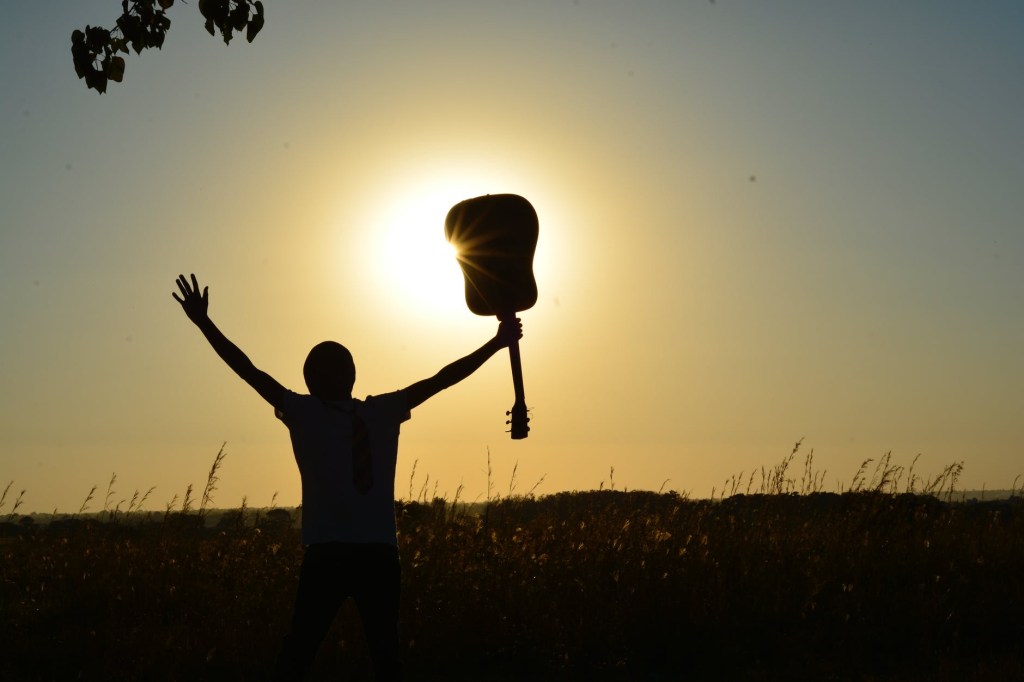
As a musician and just as a human being on a very basic level, music is a key part of my every day. I’m making no correlation between the madness and the necessity of music in one’s life, it’s just a fact: music is a key part of my life.
King of and fellow nihilist Friedrich Nietzsche said, “Without music, life would be a mistake.” Is this just another extreme observation made by the philosopher? Should we just take it with a poetic grain of salt? I don’t know. I don’t know if life would be a mistake without music, but I do know I don’t want to find out.
For me, music is an escape. I have found, compared to my wife and other peers, that I am one of the only people I know who devours and rates an album by an artist as a whole. A lot of people hit up the radio hits and go from there (I still can’t listen to Dylan’s Blonde on Blonde without starting from the bombastic beginning and plowing through all the way to the end. Every time.).
I have to say the way we ingest our music and media plays a role in the output we get. Artists and, more importantly, record labels know that all an “album” needs is a couple Top 40 hits. The rest can be filler because it’s the singles that’s going to sell the record. So, it’s a known and very-well practiced formula (unless you’re Billie Eilish and then all rules are thrown out the window).
So, what kind of music do I like?
Well, I of course have already mentioned Bob Dylan. There is a string of albums the man released back-to-back over just a few years in the 1960s that reach an almost impossible state of perfection.
I am more a predominately rock n’ roll guy but have found numerous albums and other styles of music that I add to the spectrum. For instance, The Miseducation of Lauryn Hill is definitely outside of my wheelhouse, but I honestly think it may be the last perfect album ever made. Now that’s an extreme opinion, but mine, nonetheless. With a list of “Favorite Albums” heavily clouded with Dylan, Beatles, and Rolling Stones records, the fact Lauryn Hill’s debut album cracks my Top 5 is saying a lot.
As both a musician and a fan, I have devoured The Beatles, Led Zeppelin, Aerosmith, The Doors, The Velvet Underground, etc. But still, some of my favorite albums fall outside the main party line.
Both Sufjan Stevens Illinois and Seven Swans are in my “Top Favorite Albums”. Stevens has been a folky/electronic music hero for some time, and deservedly so.
Yes, I seek out the “album’s” album. I think the Rolling Stones Exile On Main St. is perhaps THE best rock n’ roll album ever made. The raw grit of the songs, the songwriting process, and the album’s creation says it all. Check it out. You won’t be disappointed.
The White Album by the Beatles is definitely up there with Exile. It’s a perfect collection of songs, and a perfect representation of how the band was working together at the time (not well). That being said, John Lennon is a personal hero of mine and I think he’s responsible for some of the best songs and albums of the 1960s and 1970s. And, yes, I’ll take Lennon over McCartney any day of the week (Shit, I’ll even take Ringo over McCartney.).
I’m admittedly bias as hell when it comes to this next one…but The Strokes have yet to release a bad album. Just saying.
In an attempt to wrap things up, let me pause to reflect. I remember one of my grandmother’s telling me at age 13 that my interest in the 90s “grunge” movement would make me “depressed” because those artists sang about drugs and suicide. So, to prove a point, I played Roadhouse Blues by The Doors (another one of my favorite bands). Her response was immediate and positive. “Yeah! Now this is a lot better! Listen to that beat!” I guess it didn’t matter that the song is a declaration of living in the moment in as raw and simple of a way as possible (“I woke up this morning and I got myself a beer/the future’s uncertain and the end is always near”). From that moment on anyone else’s perception of my musical tastes mattered not.
So, all in all, music is a release and an appreciation process necessary for me to function. I’ve always said I’d rather go blind than be deaf, as I couldn’t live without being able to listen to or play music.
Hell, maybe Nietzsche was only half right: Life without music isn’t just a mistake, it’s an impossibility and an unnecessary evil that should be asked or expected of no one.
TOP 5 FAVORITE ALBUMS (As of this writing and in no particular order)
- The White Album- The Beatles
- Exile On Main St. – The Rolling Stones
- Nevermind – Nirvana
- Astral Weeks – Van Morrison
- The Miseducation of Lauryn Hill – Lauryn Hill
 Mirrored Madness: The Monster In Me