

Mental Health, the Military, and My Father

“Like father, like son.”

– Unknown

This is going to be more than a post of fun facts and bullet points. For me, anyway. Like millions of others with family members in the military, this has, is, and will always hit home in its own way.

My father was in the United States Army for 31 years before retiring in his early 50s a few years ago. He was that type. He could have quit after four years under the rules and laws I know. But he dedicated another 27 years of service out of the “somebody’s gotta do it” ideology. Or so I hope. The alternative would be far more sinister.

From my high school career on, he was mostly gone overseas somewhere. He could never say where. It turns out, however, a lot these deployments were voluntary. But from the age of 13 to 32, the man I now see before me has changed dramatically. He’s changed into a man that a broken system doesn’t want me to know has broken him. He’s there, yes, but there’s something missing, too.

The war (which one?) has taken its toll, yes, but have we not dropped the ball on making sure veterans receive the frontline psychiatric help they deserve after being on the front lines?

These are all questions that have been on the table for some time now. Nothing new, but far from right.

My father is an alcoholic, which makes me ever more thankful I do not drink because he’s that type of alcoholic. With all the candor and then some. But my dad wasn’t always like that. No, he was the reasonable one in our family. For a while.

Like I’ve mentioned, it comes with the territory. I know this. But the interruption or delay, if you will, my father has undergone is scary and, to an extent, was avoidable.

Who’s to blame, though? Those feeding the egos, or the ones needing their ego fed? It’s all relative, I guess. These all were questions asked before mental health became a part of the paradigm.

Nearly 25% of active-duty members showed signs of a mental health condition, according to the 2014 study by JAMA Psychiatry.

According to the National Alliance on Mental Illness, there are three primary mental health concerns that you may encounter serving in the military.

Postraumtic Stress Disorder (PTSD). Traumatic events, such as military combat, assault, disasters or sexual assault can have long-lasting negative effects such as trouble sleeping, anger, nightmares, being jumpy and alcohol and drug abuse. When these troubles don’t go away, it could be PTSD. The 2014 JAMA Psychiatry study found the rate of PTSD to be 15 times higher than civilians.

Depression. More than just experiencing sadness, depression doesn’t mean you are weak, nor is it something that you can simply “just get over.” Depression interferes with daily life and normal functioning and may require treatment. The 2014 JAMA Psychiatry study found the rate of depression to be five times higher than civilians.

Traumatic Brain Injury (TBI). A traumatic brain injury is usually the result of significant blow to the head or body. Symptoms can include headaches, fatigue or drowsiness, memory problems and mood

Adjustment disorder is another common disorder members of the military transitioning back to civilian life experience. This is where PTSD and depression play a high role.

Soldiers exiting the military are also made to feel weak by needing or accepting help for a psychiatric concern that could’ve been prevented or at least prevented from getting worse.

This is another issue my father personally faces. This, along with the less-than-great medical services provided by the VA, is another reason my father, who desperately needs medical care, will not seek it. One, it is for the weak. And two, he still doesn’t have full access to the care he needs.

Below I have included 11 facts about soldiers and mental/psychological health:

  1. Depression and post-traumatic stress disorder are the most common mental health problems faced by returning troops.

The most common symptoms of PTSD include difficulty concentrating, lack of interest/apathy, feelings of detachment, loss of appetite, hypervigilance, exaggerated startle response, and sleep disturbances (lack of sleep, oversleeping.

Post-traumatic stress disorder is diagnosed after several weeks of continued symptoms.

About 11% to 20% of veterans of the Iraq and Afghanistan wars (Operation Iraqi Freedom and Operation Enduring Freedom) have been diagnosed with PTSD.

30% of soldiers develop mental problems within 3 to 4 months of being home.

55% of women and 38% of men report being victim to sexual harassment while serving in the military.

Because there are more men than women in the military, more than half of all veterans experiencing military sexual trauma are men.

An estimated 20% of returning Iraq and Afghanistan veterans turn to heavy drinking or drugs once they return to the US.

Between 10 and 20% of Iraq and Afghanistan veterans have suffered a traumatic brain injury (TBI). Possible consequences of this internal injury include anger, suicidal thoughts, and changes in personality.

In 2010, an average of 22 veterans committed suicide every day. The group with the highest number of suicides was men ages 50 to 59.

Some groups of people, including African Americans and Hispanics, may be more likely than whites to develop PTSD.

I said this wouldn’t be a post of stats and bullet points, but they’re necessary. I can only speak of my father so much without violating his personal liberties, although he knows nothing about this blog and probably wouldn’t approve of it, anyway.

War will change any person, no doubt, but it doesn’t mean we leave our soldiers on their own, especially after the services they do provide for our country. The transition back to “normal” life after being in combat can be tremendously difficult. It’s important for people to understand that for a soldier the personal warfare, the inner battlefront, never ends. It will always be there. We must be diligent in the care and understanding of our soldiers when it comes to mental health.

Despite the expression and the idea behind it, I think very little is fair when it comes to love or war.

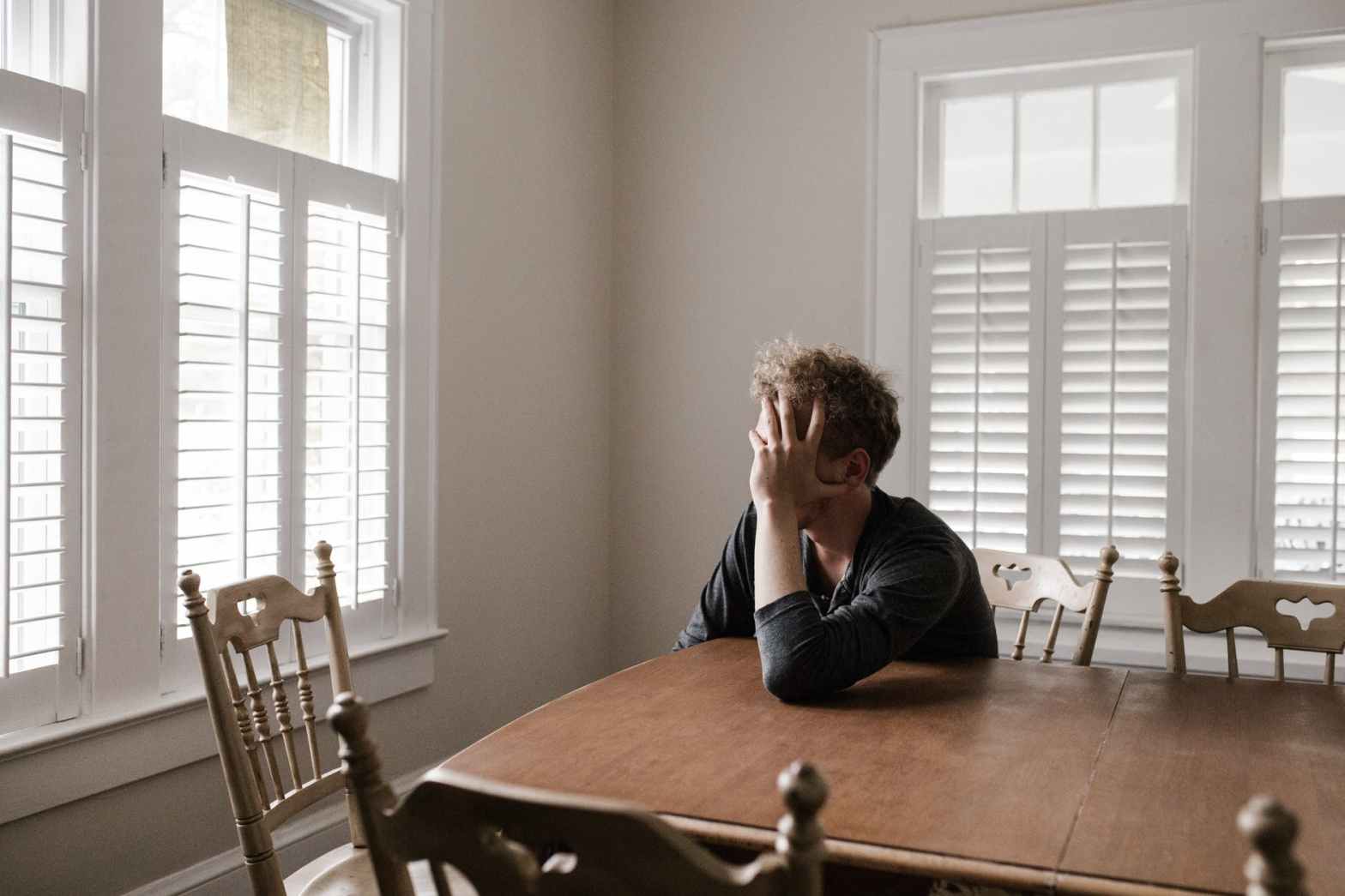
Mental Health in Small Town, USA

“There is no standard normal. Normal is subjective. There are seven billion versions of normal on this planet.”

– Matt Haig

Just some brief thoughts:

I live in a small town. Like a really small town. It’s a very conservative, small town in a very conservative part of Illinois, which is most of the state (thank God for Chicago or we would be all Red). There aren’t a lot of resources in my area for people with any type of mental health or psychiatric problems. That seems to be the case for many rural areas across the U.S.

This isn’t news. A 2020 study found that “rural residents in the USA experience significant disparities in mental health outcomes even though the prevalence of mental illness in rural and metropolitan areas is similar.”

These issues may stem from a lack of funding or a lack of understanding of these types of problems. I haven’t even heard of any recognition that May is Mental Health Awareness Month on any type in any local media in my area – not that that is surprising. I have found most people have no idea this is Mental Health Awareness Month.

That’s part of the problem. No, not recognizing May as “ours”, but by not recognizing the issue at all. I had an appointment with my psych doctor yesterday, who practices more than an hour away now. Thank God (or whoever) for Telehealth or that monthly drive would be a killer.

A study by researchers at Wake Forest School of Medicine determined one of the main causes behind the lack of resources for mental health treatment in rural areas is the surrounding shame and stigma. The belief that “I should not need help.”

“We as a society have a hard time asking for help, so it’s hard enough to ask for help [without feeling] that everybody’s going to know it,” Dennis Mohatt, vice president of the behavioral mental health program at the Western Interstate Commission for Higher Education, said. “Your neighbors don’t have a clue in a city if you’re going to go get some help. But everybody [in a small town] will know if your pickup truck is parked outside of the mental health provider’s office.”

He’s right. Fortunately, I do not fall into that category. I’m not out picketing for change or acknowledgment, but I’m far from ashamed.

Other research suggests even suicide rates are affected by the regionality of mental health services.

“There is a higher suicide mortality rate among residents of rural and nonmetropolitan areas than those living in metropolitan areas,” Ty Borders, Ph.D., said. “The discrepancy has existed for decades, and the gap has widened in recent years,”

So, why is this? I’m sure there is more than one answer, but where I live it has a lot to do with what I hope is a lack of understanding (I have to believe that, at least). Funding, too, if that can be looped into it on some real substantive basis. However, I believe it stems from a lack of understanding.

It’s also because of a weakness that gets pinned on those who suffer from any type of mental health problem or crisis. There is very much a “Suck it up and get over it!” mentality among many throughout my community. The idea that mental illness didn’t exist fifty years ago is a very prevalent one.

Poverty plays a role in this dilemma, too. How can someone expect to pay for mental health services when they can’t afford their 10-year-old’s school physical? Especially if those types of appointments are an hour away and are only open certain hours or days of the week.

According to the Rural Health Information Hub, “18.7% of individuals in nonmetropolitan areas have a mental health condition, which is about 6.5 million people. Rural residents are also more likely than urban residents to experience a serious mental illness.”

One report suggests that for every 30,000 rural Americans there is one psychiatrist. This is interesting, and it would be interesting to know how many out of those 30,000 need psychiatric help. But we’ll never get any accurate information regarding that.

So, do we need more therapists? Or is it something more serious, a more systemic issue? I don’t think there is a black or white answer. I mean, I have no real ideas that would matter. I’m just like everyone else: pointing out the flaws in the system with no real alternative measure in mind.

Bipolar Brain Fog: Seeing Thru the Haze

“When it’s foggy in the pulpit it’s cloudy in the pew.”

– Cavett Rober

I’ve touched upon this topic once before in an “a day in the life” post, but it’s something that bears repeating. Because I might forget.

Over the last year or so, I have been experiencing some semi-serious memory issues and some problems with basic motor skills and coordination. I was able to hide these specific problems from my wife for nearly three months before having to officially let the cat out of the bag.

And I only had to do that because I was stumbling around the house one day my wife and I were both home. It was a particularly bad day for me; I had no sense of perception or balance, and was bumping into furniture and running into walls. After about the third obvious misstep, though (no pun intended) I just looked over at my wife. In return, I was pretty much given the “Okay, let’s hear it” look and so I proceeded to tell her what I had been trying so hard to avoid.

It was almost painless…except for the part that wasn’t. I was embarrassed, and I had been forgetting everything, short-term and long-term. I would get hung up in a conversation and not know how to navigate back into it. How did I even manage to keep this a secret for this long? It didn’t matter how to my wife, only why.

WHY did you keep this a secret for so long?

I guess other than being embarrassed (and a little scared) I’m not sure myself. I knew, though, that when one of those “moments” would occur I would leave the room as quickly as possible and go to the bathroom and cry. I initially started this as a method of returning from the edge. I would hope that staring at myself while flooding the counters with my boxed-up tears would act as a trigger to “come back to”. This rarely worked, if ever.

The first thing was first, though, and that was to get in with the doctor ASAP. I had already wasted enough time and had finally accepted what was going on. To a certain extent, anyway.

I already see a neurologist because of a seizure disorder, so it didn’t take too long to get that appointment scheduled. I had both a CT scan and an MRI before the appointment, so I was looking forward to getting some answers.

Of course, it’s not that simple, is it?

The MRI did show two small areas on my corona radiata, an area between the cortex and brain stem. A second MRI was then ordered, and I started to worry. By this point, I was unsure of why another MRI was necessary after I had demonstrated my inability to do what the neurologist was asking of me, both mentally and physically. The physical test’s results indicated I had no reflexes in either foot/ankle, and my whole left side was significantly weaker than my right. The second part of the physical test required me to walk toe-to-toe down a long hallway – which I failed miserably at.

So, I expected some sort of answer. Things were ruled out, such as mini strokes and multiple sclerosis, but nothing was ruled on. I suppose finding out what it wasn’t should have acted as some sort of relief or buffer, but it didn’t.

It was time to get back to the drawing board.

After more lab work, another MRI on the books, and visits with other doctors, I was given at least a little bit of start. As more things continued to be ruled out, we had to at least be getting a little bit closer to an answer, right?

I have experienced all the symptoms and feelings and moods that come with along with bipolar disorder, so I thought I had the game down. But as always, this was not the case. At this point, I was just hoping to forget I was even sick, bipolar or not.

As for where I stand right now, I personally do believe what’s been going on is (more than likely) related to my illness.

Specifically, it’s referred to as “bipolar brain fog”. I guess it’s real enough. I look at it as another rung on the ladder for me, a ladder where the climb is overwhelming and never-ending.

Bipolar brain fog is described as having the “inability to focus on a task, retrieve simple memories or words, or tune out distractions.”

Fortunately – for me, anyway – I hate sympathy (even just sitting here writing this is making me cringe a little), so that in and of itself just acts as a motivator for me to not be like “why me?” or to seek out attention in any other way. Sympathy of any kind just makes me feel uncomfortable, so instead of showering in those negative waters, I decided to just hang out in Lake Out-of-Sight-Out-of-Mind. Back to avoiding the truth again. It was either that or go crazy, and I just couldn’t afford that.

As I tread forward, though, it truly does feel like it may be my bipolar disorder causing everything. From the initial MRI to now, it appears that there are areas in my brain that have shrunk in size. This seems to be indicative of these issues stemming from bipolar disorder.

Memory issues caused by bipolar disorder can be traced to the seriousness of the extreme highs and lows associated with the illness. The excessive and intense repetition of cycling is major causation of memory issues in someone with bipolar disorder.

Now, to clarify, these are not constant issues. I do deal with them daily, but not 24/7 like many others.

It’s still scary. One study suggests that bipolar disorder may cause progressive brain damage. It can even lead to early-onset dementia or Alzheimer’s disease. Now, does that mean that those things are going to happen for sure? No. Does it make sense why I might be scared at times? I’d like to think so.

Bipolar disorder and memory loss are linked to “deficits in regions of the brain,…each of which plays a role in memory as well as movement, learning, reward, motivation, emotion, and romantic interaction.”

My next appointment with the neurologist is later this month so, fingers crossed for another MRI, I guess.

To be in my early 30s and to already be seeing doctors for memory loss concerns is scary. I don’t want to lose anything else I already don’t have.

So, take away anything else. Take whatever you want.

Just don’t take my mind. Don’t take the one thing that’s truly mine.

Leave me my mind.