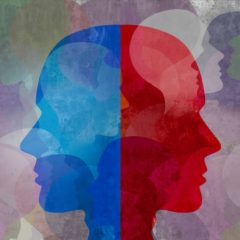

My Personal Top 10 Tips for Those Who Are Mentally Ill

“To be ill adjusted to a deranged world is not a breakdown.”

– Jeanette Winterson

There are always goin

  • Accept it: It’s all you can do. It’s a process, but it’s necessary.
  • Acknowledge that you are not your illness: This is most important.
  • Don’t be afraid of the med game: Hey, if it helps…
  • Avoid “You might be…” or “Things to avoid…” lists or articles: We’re all different
  • Stay active/healthy diet: Staying healthy is key to having any control over your overall psychological well-being.
  • Practice self-care: This, especially along with a healthy diet, can help one have a basic level of control.
  • Develop a routine: This can be difficult as real life can get in the way, but can be a game-changer.
  • Stay in contact: With friends, with family, with everyone.
  • Pause for the cause: It’s okay to be selfish sometimes.
  • Google doesn’t have a medical degree: Education is key when it comes to your mental illness but search with caution and insight.

Below are additional tips to boost your mental health:

  • Track gratitude and achievement with a journal. Include 3 things you were grateful for and 3 things you were able to accomplish each day.
  • Start your day with a cup of co­ffee. Coff­ee consumption is linked to lower rates of depression. If you can’t drink coff­ee because of the caff­eine, try another good-for-you drink like green tea. 
  • Set up a getaway. It could be camping with friends or a trip to the tropics. The act of planning a vacation and having something to look forward to can boost your overall happiness for up to 8 weeks!
  • 4, Work your strengths. Do something you’re good at to build self-confidence, then tackle a tougher task. 
  • Keep it cool for a good night’s sleep. The optimal temperature for sleep is between 60 and 67 degrees Fahrenheit.
  • “You don’t have to see the whole staircase, just take the first step.” – Martin Luther King, Jr. Think of something in your life you want to improve, and figure out what you can do to take a step in the right direction.
  • Experiment with a new recipe, write a poem, paint or try a Pinterest project. Creative expression and overall well-being are linked.
  • Show some love to someone in your life. Close, quality, relationships are key for a happy, healthy life.
  • Boost brainpower by treating yourself to a couple pieces of dark chocolate every few days. The flavanoids, caffeine, and theobromine in chocolate are thought to work together to improve alertness and mental skills.
  • There is no greater agony than bearing an untold story inside of you.  -Maya Angelou. If you have personal experience with mental illness or recovery, share on Twitter, Instagram and Tumblr with #mentalillnessfeelslike. Check out what other people are saying here.
  • Sometimes, we don’t need to add new activities to get more pleasure. We just need to soak up the joy in the ones we’ve already got. Trying to be optimistic doesn’t mean ignoring the uglier sides of life. It just means focusing on the positive as much as possible.
  • Feeling anxious?  Take a trip down memory lane and do some coloring for about 20 minutes to help you clear your mind. Pick a design that’s geometric and a little complicated for the best effect. Check out hundreds of free printable coloring pages here.
  • Take time to laugh. Hang out with a funny friend, watch a comedy or check out cute videos online. Laughter helps reduce anxiety.
  • Go off the grid. Leave your smart phone at home for a day and disconnect from constant emails, alerts, and other interruptions. Spend time doing something fun with someone face-to-face.
  • Dance around while you do your housework. Not only will you get chores done, but dancing reduces levels of cortisol (the stress hormone), and increases endorphins (the body’s “feel-good” chemicals).
  • Go ahead and yawn. Studies suggest that yawning helps cool the brain and improves alertness and mental efficiency.
  • Relax in a warm bath once a week. Try adding Epsom salts to soothe aches and pains and help boost magnesium levels, which can be depleted by stress.
  • Has something been bothering you? Let it all out…on paper. Writing about upsetting experiences can reduce symptoms of depression.
  • Spend some time with a furry friend. Time with animals lowers the stress hormone – cortisol, and boosts oxytocin – which stimulates feelings of happiness. If you don’t have a pet, hang out with a friend who does or volunteer at a shelter.
  • “What lies before us and what lies behind us are small matters compared to what lies within us. And when you bring what is within out into the world, miracles happen.” – Henry David Thoreau. Practice mindfulness by staying “in the present.”  Try these tips
  • Be a tourist in your own town. Often times people only explore attractions on trips, but you may be surprised what cool things are in your own backyard.
  • Try prepping your lunches or picking out your clothes for the work week. You’ll save some time in the mornings and have a sense of control about the week ahead.
  • Work some omega-3 fatty acids into your diet–they are linked to decreased rates of depression and schizophrenia among their many benefits. Fish oil supplements work, but eating your omega-3s in foods like wild salmon, flaxseeds or walnuts also helps build healthy gut bacteria.
  • Practice forgiveness – even if it’s just forgiving that person who cut you off during your commute. People who forgive have better mental health and report being more satisfied with their lives.
  • “What appear to be calamities are often the sources of fortune.” – Disraeli. Try to find the silver lining in something kind of cruddy that happened recently.
  • Feeling stressed? Smile. It may not be the easiest thing to do, but smiling can help to lower your heart rate and calm you down.
  • Send a thank you note – not for a material item, but to let someone know why you appreciate them. Written expressions of gratitude are linked to increased happiness.
  • Do something with friends and family – have a cookout, go to a park, or play a game. People are 12 times more likely to feel happy on days that they spend 6-7 hours with friends and family.
  • Take 30 minutes to go for a walk in nature – it could be a stroll through a park, or a hike in the woods. Research shows that being in nature can increase energy levels, reduce depression and boost well-being.
  • Do your best to enjoy 15 minutes of sunshine, and apply sunscreen. Sunlight synthesizes Vitamin D, which experts believe is a mood elevator.
  • “Anyone who has never made a mistake has never tried anything new.” -Albert Einstein. Try something outside of your comfort zone to make room for adventure and excitement in your life.

There are many different skills or coping mechanisms that you can do or use in times of mental duress. It all just depends on the situation and what is needed at the time to diffuse the mental health crisis or concern. We all have it in us and although bullet points suck, there is a truth there that can only be helpful.

I hope my list, along with the list provided by the MHA, is helpful to someone in some way.
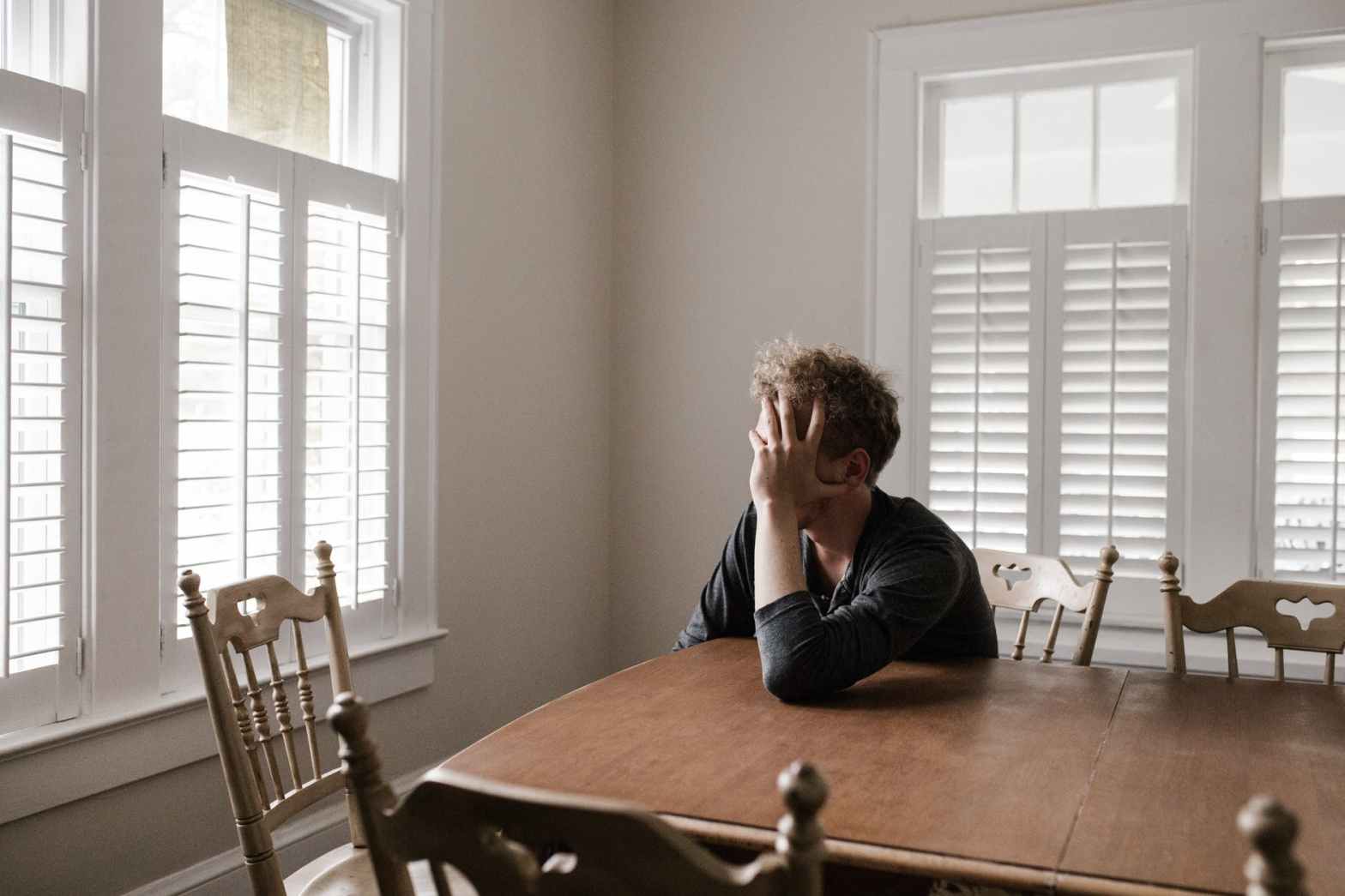
Bipolar Brain Fog: Seeing Thru the Haze

“When it’s foggy in the pulpit it’s cloudy in the pew.”

– Cavett Rober

I’ve touched upon this topic once before in an “a day in the life” post, but it’s something that bears repeating. Because I might forget.

Over the last year or so, I have been experiencing some semi-serious memory issues and some problems with basic motor skills and coordination. I was able to hide these specific problems from my wife for nearly three months before having to officially let the cat out of the bag.

And I only had to do that because I was stumbling around the house one day my wife and I were both home. It was a particularly bad day for me; I had no sense of perception or balance, and was bumping into furniture and running into walls. After about the third obvious misstep, though (no pun intended) I just looked over at my wife. In return, I was pretty much given the “Okay, let’s hear it” look and so I proceeded to tell her what I had been trying so hard to avoid.

It was almost painless…except for the part that wasn’t. I was embarrassed, and I had been forgetting everything, short-term and long-term. I would get hung up in a conversation and not know how to navigate back into it. How did I even manage to keep this a secret for this long? It didn’t matter how to my wife, only why.

WHY did you keep this a secret for so long?

I guess other than being embarrassed (and a little scared) I’m not sure myself. I knew, though, that when one of those “moments” would occur I would leave the room as quickly as possible and go to the bathroom and cry. I initially started this as a method of returning from the edge. I would hope that staring at myself while flooding the counters with my boxed-up tears would act as a trigger to “come back to”. This rarely worked, if ever.

The first thing was first, though, and that was to get in with the doctor ASAP. I had already wasted enough time and had finally accepted what was going on. To a certain extent, anyway.

I already see a neurologist because of a seizure disorder, so it didn’t take too long to get that appointment scheduled. I had both a CT scan and an MRI before the appointment, so I was looking forward to getting some answers.

Of course, it’s not that simple, is it?

The MRI did show two small areas on my corona radiata, an area between the cortex and brain stem. A second MRI was then ordered, and I started to worry. By this point, I was unsure of why another MRI was necessary after I had demonstrated my inability to do what the neurologist was asking of me, both mentally and physically. The physical test’s results indicated I had no reflexes in either foot/ankle, and my whole left side was significantly weaker than my right. The second part of the physical test required me to walk toe-to-toe down a long hallway – which I failed miserably at.

So, I expected some sort of answer. Things were ruled out, such as mini strokes and multiple sclerosis, but nothing was ruled on. I suppose finding out what it wasn’t should have acted as some sort of relief or buffer, but it didn’t.

It was time to get back to the drawing board.

After more lab work, another MRI on the books, and visits with other doctors, I was given at least a little bit of start. As more things continued to be ruled out, we had to at least be getting a little bit closer to an answer, right?

I have experienced all the symptoms and feelings and moods that come with along with bipolar disorder, so I thought I had the game down. But as always, this was not the case. At this point, I was just hoping to forget I was even sick, bipolar or not.

As for where I stand right now, I personally do believe what’s been going on is (more than likely) related to my illness.

Specifically, it’s referred to as “bipolar brain fog”. I guess it’s real enough. I look at it as another rung on the ladder for me, a ladder where the climb is overwhelming and never-ending.

Bipolar brain fog is described as having the “inability to focus on a task, retrieve simple memories or words, or tune out distractions.”

Fortunately – for me, anyway – I hate sympathy (even just sitting here writing this is making me cringe a little), so that in and of itself just acts as a motivator for me to not be like “why me?” or to seek out attention in any other way. Sympathy of any kind just makes me feel uncomfortable, so instead of showering in those negative waters, I decided to just hang out in Lake Out-of-Sight-Out-of-Mind. Back to avoiding the truth again. It was either that or go crazy, and I just couldn’t afford that.

As I tread forward, though, it truly does feel like it may be my bipolar disorder causing everything. From the initial MRI to now, it appears that there are areas in my brain that have shrunk in size. This seems to be indicative of these issues stemming from bipolar disorder.

Memory issues caused by bipolar disorder can be traced to the seriousness of the extreme highs and lows associated with the illness. The excessive and intense repetition of cycling is major causation of memory issues in someone with bipolar disorder.

Now, to clarify, these are not constant issues. I do deal with them daily, but not 24/7 like many others.

It’s still scary. One study suggests that bipolar disorder may cause progressive brain damage. It can even lead to early-onset dementia or Alzheimer’s disease. Now, does that mean that those things are going to happen for sure? No. Does it make sense why I might be scared at times? I’d like to think so.

Bipolar disorder and memory loss are linked to “deficits in regions of the brain,…each of which plays a role in memory as well as movement, learning, reward, motivation, emotion, and romantic interaction.”

My next appointment with the neurologist is later this month so, fingers crossed for another MRI, I guess.

To be in my early 30s and to already be seeing doctors for memory loss concerns is scary. I don’t want to lose anything else I already don’t have.

So, take away anything else. Take whatever you want.

Just don’t take my mind. Don’t take the one thing that’s truly mine.

Leave me my mind.

My Week-Long Hiatus

“Stress acts as an accelerator: it will push you either forward or backward, but you choose which direction.”

– Chelsea Eriaue

It has been one of “those weeks” to be sure. No, nothing genuinely terrible has occurred. It’s just been one of “those weeks” in the sense that when that phrase is used, all can be sure what is truly meant.

For me, the main thing was a classic case of “biting off more than I could chew”, an ailment that I’m too often afflicted with. I spent several days writing several freelance pieces that I had put off until the last minute, ultimately resulting in an intense, unnecessary level of stress that I’m surprised didn’t end up with me losing my hair.

I work best under pressure, I feel, but this was a little too heavy of a workload on top of everything going on. To purposefully put myself in that type of predicament, on top of kids and real life

Anyway, after finally completing my deadly deadline, I spent two days push mowing three acres of land. What started as a pet project quickly turned into a work overload. The yard had to be mowed, though, and I won’t let anyone else do it. It’s just how I was raised.

There’s not much to this post except to let everyone know I plan to stick to the main schedule I initially intended. When I missed Sunday and Monday, I didn’t want to change days just because of “personal strife”. It’s Thursday now, and I’m providing nothing of substantial value except that. I intend to do better by prioritizing and learning from my most recent lesson.

Whoever said “work smarter, not harder” sure knew what the hell they were talking about.

Sleep, or the Lack Thereof

“I love sleep. My life has the tendency to fall apart when I’m awake, you know?”

– Ernest Hemingway

Sleep is perhaps one of the most important fundamentals in a person’s life. The Sleep Foundation describes sleep as an “essential function”, one that allows “your body and mind to recharge, leaving you refreshed and alert when you wake up.”

It’s extremely important that most adults get seven to nine hours of sleep a night. A lack of sleep is linked to a higher risk for obesity, type 2 diabetes, high blood pressure, heart disease, stroke, early death, and poor mental health.

According to the Mental Health Foundation, there are a variety of reasons you may not be getting the sleep you need, including:

  • Stress or worry
  • A change in the noise level or temperature of your bedroom
  • A different routine
  • Too much caffeine or alcohol
  • Shift work
  • Physical or mental health problems
  • Side effects of certain medications

There are several types of sleep disorders, but the most prevalent is insomnia. According to the American Academy of Sleep Medicine, insomnia is defined as the “difficulty either falling or staying asleep that is accompanied by daytime impairments related to those sleep troubles.” Research from the Mayo Clinic suggests 30% of all adults will experience short-term insomnia and 10% of adults will experience long-term insomnia.

Insomnia symptoms may include:

  • Difficulty falling asleep at night
  • Waking up during falling asleep at night’s sleep
  • Waking up too early
  • Not feeling well-rested after a night’s sleep
  • Daytime tiredness or sleepiness
  • Irritability, depression or anxiety
  • Difficulty paying attention, focusing on tasks or remembering
  • Increased errors or accidents
  • Ongoing worries about sleep

Insomnia is not uncommon. In fact, it’s the most common sleep disorder, and one that can be very dangerous.

That’s never stopped me, though. Of course, I shouldn’t be proud of that, and I’m not. But I do suffer from serious insomnia.

I suffer from chronic insomnia (which recently has come in handy with the birth of my youngest son). Being bipolar doesn’t help the matter any. When manic, I’ve stayed up for days without “needing” to rest. That’s not an everyday occurrence, thankfully, but it’s happened enough for me to be used to it.

To the lucky 75% of those who recover from their insomnia, I applaud you and wonder, “what’s your secret?”

I’ve been on all the meds: Ambien. Sonata. Belsomra. Trazadone. Restoril. Lunesta. I’ve stuck with Lunesta because it works some of the time. It’s hit or miss, which at this point is all I can hope for.

Insomnia is usually caused by bad sleep habits, depression, anxiety, and chronic illness. It can even be caused by certain medications.

According to the Mayo Clinic, there are ways to fight insomnia, including:

  • Stick to a schedule: Keep your bedtime and wake time consistent from day to day, including on weekends.
  • Stay active: Regular activity helps promote a good night’s sleep. Schedule exercise at least a few hours before bedtime and avoid stimulating activities before bedtime.
  • Check your medications: If you take medications regularly, check with your doctor to see if they may be contributing to your insomnia. Also check the labels of OTC products to see if they contain caffeine or other stimulants, such as pseudoephedrine.
  • Avoid or limit naps: Naps can make it harder to fall asleep at night. If you can’t get by without one, try to limit a nap to no more than 30 minutes and don’t nap after 3 p.m.
  • Avoid or limit caffeine and alcohol/Don’t use nicotine: All of these can make it harder to sleep, and effects can last for several hours.
  • Don’t put up with pain: If a painful condition bothers you, talk to your doctor about options for pain relievers that are effective enough to control pain while you’re sleeping.
  • Avoid large meals and beverages before bed: A light snack is fine and may help avoid heartburn. Drink less liquid before bedtime so that you won’t have to urinate as often.

Suffering from a mental illness can make falling asleep no easy task. It is usually easier said than done for me since other factors play a role. I’ve always had trouble sleeping. I struggle with falling asleep, not staying asleep. If I can get there, I’m there. It’s the getting to sleep that so often eludes me.

No matter, insomnia and other sleep disorders can be extremely damaging, especially to those with a mental health disorder. Mental health disorders tend to make it harder to sleep well, in general.

Disorders Affected by Lack of Sleep:

  • Depression
  • Seasonal Affective Disorder
  • Anxiety Disorders
  • Bipolar Disorder
  • Schizophrenia
  • ADHD
  • Autism Spectrum Disorder

There is research to suggest that “brain activity during sleep has profound effects on emotional and mental health.” A 2021 study also suggests that issues with insomnia are “associated with significantly increased odds of frequent mental distress.”

Overall, sleep helps maintain cognitive abilities, including learning, memory, and emotional regulation. This is especially important to note to those who suffer from any kind of mental illness or psychiatric condition.

So, I guess that poet was wrong: Sleep isn’t just for dreamers.