Meditation: Could it Work for Me?

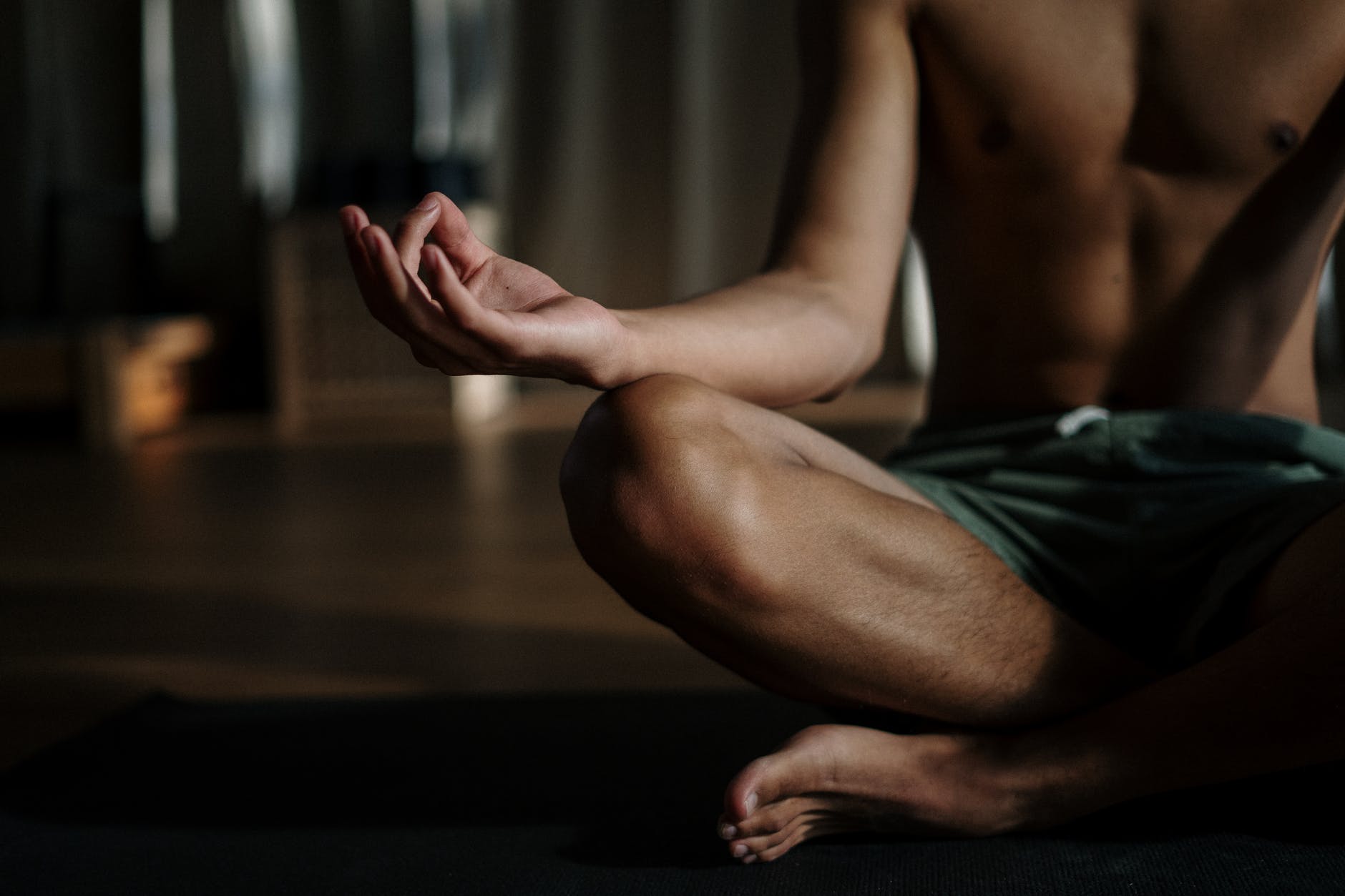
man in black shorts sitting on floor

“You’re distracted and stressed because you’re not mindful. But the statement should be in reverse – you’re not mindful because you’re distracted and stressed.”

– Unknown

I’ve never had much luck with using or finding any coping skills that work. To me, they’ve always been akin to bullet points on a piece of paper given out at AA meetings or therapy sessions. They just have never been helpful to me and so I keep my distance.

Though I’ve never found any of the generic “coping skills” to work for me, I have noticed that meditation seems to be on every list.

Just another bullet point: mediation.

For all intents and purposes, to meditate, according to Oxford Dictionaries, is to “think deeply or focus one’s mind for a period of time, in silence or with the aid of chanting, for religious or spiritual purposes or as a method of relaxation”. Well, I’m here to tell ya that I’m just not hardwired for something like that, although there is a known direct connection between meditation and bipolar disorder.

Meditation is known to provide a sense of calm, peace, and balance. It can also help carry you more calmly through your day and may help you manage symptoms of certain medical conditions.

There are many different kinds of meditation, usually all focusing on areas such as posture, breathing, attention, and relaxation

To me, meditation actually seems…daunting. Like a task or something you really dread but have no choice in doing – except you do. I just don’t know that I have the capacity to slow my brain down enough to even an begin to try to meditate.

However, more than 60% of the top health problems for which people use meditation are stress, anxiety, and depression.

It only takes a little research (and some common sense) to discover and understand the benefits of meditation.

Some of these benefits include:

  • Gaining a new perspective on stressful situations
  • Building skills to manage your stress
  • Increasing self-awareness
  • Focusing on the present
  • Reducing negative emotions
  • Increasing imagination and creativity
  • Increasing patience and tolerance

That sounds good and all but, come on. Give me a break.

I must stress to everyone reading this that I am in no way dogging or downplaying meditation as a coping strategy, ideology, or practice if it works for you. I’m not saying it doesn’t work for people. Not at all. It just hasn’t worked for me.

It’s true, though, that meditation isn’t for everyone. There is some research that found that more than a quarter of those who regularly meditate have had a “particularly unpleasant” psychological experience while doing so, including feelings of fear and distorted emotions.

The study found that psychologically unpleasant experiences can occur during meditation. Even some traditional Buddhist texts allude to intense accounts of similar experiences.

A similar study found meditation can sometimes make people more neurotic, depressed, anxious, and can even trigger unresolved trauma.

For those who can’t properly meditate (myself included), there are a variety of reasons why including:

  • Racing mind
  • No consistency
  • Wandering minds
  • Keep falling asleep
  • Body aches and pains
  • Boredom
  • Having great ideas or thinking of important things
  • Trouble finding time
  • Expectations set too high
  • Hope of immediate results

There are, however, different methods for those who traditional meditation doesn’t work. Experimenting with personal variations, practicing in a different or a group setting, and keeping your mediations short are just a few of these ways.

Maybe I’m jealous to some extent because it sounds like an awesome concept, at least in theory; it may be difficult and frustrating in ways I haven’t even considered. In the end, you have to go with what works for you. You have to go with your gut.

For me, it’s not something I find any relief in but have not given up on. I’d like to be able to meditate; out of all the coping skills I know of meditation is the most appealing and seemingly reasonable to me. Maybe I’m just fascinated by the idea of it. I hope to one day be able to put the idea into practice and benefit from it. The science is there. Now I just got to catch up.


10 Essential Writing Tips from Stephen King’s “On Writing”

In 2002 Stephen King temporarily gave up on writing bestselling novels and wrote a little book chronicling his rise to fame and discussing exactly …

10 Essential Writing Tips from Stephen King’s “On Writing”

A Pause for the Cause

green trees near mountain

“In America, there are two classes of travel: first-class and with children.”

– Robert Benchley

Just checking in.

We’re on day three of what has turned out to be a nice little vacation. My wife, son, and I are in the hills of Tennessee in a nice little cabin with all the “essentials” needed to survive out here with a 5-year-old boy and yes, that means free Wi-Fi, too (it’s inescapable these days, though I do find it amazing how it’s possible to even have electricity and running water in such an isolated area – let alone free Wi-Fi).

We’ve done very little as far as “touristy” things go, to be honest, but that’s been just fine with me. I come down here enough to know that this is the part of the trip that matters. My son has been fascinated by just us staying in a place that’s not a hotel. I’ve also been able to work and mess around on a few things while here, and my wife has her endless supply of “things to do” with her, too.

So, it truly has been a getaway. 75% of what we’ve done on this trip could’ve very well been done at home, so I’m glad this hasn’t been a vacation with a lot of bells and whistles (my wife hasn’t demanded as near as many as pictures as I would’ve expected). It’s been nice to just have a change of scenery and to be able to live on a slower (though not by much) plane of existence, if only for such a short amount of time.

Yes, we will be leaving and going home tomorrow. The end of a trip, especially a good trip, is always heartbreaking. Rolling back into town can be utterly depressing. But that’s how it goes. In the meantime, I’m going to enjoy the afternoon at the arcade with my wife and son before a nice dinner and night back here at the cabin.

Happy Birthday, Jack!

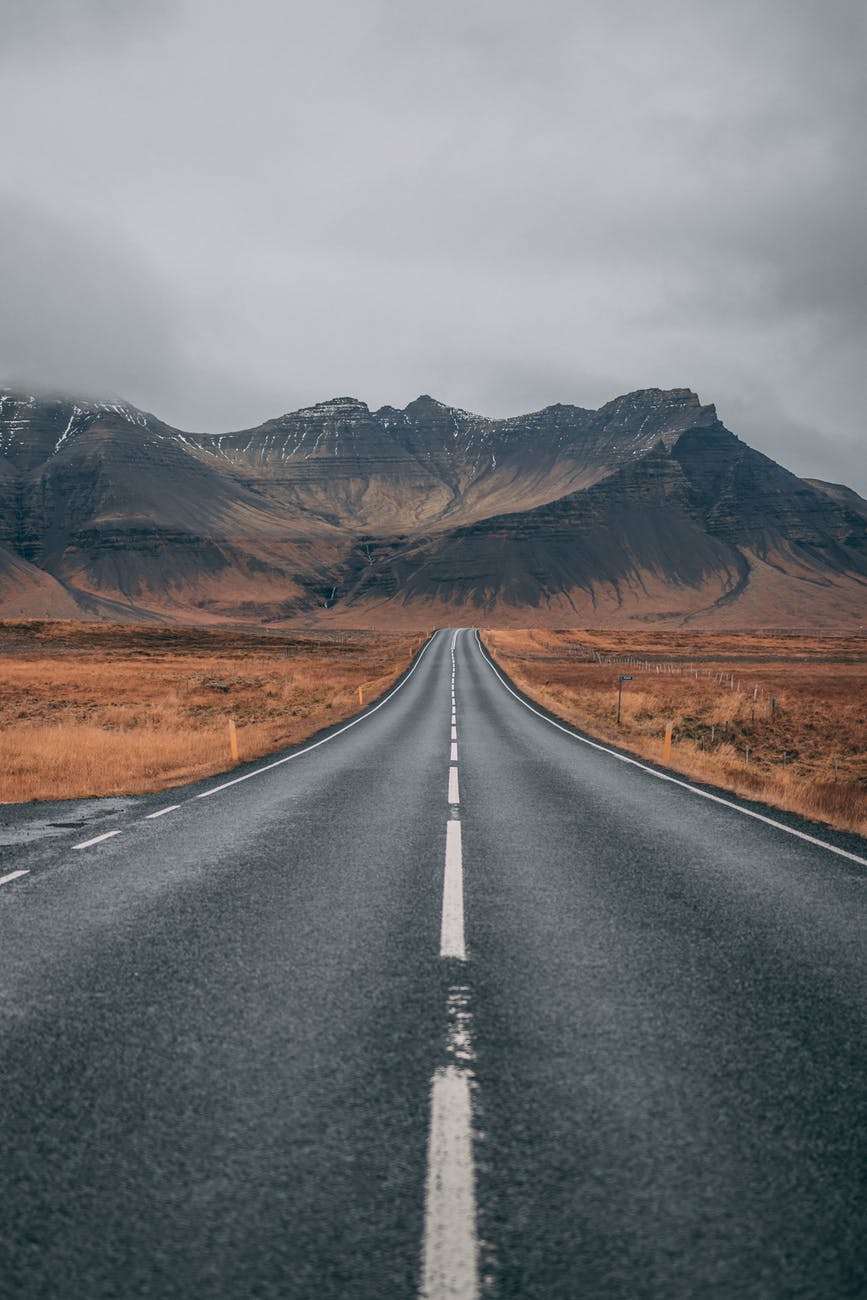
empty highway overlooking mountain under dark skies

“The road must eventually lead to the whole world.”

– Jack Kerouac

A week ago today would’ve been Jack Kerouac’s, father of the Beat generation, 100th birthday and I’m surprised I haven’t addressed it yet.

When I was 14 (as cliché as this is going to sound), I read a series of books that either opened up doors for me or that I just liked. And again (as cliché as it sounds), On the Road was one of them. Of course, it was a book that changed the playing field, but for me, it was the introduction to a bigger world. Some of Kerouac’s other books such as Desolation Angels and Tristessa, blew me away just as much, if not more, than On the Road.

However, many of your cultural icons, such as Bob Dylan and Jim Morrison, credit On the Road as being a major influence on them and their work. I credit that book as being a door-opener to a wave of other writers, musicians, etc. More than that, I have to credit the man himself, not only because of the way he wrote but because of the way he lived.

No one ever again will ever truly have those types of experiences, life on the road, getting by just by getting by. No one again will ever have a lifestyle of that type. And not just because of the obvious reasons.

If you don’t know what happened to Kerouac, he ultimately drank himself to death. Another tragic, typical story of an artist who crashed or burned out. There’s no way he would’ve made it to 100. And not just for the obvious reasons.

There’s no way you would’ve made it to 100, Jack. That’s no matter. Happy birthday. Your mark on the world will be felt for eternity,

An Inconvenient Truth: Shame, Regret, and My Ugly Theory

pexels-photo-6136099.jpeg

“Shame is a soul eating emotion.”

Carl Gustav Jung

If this were of any consequence and if I were a person of any significance, this one certain belief/opinion I have regarding a specific matter I hold would most likely be considered controversial or just plain ignorant. No, it’s not political, or derogatory in any other fashion. It’s a simple idea on what some may call a “philosophical” matter, but for me, it’s really a non-issue.

It’s regarding shame and regret, and simply put I do not believe anyone can truly be ashamed of anything. This is usually where the two camps of thought get together and meet to either attack my “negativity” or speak of my stunted and simple intelligence.

Now to clarify, the emotions stemming from what I would call “genuine shame” are very real: the embarrassment, the humiliation, and all the other awkward emotions. Shame tends to take form on outward reactions.

I just don’t believe people can do something they would be ashamed of, not on a primal, base-line level anyway. What I’m trying to say is that I understand why my “belief” is not of the majority and is considered to either be arrogant or ignorant. So, I’ll at least try and explain.

According to verywellmind, shame can be described as “a feeling of embarrassment or humiliation that arises in relation to the perception of having done something dishonorable, immoral, or improper”. Although I agree that those emotions exist within us at certain times, especially after that personal sense of humiliation sets in, I think they are more so interrelated with how we feel about ourselves.

Shame, however, in the minimalist and misinterpreted way it exists, can be used as a tool for both good and bad purposes.

Arlin Cuncic, a therapist and author, writes, “Since we want to be accepted, shame is an evolutionary tool that keeps us all in check.”

I agree with that ideology, but I always go back to the idea of human nature and how something like “shame” fits on Mother Nature’s “emotional food chain”. I just don’t believe people can truly do something they are ashamed of. It’s an under-the-surface issue in which I predict semantics will play a role in the outcome of said debate.

It’s a bold statement to make, I know, but here goes: I’ve never done anything I was ashamed of, and I only say that simply because I believe human nature disallows us from doing something we would be ashamed of. I don’t doubt that the emotions tied to shame exist and are real. I feel shame is like a selfish, personal Band-Aid. Being ashamed is being humiliated after the fact. Would you do that one thing that caused you so much shame again? No. You’d stifle it and hope you have the strength to keep the lion in its cage.

Regret is an “intelligent and/or emotionl dislike for personal past acts and behavior”. One may say, “Well, what’s the difference between the words?”. There is one major difference: Shame is about personal humiliation. Regrets are about guilt. It may not seem like a big difference, but I assure you it is.

Many think the words “shame” and “regret” can be used interchangeably, but that would be incorrect. They both express different meanings. To sum it up, regret is about wrong actions, while shame is about being wrong as a person.

So, although shame and its surrounding emotions do exist, it does only in a certain context. One can feel shame and its sister emotions, but, in my opinion, we can never truly do anything we are ashamed of. It’s human nature on a primal level. Regret is the awareness that you’ve done wrong, and you feel remorse for having done it.

Below is a clear example of the differences:

Regret: I did something bad.

Shame: I am something bad.

Shame is a feeling of humiliation after having done something whereas regret is a feeling of guilt after doing something wrong.

Telehealth: The Good vs the Bad

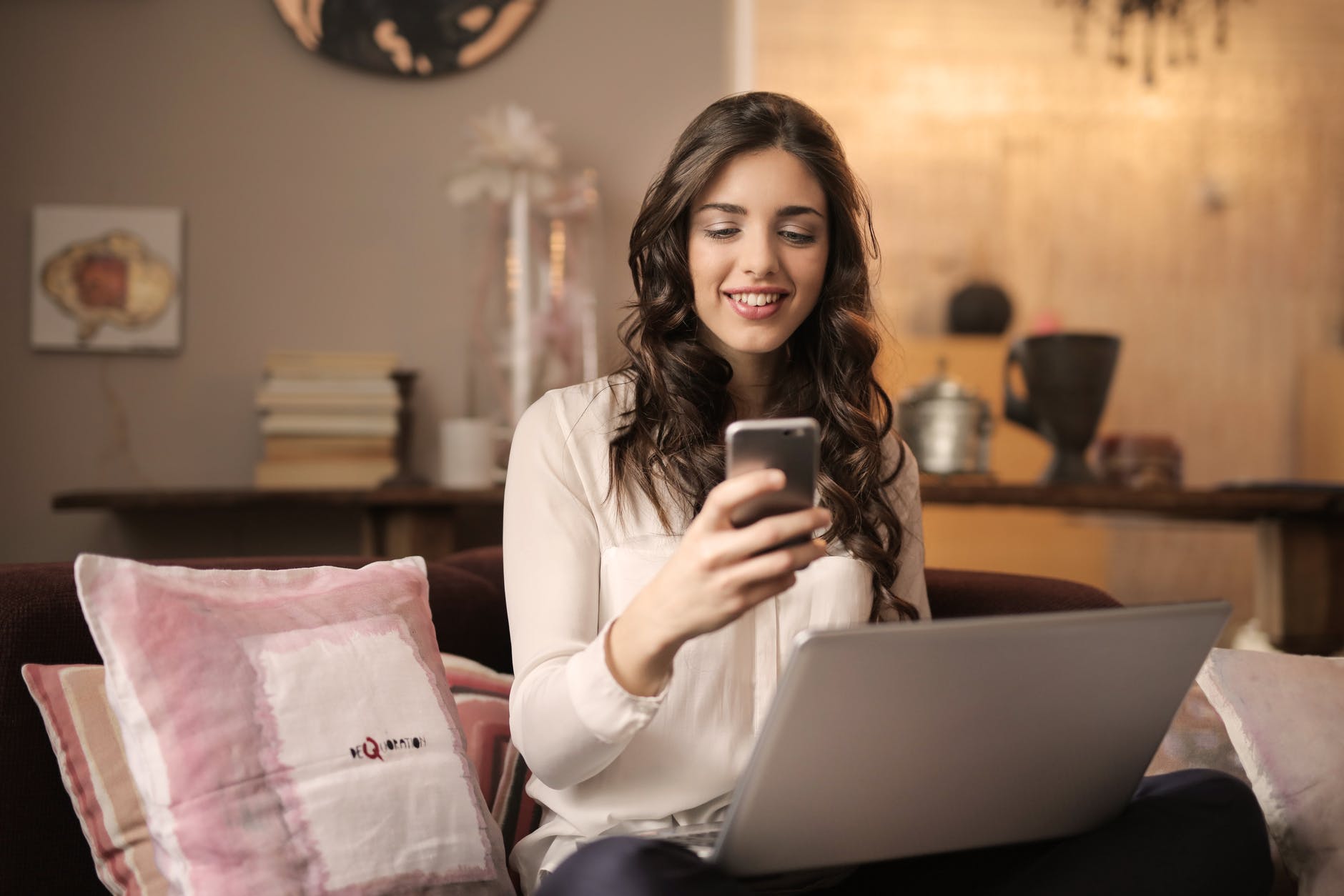
woman sitting on sofa while looking at phone with laptop on lap

“True health care reform cannot happen in Washington. It has to happen in our kitchens, in our homes, in our communities. All health care is personal.”

– Mehmet Oz

When COVID made its grand debut back in early 2020, no one was sure how serious of an issue it was going to be. That is until there was a massive shortage of things like milk, bread and toilet paper (in my area it was a complete wipeout). But no one expected the breadth of things to come until people’s personal health and medical treatment were on the line.

Enter Telehealth.

When people couldn’t get to their doctor or get their prescriptions, one thing came to the rescue and that was Telehealth: a new age method to attend one’s doctor’s appointments from the comfort of their homes. This definitely is more convenient for everyone and has its perks, but that doesn’t mean there aren’t downsides, right? With a little research I came up with what I believe are the positives and negatives to Telehealth appointments.

As someone who has at least one doctor’s appointment a month, a personal curiosity sort of drove me to think about this “issue”. There are many of both, but does the good outweigh the bad? My need for immediate gratification led me to making a list which I’m about break down.

One of the pros is obviously the convenience factor. Now we don’t have to waste gas or even leave the couch. We don’t even have to shower or bathe! It’s definitely a positive in the eyes of most. And I get it.

On the same token, you can’t have Telehealth appointments that require physical therapy, labs, or bloodwork. So, you’re not completely off the hook when it comes to attending all appointments.

Another helpful part of Telehealth appointments is that they lower the risk of spreading COVID and other illnesses. This, of course, is helpful both now and when the virus was king. Even if most illnesses are just even the slightest bit contagious, a Telehealth appointment is probably the safer route to take.

I think a real downfall to the era of Telehealth is the requirement to have internet and smart phone, tablet, or a computer. For many people I know this is what hinders them seeking out medical treatment.

Below is a more comprehensive list of the pros and cons.

PROS OF TELEHEALTH APPOINTMENT:

  • Safety, comfort, and convenience of your own home
  • No increase in potential COVID-19 exposure from leaving home.
  • Able to continue PT safely even if you have significant risk factors or are at high risk for COVID-19 exposure
  • No additional time/expense of commuting or parking
  • No need to wear face masks during exercise
  • Breathing exercises can be performed safely and freely without the barrier of a face mask
  • Therapist/patient communication may be easier without face masks
  • PT can guide patient on exercises or recommended self-treatment techniques while patient is in their own home/workspace in real-time.
  • Convenient when childcare is limited or unavailable

CONS OF TELEHEALTH APPOINTMENT

  • Some patients may feel more distracted or have limited privacy at home
  • No hands-on procedures/manual therapy techniques by PT
  • Muscle and soft tissue assessment may be limited virtually
  • Patient must adjust screen position during session to allow PT to view movements and positions
  • Potential technological/wi-fi difficulties can limit connection at times

So, does the good outweigh the bad? I’ll leave the ball in your court.