Caesar Meet Brutus

“If I can’t be my own, I’d feel better dead”

– Alice In Chains, Nutshell

I think I’m losing my mind.

The week started out grand – with my computer crashing at just two months old, my car battery completely crapping out (along with a broken terminal), and a missed freelance deadline.

Hours on the phone with HP and three business days later finally led to my computer resolution. For only having my writing saved on it I question what makes a brand-new laptop crash. I’m not extremely tech savvy, but my suspicions have been raised.

It’s kind of funny how a day can start off one way and then end in a totally different one, isn’t it? It’s our lives. We go through so many changes and come upon so many crossroads that it’s amazing we even have the ability or time to think at all. It’s the sort of thing I happen to be all too familiar with yet really would rather not be. To know the ins and outs of human emotion to this extent isn’t always the greatest of gifts. I’d trade it to be sad any day.

But we still get up every day, doing the same thing over and over. And then we go off, telling ourselves and others whatever lies we must in order not to go completely insane.

It’s a vicious cycle we’re born into. We may not necessarily be born insane; in fact, I feel we’re all born with the pretense to run from insanity. This may be our best natural asset, even when we are having to make up things to run from.

And strangely it somehow works out, albeit usually messily in the end.

I think my favorite part of who I am is attacking itself. My brain is no longer my best friend, and my mind never was. My brain is a traitor. I’m losing track of myself and someone on the inside seems to be enjoying it.

Caesar meet Brutus.

That’s just cryptic immaturity on display, but not completely inaccurate.

The mowing season is in full swing and has been keeping me busy, taking away quite a bit of time from my writing. Which is why I haven’t been here in a few days (along with my many other reasons, of course). It’s hard to prioritize which “projects” to be working on when your time is limited, and I’m trying to be as ambitious as possible without completely losing my head (haha).

But it seems to be to no avail. I’m blinded to the days of the week anymore. I am consciously keeping myself in check because I can’t keep up. It’s Saturday night, but it feels like it’s Tuesday. I don’t know why. This will somehow be my fault, though.

I’m remembering things in fragments and snapshots. Some days I am blessed with the gift of being able to string real thoughts together, other days not so much. Lately, all of my writing has become diaries of fog. I get stranded in the cliché “sea of words”, and if it doesn’t come out sounding like rambling gibberish, it comes out very corny, full of phrases like “sea of words”.

I have written some poetry I’m semi-proud of lately, though. I hate writing poetry, but feel it is a necessary evil. Sometimes the spirit just takes over and I abandon prose for a moment, getting lost in what is more than likely pretentious and semi-fraudulent. There is good poetry, however. I just do not recognize it in my own writing.

I still play my guitar every day, which is a mental exercise built perfectly to my advantage. I only play acoustic guitar anymore and haven’t picked up my bass in longer than I’d like to admit. I don’t know if “music equals life” like the t-shirts say, but without it I’m not sure where my life would be.

I’ve never had my shit together. I’ve just been able to use my illusion to get by. Now, all of that seems to be catching up to me. I don’t have the ability anymore to fake it or pull one over on people by faking it. If this is a dance, I no longer remember the steps and have never been one for dancing anyway.

I seem to be finding more and more ways I am “restrained” in life but continue keeping up the good fight of not staying in any boxes created by the “powers that be”. I am proud of myself for that. Most people who know me say I have no filter, which at times can be true, dangerous, and cruel. However, I am not afraid to stand on my own two legs and say what’s on my mind. It’s been called both my best and worst quality.

I’m going to have to wrap this up because I can see the fog coming in. It’s getting late, anyway. Although I mainly complained, I am proud to have put together a group of cohesive words from a train of broken thoughts. I made it this far and, surprisingly, even I know when to quit.

A Brief Thought on Dying

“It matters not how a man dies, but how he lives. The act of dying is not of importance, it lasts so short a time.”

– Samuel Johnson

Someone close to me recently brought forth the question of whether or not I was curious about what people will say or think about me after I die. I couldn’t help but laugh a little and try and be anecdotal, but nothing that came to mind sounded right.

When they asked me again if I had ever pondered on the issue, I had to be honest and say “no”. I’m of the inclination that this is it. It’s all black after these lights go out…so I’m still trying to plan how I’m going to sneak in a little bit when I get to the “other side”.

I guess in a way I’m so preoccupied with “what’s next” rather than who is saying what about me after I’m gone. I’m a nihilist through and through, but I still don’t have a good enough grasp on the afterlife to be comfortable going now.

Now, I’ve always known what I’ve wanted on my tombstone if that counts: “The future’s uncertain and the end is always near.” A line from “Roadhouse Blues” by The Doors. If you take away the Morrison myth it’s not a bad quote, one of ultimate summation, I think.

What do you want to be remembered for after you’ve left this earthly plane? What do you want your friends and family to say about you? Do you even care? What’s next after we die?

I’m interested to know your feelings on the topic.

My Personal Top 10 Tips for Those Who Are Mentally Ill

“To be ill adjusted to a deranged world is not a breakdown.”

– Jeanette Winterson

There are always goin

  • Accept it: It’s all you can do. It’s a process, but it’s necessary.
  • Acknowledge that you are not your illness: This is most important.
  • Don’t be afraid of the med game: Hey, if it helps…
  • Avoid “You might be…” or “Things to avoid…” lists or articles: We’re all different
  • Stay active/healthy diet: Staying healthy is key to having any control over your overall psychological well-being.
  • Practice self-care: This, especially along with a healthy diet, can help one have a basic level of control.
  • Develop a routine: This can be difficult as real life can get in the way, but can be a game-changer.
  • Stay in contact: With friends, with family, with everyone.
  • Pause for the cause: It’s okay to be selfish sometimes.
  • Google doesn’t have a medical degree: Education is key when it comes to your mental illness but search with caution and insight.

Below are additional tips to boost your mental health:

  • Track gratitude and achievement with a journal. Include 3 things you were grateful for and 3 things you were able to accomplish each day.
  • Start your day with a cup of co­ffee. Coff­ee consumption is linked to lower rates of depression. If you can’t drink coff­ee because of the caff­eine, try another good-for-you drink like green tea. 
  • Set up a getaway. It could be camping with friends or a trip to the tropics. The act of planning a vacation and having something to look forward to can boost your overall happiness for up to 8 weeks!
  • 4, Work your strengths. Do something you’re good at to build self-confidence, then tackle a tougher task. 
  • Keep it cool for a good night’s sleep. The optimal temperature for sleep is between 60 and 67 degrees Fahrenheit.
  • “You don’t have to see the whole staircase, just take the first step.” – Martin Luther King, Jr. Think of something in your life you want to improve, and figure out what you can do to take a step in the right direction.
  • Experiment with a new recipe, write a poem, paint or try a Pinterest project. Creative expression and overall well-being are linked.
  • Show some love to someone in your life. Close, quality, relationships are key for a happy, healthy life.
  • Boost brainpower by treating yourself to a couple pieces of dark chocolate every few days. The flavanoids, caffeine, and theobromine in chocolate are thought to work together to improve alertness and mental skills.
  • There is no greater agony than bearing an untold story inside of you.  -Maya Angelou. If you have personal experience with mental illness or recovery, share on Twitter, Instagram and Tumblr with #mentalillnessfeelslike. Check out what other people are saying here.
  • Sometimes, we don’t need to add new activities to get more pleasure. We just need to soak up the joy in the ones we’ve already got. Trying to be optimistic doesn’t mean ignoring the uglier sides of life. It just means focusing on the positive as much as possible.
  • Feeling anxious?  Take a trip down memory lane and do some coloring for about 20 minutes to help you clear your mind. Pick a design that’s geometric and a little complicated for the best effect. Check out hundreds of free printable coloring pages here.
  • Take time to laugh. Hang out with a funny friend, watch a comedy or check out cute videos online. Laughter helps reduce anxiety.
  • Go off the grid. Leave your smart phone at home for a day and disconnect from constant emails, alerts, and other interruptions. Spend time doing something fun with someone face-to-face.
  • Dance around while you do your housework. Not only will you get chores done, but dancing reduces levels of cortisol (the stress hormone), and increases endorphins (the body’s “feel-good” chemicals).
  • Go ahead and yawn. Studies suggest that yawning helps cool the brain and improves alertness and mental efficiency.
  • Relax in a warm bath once a week. Try adding Epsom salts to soothe aches and pains and help boost magnesium levels, which can be depleted by stress.
  • Has something been bothering you? Let it all out…on paper. Writing about upsetting experiences can reduce symptoms of depression.
  • Spend some time with a furry friend. Time with animals lowers the stress hormone – cortisol, and boosts oxytocin – which stimulates feelings of happiness. If you don’t have a pet, hang out with a friend who does or volunteer at a shelter.
  • “What lies before us and what lies behind us are small matters compared to what lies within us. And when you bring what is within out into the world, miracles happen.” – Henry David Thoreau. Practice mindfulness by staying “in the present.”  Try these tips
  • Be a tourist in your own town. Often times people only explore attractions on trips, but you may be surprised what cool things are in your own backyard.
  • Try prepping your lunches or picking out your clothes for the work week. You’ll save some time in the mornings and have a sense of control about the week ahead.
  • Work some omega-3 fatty acids into your diet–they are linked to decreased rates of depression and schizophrenia among their many benefits. Fish oil supplements work, but eating your omega-3s in foods like wild salmon, flaxseeds or walnuts also helps build healthy gut bacteria.
  • Practice forgiveness – even if it’s just forgiving that person who cut you off during your commute. People who forgive have better mental health and report being more satisfied with their lives.
  • “What appear to be calamities are often the sources of fortune.” – Disraeli. Try to find the silver lining in something kind of cruddy that happened recently.
  • Feeling stressed? Smile. It may not be the easiest thing to do, but smiling can help to lower your heart rate and calm you down.
  • Send a thank you note – not for a material item, but to let someone know why you appreciate them. Written expressions of gratitude are linked to increased happiness.
  • Do something with friends and family – have a cookout, go to a park, or play a game. People are 12 times more likely to feel happy on days that they spend 6-7 hours with friends and family.
  • Take 30 minutes to go for a walk in nature – it could be a stroll through a park, or a hike in the woods. Research shows that being in nature can increase energy levels, reduce depression and boost well-being.
  • Do your best to enjoy 15 minutes of sunshine, and apply sunscreen. Sunlight synthesizes Vitamin D, which experts believe is a mood elevator.
  • “Anyone who has never made a mistake has never tried anything new.” -Albert Einstein. Try something outside of your comfort zone to make room for adventure and excitement in your life.

There are many different skills or coping mechanisms that you can do or use in times of mental duress. It all just depends on the situation and what is needed at the time to diffuse the mental health crisis or concern. We all have it in us and although bullet points suck, there is a truth there that can only be helpful.

I hope my list, along with the list provided by the MHA, is helpful to someone in some way.

All These Medications

“It’s difficult. I take a low dose of lithium nightly. I take an antidepressant for my fatness because prayer isn’t enough. My therapist hears confession twice a month, my shrink delivers the host, and I can stand in the woods and see the world spark.”

– David Lovelace, Scattershot: My Bipolar Family

If you haven’t read Madness by Marya Hornbacher, I highly recommend that you do so. Especially if you suffer from bipolar disorder. She’s not Stephen King, but the book is as equally terrifying as anything he has written.

As someone who does suffer from the illness, I look at the book, which is a devastatingly honest memoir, as a shield. It’s far from comforting, but it is a book that captures Hornbacher’s long and torturous journey.

There is a section at the end of the book about different facts about the disorder. Many I knew. Others could be terrifying footnotes to an already terrifying book. Hornbacher even lists her medication regimen in the section. I noticed we shared a few medications and it got me thinking.

About all these medications.

Over the course of seven years, I have been on countless medications, which I am currently paying for. I have always been consistent in taking my pills. I have never gone off my meds. I have never had any reason to. But I’m beginning to wonder if the damage done by years of taking numerous medications is just as bad as not have taken them at all.

I know, I know. That’s dramatic, but still. Pills that were supposed to help my brain function are now having if not an opposite effect, a disappointing and new one. I’m not experiencing the basic “blah” one might feel on antidepressants. I’m experiencing total loss. Of conversation. Of thought. My doctor is even wanting to wean me off some of my necessary meds because of some of the issues I am having. It’s just not possible.

There are so many different medications for bipolar disorder. It’s insane. I know everyone is different, but why not try and fix a medication that “doesn’t work” or has “flaws” instead of creating a new one with new problems?

Big Pharma, baby.

There is no cure or direct known cause of bipolar disorder so it’s impossible to create a universal drug to treat the illness. However, there must be a more stable medication or clinical treatment.

And they say that’s Lithium. The problem? The same: the doctors throw a handful of other pills on top that.

Multiple medications are necessary in the treatment of bipolar disorder, but not all the ones that are typically prescribed.

On average, it takes someone with bipolar disorder 10 years to receive the proper diagnosis. That’s a lot of different pills, my friend.

If it it’s a 10-year journey, I’m three years out and am still keeping my fingers crossed.

a day in the life: reflections

“The real man smiles in trouble, gathers from distress, and grows brave by reflection.”

– Thomas Paine

I was recently thinking about my past, reminiscing about friendships that seem like mirages of existence at this point. I decided it was best to use this great “hour of remembrance” in a constructive way and think about where I was five years ago.

Five years ago, I was 27, which was my golden birthday. I was wild then, wild and rearing to go be a part of any type of ignorant activity. I suffer from bipolar disorder if you guys didn’t know and even though I knew it at the time, I still used it to be the life of the party. I was still embarrassed (to an extent) about my condition, and it was easier to just be the wild one.

Five years ago, I worked at a television news station. It was a miserable job, and I would recommend it to no one. I was a digital content producer, which was just a fancy title for someone who wrote up police reports and posted them on Facebook. I’m a “journalist”, and CNN wasn’t calling so I needed to get my foot in the door. I worked at a print news station prior as a copy editor and it was just as miserable (I had interned there and was promised a job as a reporter but was just given a different one).

Five years ago, my middle son was barely one. Life for my wife and I was drastically different. We balanced our schedules and were lucky to have the time we did have. My wife was a correctional officer, and everything worked out perfectly. Our little boy is now almost six.

Five years ago, I asked a woman who has changed my life for the better to marry me. She did the following year, thank God, but the time we spent together that year as an engaged couple can never be changed or taken away.

Five years ago, I was blessed. Just as blessed as I am today. I have always tried to adopt a strict “don’t look back” policy, but it’s hard when looking back is sometimes the key to moving forward.

Mental Health, the Military, and My Father

“Like father, like son.”

– Unknown

This is going to be more than a post of fun facts and bullet points. For me, anyway. Like millions of others with family members in the military, this has, is, and will always hit home in its own way.

My father was in the United States Army for 31 years before retiring in his early 50s a few years ago. He was that type. He could have quit after four years under the rules and laws I know. But he dedicated another 27 years of service out of the “somebody’s gotta do it” ideology. Or so I hope. The alternative would be far more sinister.

From my high school career on, he was mostly gone overseas somewhere. He could never say where. It turns out, however, a lot these deployments were voluntary. But from the age of 13 to 32, the man I now see before me has changed dramatically. He’s changed into a man that a broken system doesn’t want me to know has broken him. He’s there, yes, but there’s something missing, too.

The war (which one?) has taken its toll, yes, but have we not dropped the ball on making sure veterans receive the frontline psychiatric help they deserve after being on the front lines?

These are all questions that have been on the table for some time now. Nothing new, but far from right.

My father is an alcoholic, which makes me ever more thankful I do not drink because he’s that type of alcoholic. With all the candor and then some. But my dad wasn’t always like that. No, he was the reasonable one in our family. For a while.

Like I’ve mentioned, it comes with the territory. I know this. But the interruption or delay, if you will, my father has undergone is scary and, to an extent, was avoidable.

Who’s to blame, though? Those feeding the egos, or the ones needing their ego fed? It’s all relative, I guess. These all were questions asked before mental health became a part of the paradigm.

Nearly 25% of active-duty members showed signs of a mental health condition, according to the 2014 study by JAMA Psychiatry.

According to the National Alliance on Mental Illness, there are three primary mental health concerns that you may encounter serving in the military.

Postraumtic Stress Disorder (PTSD). Traumatic events, such as military combat, assault, disasters or sexual assault can have long-lasting negative effects such as trouble sleeping, anger, nightmares, being jumpy and alcohol and drug abuse. When these troubles don’t go away, it could be PTSD. The 2014 JAMA Psychiatry study found the rate of PTSD to be 15 times higher than civilians.

Depression. More than just experiencing sadness, depression doesn’t mean you are weak, nor is it something that you can simply “just get over.” Depression interferes with daily life and normal functioning and may require treatment. The 2014 JAMA Psychiatry study found the rate of depression to be five times higher than civilians.

Traumatic Brain Injury (TBI). A traumatic brain injury is usually the result of significant blow to the head or body. Symptoms can include headaches, fatigue or drowsiness, memory problems and mood

Adjustment disorder is another common disorder members of the military transitioning back to civilian life experience. This is where PTSD and depression play a high role.

Soldiers exiting the military are also made to feel weak by needing or accepting help for a psychiatric concern that could’ve been prevented or at least prevented from getting worse.

This is another issue my father personally faces. This, along with the less-than-great medical services provided by the VA, is another reason my father, who desperately needs medical care, will not seek it. One, it is for the weak. And two, he still doesn’t have full access to the care he needs.

Below I have included 11 facts about soldiers and mental/psychological health:

  1. Depression and post-traumatic stress disorder are the most common mental health problems faced by returning troops.

The most common symptoms of PTSD include difficulty concentrating, lack of interest/apathy, feelings of detachment, loss of appetite, hypervigilance, exaggerated startle response, and sleep disturbances (lack of sleep, oversleeping.

Post-traumatic stress disorder is diagnosed after several weeks of continued symptoms.

About 11% to 20% of veterans of the Iraq and Afghanistan wars (Operation Iraqi Freedom and Operation Enduring Freedom) have been diagnosed with PTSD.

30% of soldiers develop mental problems within 3 to 4 months of being home.

55% of women and 38% of men report being victim to sexual harassment while serving in the military.

Because there are more men than women in the military, more than half of all veterans experiencing military sexual trauma are men.

An estimated 20% of returning Iraq and Afghanistan veterans turn to heavy drinking or drugs once they return to the US.

Between 10 and 20% of Iraq and Afghanistan veterans have suffered a traumatic brain injury (TBI). Possible consequences of this internal injury include anger, suicidal thoughts, and changes in personality.

In 2010, an average of 22 veterans committed suicide every day. The group with the highest number of suicides was men ages 50 to 59.

Some groups of people, including African Americans and Hispanics, may be more likely than whites to develop PTSD.

I said this wouldn’t be a post of stats and bullet points, but they’re necessary. I can only speak of my father so much without violating his personal liberties, although he knows nothing about this blog and probably wouldn’t approve of it, anyway.

War will change any person, no doubt, but it doesn’t mean we leave our soldiers on their own, especially after the services they do provide for our country. The transition back to “normal” life after being in combat can be tremendously difficult. It’s important for people to understand that for a soldier the personal warfare, the inner battlefront, never ends. It will always be there. We must be diligent in the care and understanding of our soldiers when it comes to mental health.

Despite the expression and the idea behind it, I think very little is fair when it comes to love or war.

Mental Illness: An Excuse for Bad Behavior?

“Mental illness does not give you the excuse to act like a jackass.”

– Pete Davidson

The above quote quite sums up the entirety of what this short post will be.

It’s not unheard of. Someone with a mental illness, consciously or not, may believe they’re allowed a free pass at times. This, of course, is false. In no set of circumstances does mental illness allow one to act like a dick.

It’s a total myth that having a mental illness is an excuse for poor or bad behavior. Not that that is out of the realm of possibility, but one cannot stand behind the guise of mental illness to do whatever one wants. Yet, in certain times, we need to remember that the illness is not the person, and those isolating behaviors are part of their condition.

One study found that one-third of people think people with mental illness are ‘making excuses’.

According to an article in The Bridge Chronicle, people use mental illness as “an excuse for irrational behavior…mental illness doesn’t evaporate the consequences of our actions.

“Mental health does not make problematic behaviors excusable.”

A clear example of this is Kanye West and his continued deterioration in the media. He is allegedly bipolar (I am not sure if there has ever been a clinical diagnosis or not), but up until recently, we have always given Kanye a “pass” when he’s been offensive or completely “off his rocker” (pardon my discriminatory description – Kanye has earned it, though). His “genius” overshadowed any medical or mental health concerns that he was experiencing, and he continued down a destructive, untreated path.

I understand, to some degree, why people may play the “mental illness” card, though. It is sometimes the only way we can get any true recognition of our condition. It’s inexcusable to be manipulative when it comes to “owning” one’s illness, but sometimes it is the only way to express that part of our lives. One can use tact, though, and in a way that’s not so extreme.

There are different ways to go about “expressing” yourself. Taking responsibility for one’s actions and/or reactions is a good place to start. You may end up revealing something about yourself that you don’t want to but taking responsibility for certain behaviors is a good step in the right direction.

Having that kind of accountability can go a long way when having a mental illness. You have to acknowledge the situation before being able to handle it.

Symptoms of an undiagnosed mental illness include:


· Thoughts of harming someone or yourself

· Emotions of sorrow, frustration, fear, concern, or anxiety are recurrent or persistent.

· Regular outbursts of feelings or mood changes

· Uncertainty or mysterious memory lapses

· Delusions or hallucinations

· Intensive fear or anxiety about putting on weight

· Important shifts in eating or sleeping behaviors

· Unknown improvements in success at school or work

· Failure to deal with regular tasks or problems

· Cessation from events or relations in society

· Authority disobedience, delinquency, robbery, or destruction

· Misuse of substances, including alcoholism or illicit drug use

· Mysterious bodily conditions

There have been times when I’ve “gone off” because I’ve slipped, and lashing out seemed to be the most logical response. Hands up-don’t shoot! I, too, have been guilty of this.

If you find yourself lashing out at others, here are a few things you can do:

· If you have a lot of built up anger, speak to someone. A family member, a friend, or your doctor to talk about the things going on in your head.

· Alternatively, if you’re feeling angry, unleash your feelings by calling Samaritans on 116 123, they are there to listen to you.

· If you find yourself irritated or angry, question what’s going on. Is everyone else being irritating, or do you need extra support for your emotions?

· Before making hurtful comments, take a step back and think about the consequences.

· If you are unable to stop a reaction, take some time out afterward and apologize to the person you hurt.

· Listen when friends and loved ones tell you they’re hurting. Don’t dismiss their feelings or deflect them by blaming your mental illness.

Some people struggle with their moods and behaviors. It can be debilitating for everyone involved. This, however, does not give anyone the right to abuse their condition. Being mentally ill does not excuse bad or inappropriate behavior.

So, You Think You Have a Mental Illness

“We must bring the issue of mental illness out into the sunlight, out of the shadow, out of the closet, deal with it, treat people, have centers where people can get the necessary help.”

– John Lewis

With 1 in 5 U.S. adults suffering from some form of mental illness, it’s not a huge leap for one to think they may be suffering from one, as well. Depression and anxiety are extremely prevalent. Sharing similar hallmarks to certain other illnesses can drive many to assume they may be suffering from some sort of mental health issue.

According to Mental Health America, “mental illnesses are brain-based conditions that affect thinking, emotions, and behaviors.” Research suggests that 21% of adults in the U.S. experience some form of mental illness. 1 in 25 U.S. adults live with serious mental illness, and 1 in 6 U.S. youth aged 6 to 17 experience a mental health illness

There are things TO DO and things NOT TO DO when it comes to being curious about your own mental health. One of the big ones for me is to educate without overloading myself. Dr. Google may be right, but I believe it’s only smart to begin the deep education part after a proper diagnosis has been made by a mental health professional.

One major thing someone can do for someone is to just listen. You don’t have to pretend to understand, just listen. It may not help either side of the conversation, but it can act as a distraction.

One thing to avoid is any articles with names like “Signs You May Be…” or any other similar catechism. These are often misguided pieces of information and are used to create worry and fear rather than to be informative. After all, that headache you just Googled might just be cancer.

However, there are symptoms to keep an eye out for.

In Adults, Young Adults and Adolescents:

  • Confused thinking
  • Prolonged depression (sadness or irritability)
  • Feelings of extreme highs and lows
  • Excessive fears, worries and anxieties
  • Social withdrawal
  • Dramatic changes in eating or sleeping habits
  • Strong feelings of anger
  • Strange thoughts (delusions)
  • Seeing or hearing things that aren’t there (hallucinations)
  • Growing inability to cope with daily problems and activities
  • Suicidal thoughts
  • Numerous unexplained physical ailments
  • Substance use

In Older Children And Pre-Adolescents:

  • Substance use
  • Inability to cope with problems and daily activities
  • Changes in sleeping and/or eating habits
  • Excessive complaints of physical ailments
  • Changes in ability to manage responsibilities – at home and/or at school
  • Defiance of authority, truancy, theft, and/or vandalism
  • Intense fear
  • Prolonged negative mood, often accompanied by poor appetite or thoughts of death
  • Frequent outbursts of anger
  • In Younger Children:
  • Changes in school performance
  • Poor grades despite strong efforts
  • Changes in sleeping and/or eating habits
  • Excessive worry or anxiety (i.e. refusing to go to bed or school)
  • Hyperactivity
  • Persistent nightmares
  • Persistent disobedience or aggression
  • Frequent temper tantrums

Before letting a list like this define you it’s important to seek out professional help. These are only places to start.

If it turns out after receiving proper medical care that you may have a mental illness there are things to do, as well.

  • Accept your feelings
  • Establish a support network
  • Seek counseling
  • Take time for yourself
  • Handling unusual behavior
  • Talk to a doctor about medication
  • Therapy

No, not all of these are going to work for everybody (I still struggle myself), but they’re a place to start. You must accept the issue before you can move forward. Only do so cautiously, though. The opinion of a mental health professional is needed before anything else.

Mental Health in Small Town, USA

“There is no standard normal. Normal is subjective. There are seven billion versions of normal on this planet.”

– Matt Haig

Just some brief thoughts:

I live in a small town. Like a really small town. It’s a very conservative, small town in a very conservative part of Illinois, which is most of the state (thank God for Chicago or we would be all Red). There aren’t a lot of resources in my area for people with any type of mental health or psychiatric problems. That seems to be the case for many rural areas across the U.S.

This isn’t news. A 2020 study found that “rural residents in the USA experience significant disparities in mental health outcomes even though the prevalence of mental illness in rural and metropolitan areas is similar.”

These issues may stem from a lack of funding or a lack of understanding of these types of problems. I haven’t even heard of any recognition that May is Mental Health Awareness Month on any type in any local media in my area – not that that is surprising. I have found most people have no idea this is Mental Health Awareness Month.

That’s part of the problem. No, not recognizing May as “ours”, but by not recognizing the issue at all. I had an appointment with my psych doctor yesterday, who practices more than an hour away now. Thank God (or whoever) for Telehealth or that monthly drive would be a killer.

A study by researchers at Wake Forest School of Medicine determined one of the main causes behind the lack of resources for mental health treatment in rural areas is the surrounding shame and stigma. The belief that “I should not need help.”

“We as a society have a hard time asking for help, so it’s hard enough to ask for help [without feeling] that everybody’s going to know it,” Dennis Mohatt, vice president of the behavioral mental health program at the Western Interstate Commission for Higher Education, said. “Your neighbors don’t have a clue in a city if you’re going to go get some help. But everybody [in a small town] will know if your pickup truck is parked outside of the mental health provider’s office.”

He’s right. Fortunately, I do not fall into that category. I’m not out picketing for change or acknowledgment, but I’m far from ashamed.

Other research suggests even suicide rates are affected by the regionality of mental health services.

“There is a higher suicide mortality rate among residents of rural and nonmetropolitan areas than those living in metropolitan areas,” Ty Borders, Ph.D., said. “The discrepancy has existed for decades, and the gap has widened in recent years,”

So, why is this? I’m sure there is more than one answer, but where I live it has a lot to do with what I hope is a lack of understanding (I have to believe that, at least). Funding, too, if that can be looped into it on some real substantive basis. However, I believe it stems from a lack of understanding.

It’s also because of a weakness that gets pinned on those who suffer from any type of mental health problem or crisis. There is very much a “Suck it up and get over it!” mentality among many throughout my community. The idea that mental illness didn’t exist fifty years ago is a very prevalent one.

Poverty plays a role in this dilemma, too. How can someone expect to pay for mental health services when they can’t afford their 10-year-old’s school physical? Especially if those types of appointments are an hour away and are only open certain hours or days of the week.

According to the Rural Health Information Hub, “18.7% of individuals in nonmetropolitan areas have a mental health condition, which is about 6.5 million people. Rural residents are also more likely than urban residents to experience a serious mental illness.”

One report suggests that for every 30,000 rural Americans there is one psychiatrist. This is interesting, and it would be interesting to know how many out of those 30,000 need psychiatric help. But we’ll never get any accurate information regarding that.

So, do we need more therapists? Or is it something more serious, a more systemic issue? I don’t think there is a black or white answer. I mean, I have no real ideas that would matter. I’m just like everyone else: pointing out the flaws in the system with no real alternative measure in mind.

My Week-Long Hiatus

“Stress acts as an accelerator: it will push you either forward or backward, but you choose which direction.”

– Chelsea Eriaue

It has been one of “those weeks” to be sure. No, nothing genuinely terrible has occurred. It’s just been one of “those weeks” in the sense that when that phrase is used, all can be sure what is truly meant.

For me, the main thing was a classic case of “biting off more than I could chew”, an ailment that I’m too often afflicted with. I spent several days writing several freelance pieces that I had put off until the last minute, ultimately resulting in an intense, unnecessary level of stress that I’m surprised didn’t end up with me losing my hair.

I work best under pressure, I feel, but this was a little too heavy of a workload on top of everything going on. To purposefully put myself in that type of predicament, on top of kids and real life

Anyway, after finally completing my deadly deadline, I spent two days push mowing three acres of land. What started as a pet project quickly turned into a work overload. The yard had to be mowed, though, and I won’t let anyone else do it. It’s just how I was raised.

There’s not much to this post except to let everyone know I plan to stick to the main schedule I initially intended. When I missed Sunday and Monday, I didn’t want to change days just because of “personal strife”. It’s Thursday now, and I’m providing nothing of substantial value except that. I intend to do better by prioritizing and learning from my most recent lesson.

Whoever said “work smarter, not harder” sure knew what the hell they were talking about.

The Perks (or So I’m Told) of Bipolar Disorder

“In the terms of ‘Mental Illness’ isn’t stable a place they put horses that wish to run free?”

– Stanley Victor Paskavich

If you follow my blog regularly, don’t worry if I’ve strayed from my personal journey of positive thinking. I haven’t. But I am wondering if someone’s playing a joke on me. I’m behind the computer as we speak, waiting for someone to jump and shout, “GOTCHA!” Just know I went in with the idea for this post relieved and even a little bit excited. By the time I was done, though, I couldn’t tell if I was baffled, underwhelmed, or downright appalled.

It may seem ignorant (or arrogant, depending on which way you look at it) to suggest that there is any kind of upside to the bipolar condition. I would not be able to see past the question before giving an answer that was less than friendly. Understanding that now does do a lot of good but makes up for very little.

That said, I’ve always had my personal beliefs about any connections between bipolar disorder and intelligence, creativity, etc. They were in no way unbiased, universal, or set in stone. It turns out, though, there is research to suggest that being bipolar doesn’t always have to be all bad.

Many people think genetics is the only factor that plays a role in this disorder’s existence. One study on the matter suggests that “despite the clear contribution of genetics to the etiology of bipolar disorder, little of the genetic architecture is currently understood.”

That same study also found five positive psychological traits dominant in those with bipolar disorder:

· Spirituality

· Empathy

· Creativity

· Realism

· Resilience

These traits “are generally viewed as valuable and beneficial morally or socially.”

I can only speak for myself, but I wouldn’t have guessed those to be the traits amplified in a positive light by bipolar disorder.

One of the psychiatrists who worked on the study, Nassir Ghaemi, is turning some heads with some of his research.

Ghaemi, psychiatrist and author of A First-Rate Madness: Uncovering the Links between Leadership and Mental Illness, has evidence supporting the study’s contentious findings.

“Depression enhances empathy and realism, and the mania enhances creativity and resilience … so when people have bipolar disorder, they have the full gamut of benefits.”

According to Ghaemi, those with bipolar disorder “are better equipped for times of crisis.”

This is playing semantics as far as I’m concerned. I personally don’t find it offensive but would understand why someone else suffering from bipolar disorder might. The word “crisis” is applicable in many different ways and on many different levels. To suggest that someone with bipolar disorder has the “full gamut of benefits” is offensive in general and, even more so, inaccurate.

The idea of resilience being a positive trait of this illness kind of makes sense to me, but the cynic in me can see how that might be offensive to others, as well. It may also be the cynic in me and not the bipolar disorder that makes me think, “Resilience? At what cost?”

Ghaemi said he believes exposure to adversity can provide a kind of “mental vaccine” against future adversity, in turn creating a kind of organic resilience.

“People with bipolar disorder … have traumatic manic or depressed episodes, and then it goes away. They actually recover from these episodes,” he said.

This is a misleading, reckless statement. I’m walking proof that that isn’t a rational assumption. I can only speak for myself, but even when I “come out” of a depressive or manic state I am always reminded that I only have a certain number of tools to work with – and they’re never enough. And they never will be. That’s part of the disorder: When you go into remission, you think you’ll be ready for next time. And then next time comes and you realize too late you were far from ready.

I can’t speak to the sense of spirituality that inflates by the madness; I myself am not a spiritual person so I can’t speak to the idea’s logic or lack thereof. The idea is that someone with bipolar disorder may “rely” on spirituality to help them through. Although this makes sense to me, I still cannot relate.

David Miklowitz, director of the Child and Adolescent Mood Disorders Program at UCLA’s Semel Institute, believes traits such as spirituality, in fact, are worth developing as safeguards.

He says, “for people with bipolar disorder to think about their personal goals for recovery—not taking medication and only taking medication, but are there other things that could be helpful to their long-term quality of life?”

This is true, but we must not lose sight of where, and in what order, our priorities need lie. “Recovery” in the land of mental illness and make-believe doesn’t mean “recovery” in the standard, typical sense here on dry land. For me, recovery is like the pot of gold at the end of the rainbow: the idea is fun, but that’s about it. If you’re going to worry about being resilient or creative, you better have the “basic” stuff (like a medication regimen and therapy) MORE than down pat beforehand. Remember, this is war.

But, Miklowitz does note the danger in romanticizing the “mad genius” concept.

“…where we get into trouble … is when it’s implied that bipolar people are more creative than other people and then the logical leap that people make is, ‘Well, if I go off my medications, then I’ll be really creative.’ And that’s when disasters tend to occur.”

It seems like Miklowitz wants to have his cake and eat it, too. He seems to be nailing down the importance of maintaining a healthy lifestyle while at the same time entertaining a hypothesis that, from where I’m sitting, seems a little too unrealistic.

So, what about depression? Does one’s close nature with suffering allow them to tap into a secret vault of empathy? Well, according to the study, kind of.

“I…think that people with bipolar disorder have a unique way of perceiving the world,” Roumen Miley, psychiatrist and clinical director of the Providence Care Mood Disorder Research and Treatment Service, said. “They have increased sensitivity. When people are depressed, they experience the world in a different way. They become more sensitive to the world and to the pain in the world.”

This ideology does make me wonder if I’m a bipolar anomaly in that I disagree. Sure, I see the world through a lens that only I can. And someone with breast cancer sees the world through a lens only they can. It makes me feel like a spectacle. I don’t want to be interesting or knowledgeable in that regard. I don’t want to be “fun” to be around if what I’ve gone through continues to be the price. I’m flattered, but no thanks.

There has been a known correlation between creativity/intelligence and bipolar disorder for decades now, but no one can point to the reason why. It’s been common knowledge for some time that there is an extreme genetic component to the illness, but no one knows anything about which gene that is and why.

I’m not in complete disagreement with some of the conclusions these researchers came to, but I question the unusual directions they followed to reach said destinations.

I’m not offended to a point of irrational defiance, and granted, I know very little about the professional backgrounds of the researchers involved…but their intentions weren’t entirely in the right place.

On another note, the study also puts out the idea that having a “positive cognitive bias” shows people without a mental illness often misjudge both their own capabilities and control. They also tend to interpret events with too much of a positive attitude. So, are people without bipolar disorder different than “us” because they’re too positive and lack a certain kind of control?

The study aside, even the title of Dr. Ghaemi’s book, A First-Rate Madness: Uncovering the Links between Leadership and Mental Illness, makes me wonder about some of the connections made. I’m sure the research is there, but it sounds silly taken at face-value.

A catalyst for Ghaemi’s research, Tom Wootton founded what’s called the Bipolar Advantage in 2003. Its mission is to “focus on learning how to thrive DURING manic and depressive episodes. Those who achieve remission end up in crisis the next time it happens. Those who learn to thrive never have to worry about their next episode again.” I never knew a mission statement could be so irresponsible and potentially dangerous. But, hey, for the right price you can learn to harness delusional mania or that earth-shattering depression to your advantage.

Do I believe that’s possible to a certain extent? Yes, but only to an extent.

It’s the language that scares me. Not everyone’s brain chemistry is going to change by taking some overpriced web seminar.

This illness is like walking through fire. You become stripped down to your most raw, bare form and then you feel. You’ll feel feelings that you could’ve gone your whole life without. Feeling them in a way you know no one else can relate to or tolerate. I’m not special. I already deal with the disorder so don’t belittle me by trying to fit me inside one of your boxes because I’ll get out.

To quote the study, “By gaining a better appreciation for the positive aspects of mental illness and exploring methods to enhance these traits, we may improve clinical outcomes.”

Maybe they’re right. Through all the research maybe they’ve found the way in and cracked the code. But just because we can’t start the book on page one doesn’t mean we have to rewrite the first three chapters. I understand there is no linear approach when researching and treating bipolar disorder, but the conditions in which these conclusions were drawn are unusual and self-serving.

Like I said at the beginning, I approached doing this post with a proud enthusiasm; I was ready to be able to have something of tangible, evidentiary value that there was an upside to my downside. And there is, of course. I’m just not sure Dr. Ghaemi or any other researcher here pointed it out.

“In the storm of crisis, complete sanity can steer us astray, while some insanity brings us to port,” he said.

Needless to say, I won’t ever be getting on a boat with Dr. Ghaemi, proverbial or otherwise.
So Far, So Good

“You are not your illness. You have an individual story to tell. You have a name, a history, a personality. Staying yourself is part of the battle.”

– Julian Seifter

So far, so good.

Still sticking to a pretty self-care-oriented lifestyle. I haven’t been in the trenches of this new battle too terribly long, so fingers remain crossed.

Routine is key, and after a healthy breakfast, my day kicked off with a walk around the city park – my hometown’s only claim to fame (one of the seven Lincoln-Douglas debates took place there – kind of cool actually). The park is near the town square, but still as far away as ever too, tucked in all snug behind a thick tree line that leads to a forest of a park.

I walked the winding, manmade trails over tree roots and animal tracks. I had forgotten how many laps a mile was so I just decided to forget to keep track of how many laps I walked.

I walked down to the pond where the local ducks were congregating. Many people come out with loaves of bread just to feed the, at more often than not, large group of ducks. On this particular day I had no bread, but then again, the ducks weren’t even on my radar. I was more oblivious to them than I’m sure they had hoped.

I haven’t really actually “exercised” since football and wrestling in high school, and the last time I ran was probably from the cops, so I walked until boredom took over. I was pretty proud of myself for sticking to something, though. I discovered as the day progressed that you have to start with the little things, the kind of things most people take for granted and thus lose sight of down the line.

Again, routine is key, so I came home and did some laundry and cleaned up around the house (I’m still working out a consistent routine and I’m not quite ready to jump back into trying meditation again just yet).

I tried to do some breathing exercises and get a routine for that down. They’re no cure-all, but I’ve discovered they help to a certain extent. And you can only work with what you got.

This new declarative, self-acceptance is just that: new. I don’t like the word “positivity”, though that’s what it is.

This period of self-acceptance is different than any other. It’s not forced or phony. I’m genuinely in the game to get through certain things in my life. There are some things you can’t fix, however. You just have to face the music in that case.

I suffer from bipolar disorder, and it can take away all you have and then some at times. Both the “ups” and “downs” are miserable, but you weather the storm.

My disorder makes it harder for me to function in a rational sense at times. I am not my diagnosis, though, and if there are those who think otherwise, I feel sorry for them as ignorance has the tendency to blind and lead to nowhere good.

The secret, though, is to let go of any loose ends. I’ve recently had to do just that regarding some things going on and am better for it. I can’t control what other people think or assume so all I can do is continue to work on myself. I have a lot to learn, but it’s time to take action and evaluate my motivation and intentions in life.

I’ve had to be more introspective than usual lately (which is scary in and of itself with my brain), but it’s been helpful. The only thing I have control over is myself and I’m learning that, too. Replaying the past has been extremely hard on me. Now, I’m writing the script for the future, and I’m not looking back.

I’ve accepted my illness and realize its control over me. I have also finally accepted that the stigma isn’t going anywhere anytime soon. But that’s okay. I can only live by my actions. I can only focus on my own authenticity and truth. And it’s liberating just to jump on the notion of change. I will always be an advocate for mental health awareness. I’m not going anywhere.

Self-love and self-care are both important and are something I’m working on. I’m proud of myself for once. I feel this new wave of understanding and am taking advantage of it.

I am thankful and have no expectations.

I’m just moving forward.

To blog, or not to blog, is there really any question?

“Blogging is like work, but without coworkers thwarting you at every turn.”

– Scott Adams

I recently wrote a post about the health benefits that blogging can provide, and there are many. I’d like to cexplore this a little more in depth, though. The effects of this specific type of release are tremendous. It seems obvious on a very basic level, but the facts are in, and they speak for themselves.

According to the American Psychological Association, blogging is healthy in ways you may never have imagined. Mental health experts say that short-term, focused writing can “enhance immune function, lower blood pressure, decrease heart rate, reduce asthma and arthritis symptoms, and lessen sleep disturbances in patients with metastatic cancers”.

Again, the benefits are plentiful.

A 2013 study suggests blogging is more effective than basic journaling or writing.

There are four categories when it comes acknowledging the health benefits of blogging:

· Interaction with others

o There is both a sense of community and anonymity amongst bloggers.

· Inwardly oriented benefits

o Being able to vent or express oneself is a key benefit that blogging provides. There is less emphasis on certain aspects of differences in the blogging world.

· Providing a safe space apart from ‘real life’

o The blogging community, no matter how large it gets, still allows one to feel safe while still having a voice in the mix.

· Use of time spent blogging

o Blogging can be a constructive and therapeutic activity, while also offering a much-needed distraction.

Researchers at the University of Texas discovered other physical benefits of blogging, such as:

· enhance immune function

· lower blood pressure

· decrease heart rate

· reduce asthma and arthritis symptoms

· lessen sleep disturbances in patients with metastatic cancers

The American Psychological Association (APA) supports expressing thoughts and feelings in the arts, including blogging and journaling.

Blogging also promotes wellness, which provides people with certain skills needed to “recover”. Wellness helps us mend, restore, and to be whole.

Blogging can also help chip away at the stigma of mental illness, according to Ali Mattu, PhD, a clinical psychologist.

“As psychologists, it’s our job to model how to handle these things, and if we’re not willing to talk about some of our own difficulties and how we’ve sought help, how do we expect our patients to do it?”

Deborah Serani, PsyD, a New York-based psychotherapist, agrees.

“There’s a lot of science grounding expressive language writing and journaling as being an helpful piece for maintaining mental wellness,” she said. “You don’t want patients to use their 50-minute session to process what’s going on in their lives.”

Being able to appreciate the anonymity of blogging while still taking advantage of its communal perks only goes to show its influence.

It is important, but blogging isn’t a cure-all or should take the place of other healthy alternatives.

“Social media can be a good adjunct to treatment, but not a replacement,” says Colorado clinical psychologist Stephanie Smith, PsyD, who blogs about the importance of psychology and good mental health. Smith acknowledges that there are many people who can’t afford the treatment they need.

“If online support and resources are all that some folks can manage, then it’s important we support them in that.”

Despite all the health benefits, there are downsides to blogging.

“Negative comments are inevitable when blogging, and in fact, there are people who troll blogs to find something to argue, berate or taunt,” Serani says. “Resist talking back, arguing or trying to prove your point to the negative commenter. Instead, delete his or her existence once you discover it.”

Since blogging and other social media outlets are here to stay, it’s important for psychologists to understand how the technology is used in the best way for healthy blogging.

You Walk on Eggshells, I Walk Thru Fire

orange flame selective focus photography

“Some days, I feel everything at once. Other days, I feel nothing at all. I don’t know what’s worse, drowning beneath the waves, or dying from the thirst.”

– Unknown

Someone close to me recently had their first panic attack and described it as the most frightening experience of their life. Equating it to what a mental/emotional/physical heart attack might hypothetically feel like, it was evident that this person had been truly affected by this incident. And not in any positive way. This person, being aware of my “situation”, came to me to ask if I could remember my first panic attack and what it was like. I paused, struggled, and slowly accepted the realization that no, I could not remember my first panic attack.

I’ve grown accustomed to the panic attacks and the anxiety, just as I have the depression. It all runs together. Not to belabor the point, but this state of mind has become my normal. In fact, I probably wouldn’t know what to do without the highs and the lows and everything else under the sun. Isn’t it funny that the one thing in the world I would do anything to change is the one thing I would miss the most and be lost without? It’s a trap, one of God’s little jokes. And he’s the only one laughing.

I guess that’s kind of my point. For someone with bipolar disorder, learning to live with all of its manifestations and idiosyncrasies becomes an art form, and in the purest sense. I have weathered the storm long enough to not be “used to it” but be accustomed to the qualities you may see as a “hindrance” or a “disability”. It’s quite the opposite at times; bipolar disorder strips away all that you are until you are in your rawest form or mindset. From there, you simply learn to ride the wave because the waves don’t stop. They are forever, and all we can do is attempt to reach a moment of clarity and relief.

I’ve grown so used to being like this that I remain in a constant state of disillusionment. My naturally adopted cynicism never fails to make an appearance. I’m on a constant loop; I’m up, I’m down, I’m level. Up, down, level. By the time I actually do level out and can adopt some perspective, it’s time to get back on that rollercoaster and do it all over again. Never “sane” long enough to enact any real change.

So, anxiety and panic attacks are just par for the course for me. I remain suspended in a mess of pure hopelessness. The difference between us, though, is that I can manage. I can hang. I can hang and you can’t. It may sound like I’m bragging, but I assure you I am not. As it turns out I am not proud. If I didn’t approach this topic with a kind of conceited, bare bones attitude I would be a total mess, and no one needs that.

So, no. I do not remember my first panic attack. I am anxious to a debilitating point at least once a day anyway so you can’t hold it against me. It’s certainly not something I can apologize for. I live in a constant state of panic and anxiety. It’s not that it’s easy or that I’ve gotten used to it. It simply is what it is.

Another Pause: The Little Things

white ceramic teacup with saucer near two books above gray floral textile

“Resting and relaxing is as important as going out there and making it happen.”

– Hiral Nagda

So, we decided to stay another night just to have a full evening of recovery and relaxation (reading for me) before we make the seven-hour plus drive home. We’ve had a full day of family fun and it seemed like a no-brainer to take a night to unwind before we headed home; no need in going home so worn out that the trip becomes something we want to forget. Also, we all seemed to be excited at the idea of just getting to sit around and read or write or color.

Tomorrow, we return to reality (my wife has to work, and we both have two other children to return to). Not some futuristic definition of reality, just back to our everyday routine. There is nothing wrong with that; reality is, I assume, preferable to the alternative.

This post isn’t going to be too long, so I won’t take much, if any, of your time (assuming you’re even reading this). We’ve all enjoyed this little trip but are also excited about a night of nothing. Even though we’re doing things we can do just as easily at home doesn’t mean we always get to. Life can always get in the way of you being able to finish the last chapter of that book you’ve been reading for two months.

So, I guess my point (other than providing another unnecessary update) is to appreciate the simple things. Real original, right? But seriously, no vacation in the world can make up for the little things that are always right in front of us.

Meditation: Could it Work for Me?

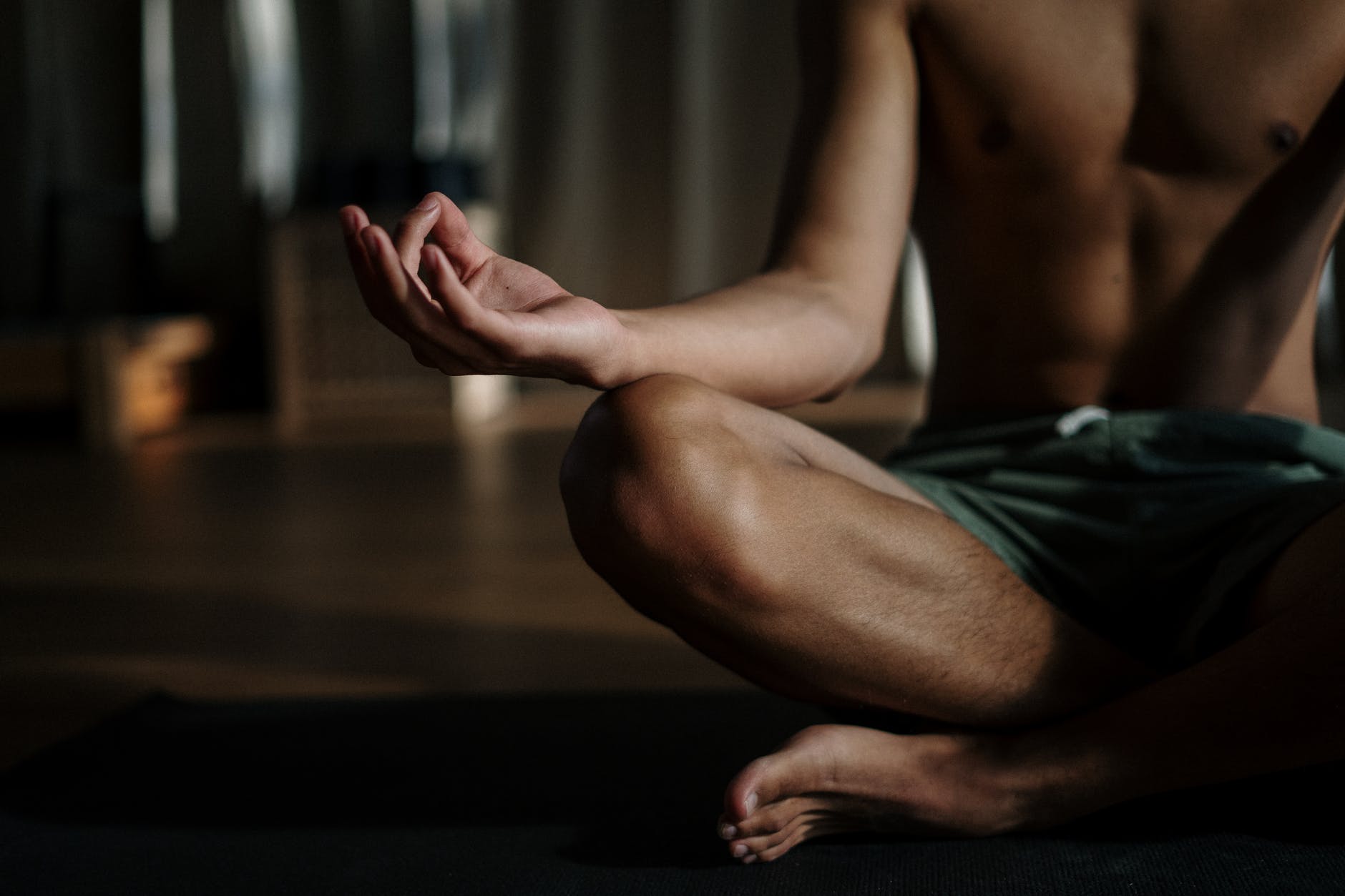
man in black shorts sitting on floor

“You’re distracted and stressed because you’re not mindful. But the statement should be in reverse – you’re not mindful because you’re distracted and stressed.”

– Unknown

I’ve never had much luck with using or finding any coping skills that work. To me, they’ve always been akin to bullet points on a piece of paper given out at AA meetings or therapy sessions. They just have never been helpful to me and so I keep my distance.

Though I’ve never found any of the generic “coping skills” to work for me, I have noticed that meditation seems to be on every list.

Just another bullet point: mediation.

For all intents and purposes, to meditate, according to Oxford Dictionaries, is to “think deeply or focus one’s mind for a period of time, in silence or with the aid of chanting, for religious or spiritual purposes or as a method of relaxation”. Well, I’m here to tell ya that I’m just not hardwired for something like that, although there is a known direct connection between meditation and bipolar disorder.

Meditation is known to provide a sense of calm, peace, and balance. It can also help carry you more calmly through your day and may help you manage symptoms of certain medical conditions.

There are many different kinds of meditation, usually all focusing on areas such as posture, breathing, attention, and relaxation

To me, meditation actually seems…daunting. Like a task or something you really dread but have no choice in doing – except you do. I just don’t know that I have the capacity to slow my brain down enough to even an begin to try to meditate.

However, more than 60% of the top health problems for which people use meditation are stress, anxiety, and depression.

It only takes a little research (and some common sense) to discover and understand the benefits of meditation.

Some of these benefits include:

  • Gaining a new perspective on stressful situations
  • Building skills to manage your stress
  • Increasing self-awareness
  • Focusing on the present
  • Reducing negative emotions
  • Increasing imagination and creativity
  • Increasing patience and tolerance

That sounds good and all but, come on. Give me a break.

I must stress to everyone reading this that I am in no way dogging or downplaying meditation as a coping strategy, ideology, or practice if it works for you. I’m not saying it doesn’t work for people. Not at all. It just hasn’t worked for me.

It’s true, though, that meditation isn’t for everyone. There is some research that found that more than a quarter of those who regularly meditate have had a “particularly unpleasant” psychological experience while doing so, including feelings of fear and distorted emotions.

The study found that psychologically unpleasant experiences can occur during meditation. Even some traditional Buddhist texts allude to intense accounts of similar experiences.

A similar study found meditation can sometimes make people more neurotic, depressed, anxious, and can even trigger unresolved trauma.

For those who can’t properly meditate (myself included), there are a variety of reasons why including:

  • Racing mind
  • No consistency
  • Wandering minds
  • Keep falling asleep
  • Body aches and pains
  • Boredom
  • Having great ideas or thinking of important things
  • Trouble finding time
  • Expectations set too high
  • Hope of immediate results

There are, however, different methods for those who traditional meditation doesn’t work. Experimenting with personal variations, practicing in a different or a group setting, and keeping your mediations short are just a few of these ways.

Maybe I’m jealous to some extent because it sounds like an awesome concept, at least in theory; it may be difficult and frustrating in ways I haven’t even considered. In the end, you have to go with what works for you. You have to go with your gut.

For me, it’s not something I find any relief in but have not given up on. I’d like to be able to meditate; out of all the coping skills I know of meditation is the most appealing and seemingly reasonable to me. Maybe I’m just fascinated by the idea of it. I hope to one day be able to put the idea into practice and benefit from it. The science is there. Now I just got to catch up.

10 Essential Writing Tips from Stephen King’s “On Writing”

In 2002 Stephen King temporarily gave up on writing bestselling novels and wrote a little book chronicling his rise to fame and discussing exactly …

10 Essential Writing Tips from Stephen King’s “On Writing”

A Pause for the Cause

green trees near mountain

“In America, there are two classes of travel: first-class and with children.”

– Robert Benchley

Just checking in.

We’re on day three of what has turned out to be a nice little vacation. My wife, son, and I are in the hills of Tennessee in a nice little cabin with all the “essentials” needed to survive out here with a 5-year-old boy and yes, that means free Wi-Fi, too (it’s inescapable these days, though I do find it amazing how it’s possible to even have electricity and running water in such an isolated area – let alone free Wi-Fi).

We’ve done very little as far as “touristy” things go, to be honest, but that’s been just fine with me. I come down here enough to know that this is the part of the trip that matters. My son has been fascinated by just us staying in a place that’s not a hotel. I’ve also been able to work and mess around on a few things while here, and my wife has her endless supply of “things to do” with her, too.

So, it truly has been a getaway. 75% of what we’ve done on this trip could’ve very well been done at home, so I’m glad this hasn’t been a vacation with a lot of bells and whistles (my wife hasn’t demanded as near as many as pictures as I would’ve expected). It’s been nice to just have a change of scenery and to be able to live on a slower (though not by much) plane of existence, if only for such a short amount of time.

Yes, we will be leaving and going home tomorrow. The end of a trip, especially a good trip, is always heartbreaking. Rolling back into town can be utterly depressing. But that’s how it goes. In the meantime, I’m going to enjoy the afternoon at the arcade with my wife and son before a nice dinner and night back here at the cabin.

a day in the life: one day at a time

red flower near white flower during daytime

“There is a crack in everything, that’s how the light gets in.”

– Leonard Cohen

As I write this early Tuesday morning, I can in good faith look back and reflect on how good yesterday was. Not that I can sit here all “woe is me” like I never have good days, but yesterday felt like a fresh start.

First off, work is picking back up as the warmer weather is (maybe) finally starting to settle in. I work for both a lawncare and a construction company. Yards will need to be mowed; houses will need to be built or repaired. Things are about to pick up and get busy. It’ll be mornings of rushing to get the kids shipped out to whoever is watching them on that day by 6 am. It’ll be the “get-up-and-go” this household really needs.

On another note, I had my second ketamine treatment last night and the relief was immediate. No, there was no “high” or “buzz”, as I’m often asked. It takes a few minutes to wake up and come to after the infusion, but there is nothing other than that if you’re someone trying to chase the dragon. I just felt all of the stress go away. I’m less tense and uptight, and I can even handle some of my OCD/superstitions that could laughably be debilitating. But that in and of itself is proof there is something to this ketamine regimen.

I am thankful for my family and am slowly starting to realize to not push them away. I’m learning how personally devastating it is to be bitter and to hold onto those little feelings every day. Let it go. I have an amazing wife and three beautiful sons that need me. And they need me to be me, not the person I have been and will still (unfortunately) become at times.

But even after writing that last sentence I still can find some level positivity in the situation, if only by not dwelling on the issue. That is new for me. My usual moody attitude would’ve normally kicked into full gear, and I would’ve ended up dead or in jail.

It’s nice to be able to reflect in a positive sense, not having to worry about getting fixated on a topic that concerns me in no way. That’s an intense state of mind and I’m happy for the relief. At this point in time, I’ll take whatever I can get.

Just remember when you wake up every morning to find or think of a few positive things right off the bat. Easier said than done, right? But it can be done. I’m doing it as I’m typing these words right now. If I didn’t know better, I would think I’m in the beginning stages of a cycle. Fortunately, I am not on any drugs, and I am lucid and have been for some time now. So that’s a nice feeling, too.

Well, it’s early and it’s about time for work (don’t you know there are yards to be mowed and houses to be built?). I just wanted to check in and remind anyone who needed reminding that, even through the madness, there is light. You may have to look a little bit harder some times, but it’s always there.

Happy Tuesday everyone!