OPINION: Mental Health & the Divine? (Just a Pitch)

A look into Mental Health & Spirituality
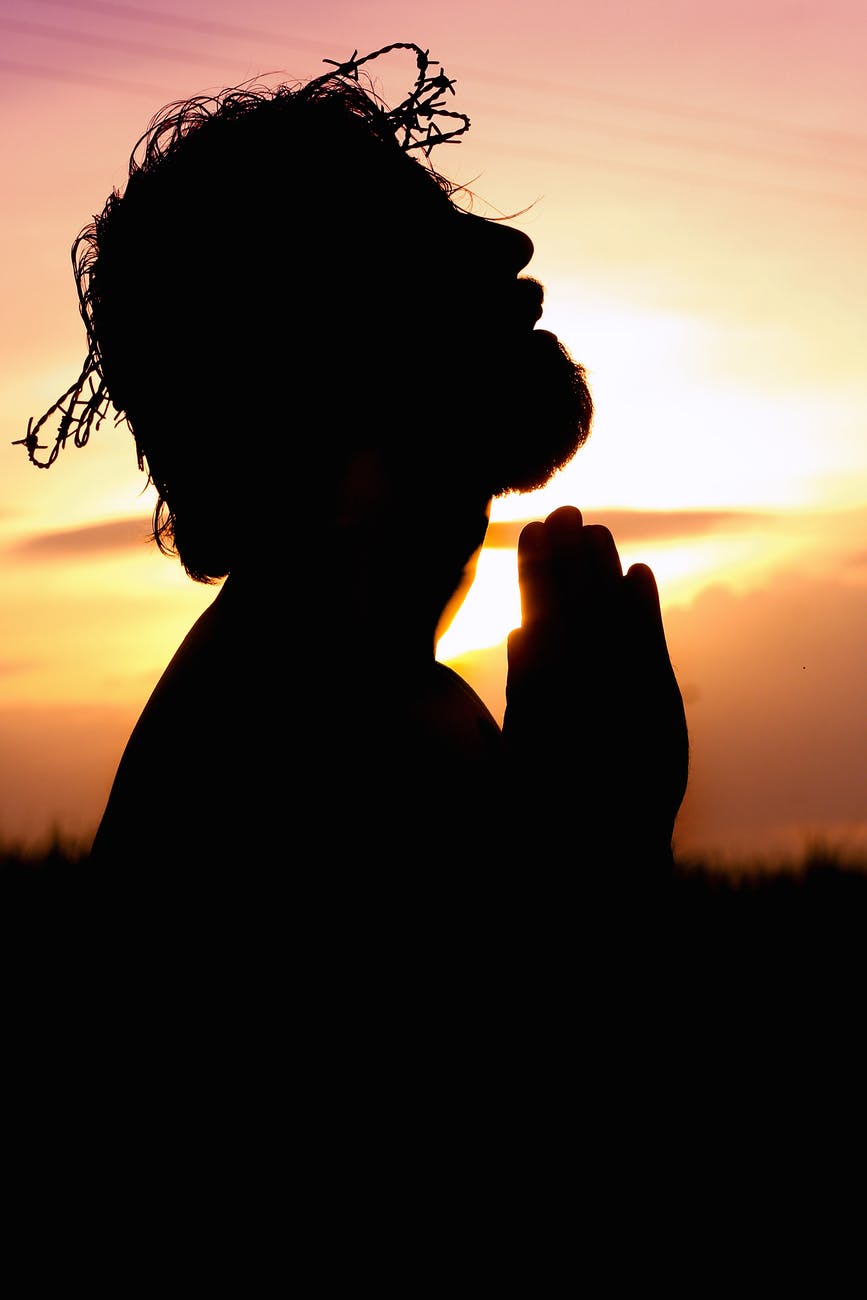
silhouette image of person praying

“Just because you don’t understand it doesn’t mean it isn’t so.”

– Lemony Snicket

A newly released study is tying people’s religious uncertainty and lack of faith in the divine to poor mental and psychological well-being.

This study, entitled Attachment to God and Psychological Distress: Evidence of a Curvilinear Relationship, was conducted by Matthew Henderson and Blake Kent. The conclusion came about based on a national survey’s worth of data from the 2010 Baylor Religion Survey.

Henderson, an assistant professor at Union University, spoke out about his perception of the end results of the study.

“A lot of research has been able to demonstrate that religious practices, like prayer and religious service attendance, can have positive effects on mental and physical health,” he said.

According to Henderson and Kent, the study confirms that people with a strong connection to God will have a significantly better psychological well-being.

Kent, an assistant professor at Westmont College, said the amount of literature tying both religion and health together is immense and is only growing.

“Attachment to God has emerged as one of the most significant, powerful influences of mental health and oftentimes more important than actual religious attendance,” he said.

It’s an interesting case to make, but one that makes sense.

Kind of.

Having just the minimal knowledge I have of the study and its findings doesn’t take away from the strength of the research. I don’t think it’s too far out of left field to see a correlation between the two. Having pure blind faith in something may seem silly to some but can offer many a sense of purpose and discipline that may have a very powerful effect on their mental and psychological well-being.

People turn to religion for all sorts of different reasons, but the reason ultimately doesn’t matter and has no negative bearing on a person’s choices. In fact, it has quite the opposite effect. So, it makes sense that having a strong faith in God (ANY God or entity) could impact both one’s spiritual and psychological happiness.

I remember asking my grandma when I was a kid what would happen if she were a “true” Christian and had been praying to the wrong God this whole time. What would happen then? Would she be damned? But her response sort of summed up, in a similar regard at least, this study’s conclusions. She told me that even on the off-chance I was right with my concern that “living by the Lord and his positive message” is still the best way to live one’s life. I thought of her and that specific instance when going through some of the research that went into this study. The positivity that can surround one’s faith and belief systems can be infectious and inspiring. So, to me it makes perfect sense that there may be a scientific connection between one’s faith and mental health.

I, however, would like to point out that I do not believe it has to necessarily be a Christian God. I think any higher power will do. So, knock yourselves out, guys.

The study does have legs and can stand on its own. So much so that two social work professors at Baylor University have received a $843,647 grant from the University of South Alabama to study faculty views regarding training students to address a patient’s spirituality in mental health treatment.

Dr. Holly Oxhandler and Dr. Clay Polson are researching this as part of four sub-projects of the university’s Spiritual and Religious Competencies Project, which aims to provide mental health professionals with the basic abilities to focus on religious and spiritual qualities in their patients’ lives.

“What we see in the research is that when clients’ religion or spirituality is ethically and effectively integrated into mental health treatment – meaning the mental health care provider assessing for this area of their lives and asking them how it relates to their mental health care or circumstances or situations, how they’re leaning on it to cope or maybe ways in which it’s been a source of pain for them in the past,” Oxhandler said.

If an uncertainty in God/Gods or a shakiness in one’s faith can have such a negative impact on one’s psychological well-being, why hasn’t someone made the connection before now? Oxhandler and Polson both feel the role of religion in one’s mental health treatment hasn’t always been addressed due to the lack of research surrounding the topic.

“Without this level of funding, I think even envisioning a project this comprehensive would be challenging,” Polson said. “This makes it possible for us to do such a large project, looking at all the disciplines.”

Both professors say the final goal of the project is to be able to help mental health professionals realize the need to integrate religion and spirituality with mental health treatment.

“We want awareness, but ultimately, the goal is to see more comfort, to see practitioners using their skills and knowledge to do this better,” Polson said.

Being aware of the power of one’s faith and beliefs may have a bigger impact on your health than you could have ever imagined. The results aren’t completely in, but they look good. Mostly. If the effects of the uncertainty of a higher power have proven to be negative and damaging to one’s mental state, it makes perfect sense. Blind faith can lay the bedrock down for a clearer and more constructive personal core. In fact, a strong faith in a higher power may very well be your best bet when trying to maintain a stable and positive psychological well-being.

March Only Comes Once a Year

“I’d rather feel the benefits of the flames and risk everything, than not feel them, and risk nothing at all.”

– Daniel Lyddon

Having bipolar disorder is like standing on the edge of a cliff in a thunderstorm: there’s an intense beauty about it, but ultimately in the end it’s just not a good idea. And that’s okay. It’s a well-known fact that if you play with fire, you just might get burned.

As I’ve put certain things in my life on the backburner (including this blog, for instance) to try and tackle another project, I have definitely spent more time in my head than usual. It’s been both eye-opening and frightening. The wheels are always turning , and even when I’m still being “productive” it can become exhausting on a dangerous level.

So, own it. You must own it. If you don’t own it, it will end up owning you.

Realizing that some of the worst aspects of having bipolar disorder are also some of the best ones makes it easier to use the illusion of ignorance to take advantage of it. You may love it, you may hate it, but you must own it.

It does get easier, though, but not because you get used to it. You just learn to try and brace yourself in a kind of frenzied preparation. No, it doesn’t always work, but you must take advantage of the times when you have some semblance of control. Sometimes you just have to grit your teeth, brace yourself, and hope for the best.

I’ve spent a lot of time lately (more time than usual) trying to be purposefully self-reflective for a bigger project, and although I am thankful for the temporary gift of impulse control and the like, it’s still not hard to get lost in the internal chaos of my mind. And that’s what it is: an intense state of internal (and eternal) chaos that if it’s not completely debilitating, it controls and ultimately destroys you.

I’m going to return to this blog, not daily, but at least a couple days a week. This is an outlet that lets me share my experiences to help spotlight the topic of bipolar disorder. I hope I’ve done that without coming across as abrasive or pretentious. But I can’t worry about that now.

If all remains the same, March and April will be when I become manic. Maybe it’s because Spring is my favorites season. I used to look at it as a kind of personal beauty, accompanied by an intensity that can only be described as exquisite and capacitating. It ends up zapping you of everything, though. You become drained to a point of complete depression. The cycle is always the same, just like the directions on a shampoo bottle: Wash. Rinse. Repeat.

It’s almost March, and if I continue to share on this blog during this upcoming “event” or period of time, there’s no telling how it’s going to come across. I may be rambling about anything or I may not. We’ll see.

I just have to learn and accept that sometimes to stand out it’s better to just blend in.

OPINION: A Timeless Debate, “Prayer In School” Remains A Divisive Issue

*An opinion piece I published in another publication*

The debate over prayer in school has been one of high contention for decades now, and with the dispute still making headlines it only makes me wonder if any real progress or headway has been made. Or will ever be made.

It was recently announced that the Supreme Court will hear the case of a high school football coach who was fired over holding postgame prayers at the 50-yard line. A federal appeals court ruled that the school board could force said coach from holding these after game prayer circles. This may be an offshoot of the actual “prayer in school” debate, but it is a slippery slope and here is where we are. This is definitely a case to keep an eye on.

It’s important to note in this particular case the fact that the Supreme Court has never outlawed prayer in school, so long as it is done privately, willingly, and in a way that is not forced or disruptive. However, the debate was first heard by the Supreme Court in 1962 in a case called Engel v. Vitale. The ruling handed down determined that prayer in school was a direct violation of the First Amendment to the U.S. Constitution. At the same time, many in favor argued that disallowing or banning prayer in school is a direct violation of religious freedoms also protected by the U.S. Constitution.

An issue I once considered pretty cut-and-dry as a matter of personal opinion is actually one dictated by politics more so than morals and religion. But of course, that’s the way it goes. The principle is lost behind an agenda of “right fighters”, all claiming to have the answer based off whatever they feel they need to say to keep their jobs. I’ve often wondered how serious an issue this really should be considered and feel that maybe it should have remained a little more cut-and-dry.

When I say “cut-and-dry” I merely mean to each their own. If you are against prayer in school, you probably want to have your cake and eat it too; as long as it’s not the white, Christian God then pray away, right? And if you are for prayer in school, you have to consider all religions instead of making it a Christian and non-Christian debate.

The California Board of Education and Department of Education (CDE) just recently settled a lawsuit with parents over a certain Ethnic Studies program that required students to recite certain prayers and chants to Aztec gods. According to the suit, the CDE infringed upon California Constitution’s establishment clauses and state law banning government aid in promoting or teaching any religion in any particular fashion. This is a side of the issue that makes sense to me. If the recitation of these prayers and chants were taught as part of the educational curriculum provided by the state then I would have to side with the parents in the suit: religion should not be imposed upon someone in school per se, especially if it is a requirement and for a grade.

See? A slippery slope, indeed.

My feelings surrounding the matter are slanted, for sure. Although that may sound like I want to have my cake and eat it, too, I assure you that’s not what I mean by “slanted”.

Although a very polarizing, “Conservative vs. Moderate” issue most of the time, each and every circumstance is different and must be analyzed based on its own merit. A football coach getting fired for praying after a game, as long as it not forced upon the players, is an extreme that is less of a slippery slope and more of a nosedive into sheer ignorance. That being said, I honestly feel prayer in school should be done at the individual’s discretion, if at all, and in a way that doesn’t isolate or make other students uncomfortable. School is supposed to serve a singular purpose, and that’s not to divide the aisles any more than they already are by personal religious beliefs. There are already enough divisive issues our children are going to have to face in the school environment. Should we really add another one?

I also feel if you’re going to hang up a picture of Jesus Christ in your school (I attended a school in which this was the case), then it’s only fair to hang one up of Buddha, Mohammed, etc. If we’re going to pray in school, let’s keep it fair.

Prayer in school should not be a forced part of any school’s curriculum. The world and current cultural norms are only becoming more diverse, so for prayer in school to even be part of any discussion all voices must be heard.

It is ironic to me, however, how a majority of the proponents for prayer in school are pretty close-minded in their beliefs and how those beliefs should be carried out. Is this an across-the-board fact? No. And I wouldn’t dare to speak on an issue in such a blanketed, black-and-white way. I will, however, remain steadfast in my belief that the motives for or against prayer in school are skewed and usually exist for the wrong reasons.

My Cracked Faith

“In heaven, all the interesting people are missing.”

Friedrich Nietzsche

Friedrich Nietzsche said faith is not wanting to know what the truth is. And as a dutiful nihilist, I would be remiss to even try and feign a belief in a Christian God. Having said that, I also suffer from a deep fear that I may be wrong in the belief system I so strongly cling to.

I am extremely conflicted on the issue yet remain steadfast in not believing in the God that most have come to know and ultimately worship.

I do not believe in organized religion at all. I also personally can’t entertain the idea of blind faith leading one to their eternity. Anyone can phone it in in the name of whatever they are chasing, but I can’t bring myself to play along. If I’m going to sell out, the payoff better be worth my time.

So, my question is can I blame my lack of faith and my cynicism surrounding the issue on my disorder?

Yes and no.

The constant back and forth between the highs and lows that accompany this illness can send me into a state of pure hopelessness. This in turn can create a downward spiral of self-doubt that I only get lost in.

I am only putting a spotlight on this issue because I am genuinely curious myself. I don’t mean to sound pessimistic or cold, though even I can see how I may come across.

My illness may not have any effect on which religion I practice or which god I pray to, but it does hinder the process of maintaining such a faith-based belief system. A belief system that takes dedication and commitment.

Dedication and commitment I have no understanding of.

So, does mental illness play a role in my lack of faith, or does it only slow down the process one must go through to reach true faith?

I don’t have answers to any of these questions, just thoughts and opinions. But since I don’t believe one can ever truly reach a state of complete knowledge and awareness, these thoughts and opinions will just have to do.