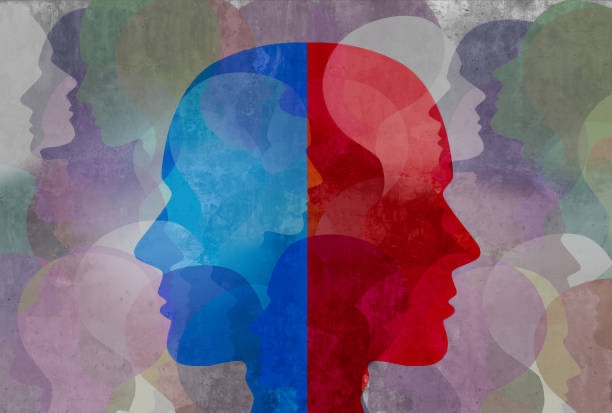

Memories of a Backyard Hanging: A True Story

  It was a late spring day, like any other.

In finding some forgiveness of loneliness, and with a strange acceptance of suffering, I can now look back on it all with a dim understanding. It happened at a time when creativity existed within me at an exhausting level. There was a maddening frenzy in the way things came out of me, pouring with sympathy, yet offering nothing.

     It was a late spring day, like any other. The afternoon sun hung in the sky, low and domineering, and the confused aromas of the season were in full force. Spring, a season with a natural thickness of rebirth in the air that creates its own swelter, is a season I’ve come to both love and hate.

     I could sense the onset of the stifling evening, and the heat wasn’t even a factor. There was something else in the air contributing to my restless unease. Little did I know that day would be the end of an innocence I can now only barely remember.

***

     We lived on a hill just below the county hospital, with a deep jungle of ditch lines in our backyard. On the other side of the ditch lived another family: a woman named Vanessa, her son, Allen, and her boyfriend Mike. As time passed my family formed some sort of relationship with “our neighbors to the south,” as they jokingly became known.  We would have cookouts and pool parties. We’d all even go fishing from time to time. So we became friends. At the very least we were friendly.

     Although our families had become rather close, no one noticed the shift in Mike’s behavior in the beginning.

     That may have been because there wasn’t much of a difference in his behavior; it was more of a slight, unexplainable change in his attitude. He had always been a naturally happy-go-lucky kind of guy who, out of nowhere it seemed, started acting like a totally different person, like a mean drunk.

     When the “change” in Mike did become somewhat noticeable, the people around him chalked it up to being nothing but a man going through a hard time, probably because of his job. Mike was a professional tree trimmer, and in that profession, it seems like you’re either raking it in or getting raked over.

     Mike wasn’t just your average tree trimmer, though. This man would tackle a tree, be hundreds of feet in the air, and be anything and everything but scared or nervous. He had these great big spikes that he would attach to the bottom of his boots, allowing him to scale any size of tree with nothing but a few ropes and his chainsaw. I had the chance to see him work a few times and would watch, sometimes in awe and others in fear. I had respect for him for that reason alone; he was one of the bests at what he did, no doubt about that.

     Little did anyone know, however, Mike was struggling with more than just a lack of work or with problems at home. Mike, along with my father, was a big drinker, mostly beer but an occasional bottle got passed around. My father and Mike both could become rambunctious, even hard to handle at times, but it was mostly innocent.

     There’s that word again.

     But then the occasional bottle turned into a steady supply. Still, though, no one was quite sure what caused this change in Mike. And no one asked. I think my family really believed it was troubles at work or home. I didn’t have any real opinion.

     All I can say now is that it was much more serious than work troubles.

***

     So as the stifling afternoon turned into an even more suffocating evening, I was eating dinner with my parents when the familiar red and blue flashes of police lights became noticeable through our dining room window. Usually none of us would have cared, let alone moved, but my dad jumped up when he realized which house the cops had gone to.

Mike’s.

     We all ran outside to try to find out what was going on. But before we could cross the ditch line, I saw a light even brighter than the cops’ lights (there were several squad cars at the house by this time). I got across the ditch and discovered the bright light I was seeing was a spotlight, pointed up and shining into one of the tallest trees in Mike’s yard.

     And what I saw next turned my full-on sprint into a disoriented jog. The light the police were using was shining on Mike, who had climbed as high as he could in the tree behind his house and appeared to be wearing a homemade noose around his neck.

     At first, I couldn’t be sure if what I was seeing was real. This had all happened so fast. There was just too much going on. Too many people shuffling around and talking. Too many voices coming from first responders, unsure of what to do.

     Too many lights.

     And Mike…

      The sight of Mike in that tree, standing on a branch with a noose around his neck…

     I was in shock.

     Mike started shouting down from the branch he was standing on. He wanted “everyone to leave and to just be left alone.” He was crying, yet somehow remained stoic as he continued his demands. My dad tried to talk to him, and Mike stopped yelling long enough to listen and say something I’ll never forget.

     “Just get out of here. It’s too late.”

     Before my dad could respond, a fire truck pulled into the yard. Immediately, Mike threatened to jump if it didn’t leave. 

     As this scary scene continued to unfold I noticed the big spike boots I had seen him wear before. Wow, I remember thinking, he’s serious. He’s beyond serious.

     He was so high in that tree I wasn’t sure if the ladder on the fire truck could even reach him. If it even came to that.

     No one seemed to be in any big hurry. I didn’t understand then, but I do now. Any sudden or dramatic actions could, and most likely would have, provoked Mike to jump.

     No question about that.

As the fire truck pulled in and parked in the yard as close to the tree as necessary, a “crisis team” from an area counseling center showed up. My backyard had become some sort of neon nightmare with all the lights flashing across the sky, across the night throughout the neighborhood.

     I wasn’t sure how this was going to play out by this point and honestly had become beyond fearful. It was an emotion I didn’t recognize at first, but yes, fear was what it was.

     This was real.

     By this time, of course, there was already a crowd of onlookers outside, steadily growing. I could hear police talking about the “tactics” they were undoubtedly trained for in these “types of situations.”

     I may not have been alone in my concern for this man, but it sure was starting to feel like it.

     The noise continued but through it all, through all the yelling and commotion, what I could hear most clearly was Mike, crying.

     An officer approached my dad and I, apparently noticing the only person Mike would carry some sort of rapport with was my dad. They talked in voices I couldn’t hear, frankly not wanting to. But I didn’t want to leave either, which is what happened next. A desk-type cop barked at me to go back to my house and my dad made sure I did just that.

     My dad rushed me across the ditch line and told me to go inside. I wasn’t happy with his demand, but I didn’t argue; this wasn’t the time or place. Before I could comply, though, my dad was gone, across the ditch and back over in Mike’s backyard.

     But by the time he got back, it was too late.

     By the time he got back Mike’s patience and belligerence had run its course, which were the only things keeping his feet on that tree branch he had climbed up to.

     What was keeping his neck inside that homemade noose before he jumped I’m afraid we’ll never know.

     But in one last bout of gusto, it was all over. Mike shouted something I couldn’t make out and jumped off of the tree branch.

     And I wish there was something more to say.

***

     Mike’s body hung in that tree for more than six hours after he killed himself. I’m sure the police and investigators would have some sort of explanation about “proper procedures and protocol.” But it didn’t make much sense to me, not then or now.

     I remember as I woke up for school the next day (if I had even slept at all) there were still police in Mike’s backyard. Mike’s body had just been cut and lowered from the tree after dangling all night.

     I stood in my backyard as Mike’s sheeted body was being loaded up. Seeing that made me realize I hadn’t yet processed any of this. There had been no tears, no time for tears. Tears were not part of the “proper procedures and protocol,” not for these “types of situations,” anyway.

     My dad was outside, too, and came up to me. We looked at each other, the silence between us almost comforting. Exhaustion had become him, and I could tell that he hadn’t had any time for tears either.

     I could see the morning sun shining through the trees, perched up in the sky as if being held up by the wood line and nothing else. It was as if the sun was even sad.

     My dad wiped a single tear from his left eye and stood up. All of the police and emergency vehicles were gone at this point.

     “They left the rope,” my dad said, pointing up to the tree. 

     And they had. I didn’t see it at first, but they had. Most of the thick, blue rope Mike had used to hang himself with was still up in the tree.

     “Can you believe that? They left the rope.”

     No time for tears, no time for questions. 

     We stood there in the backyard in silence for a long time. My dad finally spoke, telling me it was time for him to get ready for work for me to get ready for school.

     School? How could I go to school just hours after seeing a man hang himself in my backyard practically?

     My apprehension must’ve been on display on my face because my dad began one of his familiar speeches.

     When my dad finished, he hugged me and sent me back into the house, and again told me it was time to get ready for school.

     It was a late spring day, just like any other.

 

Sticks & Stones

There is an article by Stephen Propst called “10 Things NOT to Say to Someone with Bipolar” that, somewhat pretentiously, hit me hardcore.

We as humans sometimes forget the damage our words can inflict. So, without being self-righteous, here are some things one should try to avoid saying to someone with bipolar disorder:

1. “I thought you were taking your medication.”

Although it’s not uncommon for someone with this illness to stop taking their medication once they feel they’re “better”, it’s usually not a topic of conversation that most people with bipolar disorder want to have or be accused of.

2. “You know he’s “bipolar,” don’t you?”

A comment like this can end up being counterproductive and even destructive. People with bipolar disorder don’t like to be reduced to their diagnosis.

3. “Everyone Is a Little Bipolar Sometimes”

This one can come across as really insensitive and is dismissive of a person’s experiences with this illness.

4. “We used to have high hopes for you.”

I mean, come on. It is NEVER a good idea to kill someone else’s dreams by being rude because one may have a mental illness.

5. “It doesn’t take much to set you off!”

Now this is a comment that clearly might set one off. Tearing someone down who may need you could trigger a bipolar episode, manic or depressive.

6. “Why can’t you just be happy?”

Oh, believe me, we try (and are still trying), but having a mood disorder defined by such highs and lows could quite possibly hinder someone’s happiness and overall mood.

7. “Everyone Is Bipolar Sometimes”

A turn of phrase that ends up coming across in an insensitive and dismissive way. Don’t generalize someone’s condition to try to make them feel better.

8. “You Don’t Seem Like You’re Bipolar”

The highs and lows associated with bipolar disorder come in cycles or episodes so there are periods of “normalcy” and being leveled out. Never assume that someone is okay because their symptoms aren’t obvious to you.

And now for my favorite…

10. You’re bipolar?

This comment can take the wind right out of my sails. Sometimes you feel comfortable and open enough to talk about your illness. But then you realize your family and friends are basing every action and reaction on your illness. Or is that my personal paranoia? That’s why that specific question/comment has always been hurtful and offensive.

Here is a list of 8 things from the article one should say to someone they know is suffering from bipolar disorder.

1. “This is a medical illness and it is not your fault.”

2. “I am here. We’ll make it through this together.”

3. “You and your life are important to me.”

4. “Tell me how I can help.”

5. “I might not know how you feel, but I’m here to support you.”

6. “Whenever you feel like giving up, tell yourself to hold on for another minute, hour, day — whatever you feel you can do.

7.”You’re not alone.”

8. “Your illness doesn’t define who you are. You are still you, with hopes and dreams you can attain.”

Sticks and stones, right? Words can sometimes cause more damage than we intend, though. And this isn’t any kind of guilt trip; I only mean to help.

Be the positive, encouraging friend or family member to your loved one who is suffering from this disorder. There is no cure and there is no true recovery. There is only management.

Does It Get Better?

“Recovery” is a word most often used in the realm of drugs and addiction, a descriptor of those who are abstaining from the use of addictive substances. This same ideology simply doesn’t apply to bipolar disorder, however. People with bipolar disorder never recover in the same sense as an addict might. We don’t recover, we manage.

Now, I know the old familiar adage of “once an addict, always an addict”, but we have to look at both ideas in context here. If one is an addict and is always an addict, then one must always be in recovery, according to that ideology. It’s not necessarily the same concept when it comes to having a mental illness, in particular bipolar disorder. One does not make the choice to develop a chemical imbalance as one makes the choice of using drugs and/or alcohol. It’s all relative, of course, but not really.

So, after all the semantics, does bipolar disorder get better for those afflicted by the illness?

Yes and no.

Scary, huh? Only make of it what you will, though. This is where finding the right treatment plan comes into play.

Yes, yes, like I said, it’s all relative. We, alongside those in recovery battling addiction, must get to our own breaking point. The definition of “rock bottom” is different for everybody, and everybody has to have their moment. When I say “breaking point” I’m referring to the moment that brings one the clarity needed to see that something is and has been wrong. Unfortunately, that moment of clarity is usually brought on by some potentially disastrous behaviors.

Although people suffering from bipolar disorder share similar stepping stones as someone dealing with addiction on their journey forward, “recovery” is still not an applicable term for those with this illness. Granted, there are just as many variables that come into play regarding both addiction and mental illness when seeking help.

On the Outside…

Can someone with bipolar disorder have a normal relationship? Although it’s a question that is as ignorant as it sounds, I can, to some extent, see how it could raise some red flags for someone on the other side. But if your loved one has bipolar disorder, it is possible to have a “normal” relationship.

Okay. I can admit that I’m probably not always the easiest person to live with. I can concede that. But I was never so aware of how many “bipolar bullet points” I was checking off the list until my wife and I had a truly candid conversation about my condition.

She knows how I hate the stereotypical things one hears about bipolar disorder, such as phrases like “walking on eggshells”, etc. But once the conversation began, it was clear there was no way back from where we were going. I was the cancer, I was the cure.

I must be thankful the conversation came about the way it did, however, because A) it was organic, and B) I wasn’t experiencing any signs of mania or depression. Just curiosity. And from what I had heard it had killed the cat.

But ignorance is not always bliss and I decided that this was one of those situations in which that was true.

It’s strange how, like bipolar disorder itself and those who suffer from it, the “symptoms” a spouse or partner of someone with it may exhibit are similar.

Similar in the fact that they can’t be cured, only managed. And even that is a stretch at times.

When my wife began to tell me about some of my “extreme” moments and how she would handle them, I felt microscopic in size. Not in the “oh, woe is me” sense, but in the “how could I allow myself to make her feel that way” sense. When I asked how she was able to handle all of my behavior without leaving or going crazy, she told me she could tell the difference between me and the disease. She had taken the time to educate herself on what bipolar disorder is and had listened at all my appointments.

She also said it was important to communicate, when it was the right time to communicate. Again, I normally would’ve taken this negatively, like I was too fragile to handle a conversation. But because we were able to have the conversation, we continued.

She reminded me that no matter what the situation, we had always worked through it. Even if it’s one where I may not be totally aware that is going on; even being manic and/or depressed at times, I still contributed and offered value. She told me she watched for my “triggers” and kept an eye on certain behaviors.

What I wondered was how I could be so blind or, even worse, careless as to what my wife experienced or how she felt during one of my episodes. How is she still here? WHY is she still here?

She told me. And then she explained it to me. And then explained to me how I wouldn’t understand so not to worry about it. She said it’s just like any other relationship when it comes to honesty and transparency, communication and trust. They’re all “must-haves” no matter the circumstances.

Regardless, however, it was a conversation and/or situation that could have been handled or dealt with negatively and it wasn’t. And those are the types of situations one should put themselves into any time they get the chance. I plan to fully from this moment on.

And remember, if you can take it without lashing out or getting sad, then take it. Those are the feelings you need to feel.

Let yourself feel them.

Bipolar Disorder: Facts vs. Myths

The general stigma surrounding mental illness, and in particular bipolar disorder, has created a balloon of misinformation that has only increased people’s fear of seeking treatment. So what we are left with is convoluted beliefs regarding mental illness in general.

In turn, many myths have been created around bipolar disorder and the facts have been twisted or swept under the rug.

So let’s talk about some of the facts and myths associated with bipolar disorder, according to the National Alliance of Mental Illness.

Myth: People with bipolar disorder are just moody.

Fact: The extreme highs and lows of bipolar disorder are vastly different from mood swings.

Myth: Bipolar disorder is mostly mania.

Fact: Bipolar disorder features a wide range of disturbances, including mania, hypomania, and depression.

Myth: Mania is always fun and exciting.

Fact: When someone is manic, they may feel good and have lots of energy. However, mania can also be an unpleasant experience, marked by irritability, restlessness, impulsivity, and loss of self control.

Myth: People can stop taking their medication once their bipolar disorder is under control.

Fact: People with bipolar disorder take medications that also act preventively to help stave off future manic or depressive episodes

Myth: Bipolar disorder is super rare.

Fact: Bipolar disorder is more common than one may think. Approximately 7 million U.S. adults have experienced bipolar disorder in the past year.

Myth: The highs and lows happen in regular cycles.

Fact: Bipolar disorder can be unpredictable. Some people may feel manic and depressed at the same time and not on any certain schedule.

Myth: There is a test that can be done to diagnose someone with bipolar disorder.

Fact: There is no single test that shows for sure one might have bipolar disorder. One would have to see a doctor and a psychiatrist regularly, combined with lab work and said person’s medical history.

Myth: There’s no way to treat bipolar disorder.

Fact: Although there is no cure for bipolar disorder, it can be treated and managed with medication and psychotherapy.

Myth: Stress isn’t a factor.

Fact: Stress is one of the biggest triggers for a bipolar episode or symptoms.

If you have bipolar disorder, it’s important to know the effects of the disorder. Separate facts from fantasy regarding an illness that is already shrouded in so much myth and mystery.

Stigma, Statistics, & Suicide

The stigma surrounding mental illness can be so overwhelming that it can cause many people who are truly suffering to be too scared or ashamed to seek out help. The statistics are even scarier. I touched on quite a few in my last post, but I feel this is information that bears repeating.

According to the National Institute of Mental Health, about 2.7% of the U.S. population suffers from bipolar disorder. Of the population that is affected by this particular disorder, 82.9% will suffer from severe impairments, more so than with any other mood disorder.

The National Alliance on Mental Illness has discovered similar facts through extensive research. Although there is no one particular cause of bipolar disorder, researchers and doctors posit that a number of factors could play a role. Those with a close relative with the disorder, especially a parent, are more likely to develop this disorder. Trauma can sometimes be a trigger for the disorder to manifest itself. The abuse of drugs and/or alcohol can also possibly be a trigger.

People with bipolar disorder have a 9.2% less life expectancy, making the average age for people with the disorder between 55-66. This is partly due to the high suicide rates of people suffering from bipolar disorder.

Approximately 19% of people with the disorder will commit suicide. This is one of those facts that bears repeating.

That in of itself should be alarming to anyone and everyone.

Suicide is the second leading cause of death among people aged 10-34, according to NAMI. The suicide death of a person with bipolar disorder accounts for approximately 12% of all suicides.

There is an article written by Michael G. Pipich, entitled “Bipolar Disorder and Suicide: What 12,000 Lives Can Teach Us”. Pipich, a Licensed Marital and Family Therapist (LMFT) with a Master’s Degree, also suffers from bipolar disorder. However, he makes a great point when it comes to this specific issue.

The article focused on the need “to learn the lessons of poor bipolar care before it’s too late.” Approximately 12,000 people with bipolar disorder commit suicide every year. Again, just another shocking reality.

He also touched upon the shame and fear of treatment a person has due to the stigma around the illness. In fact, he said that may be the main cause of the enormous amount of suicides we see every year. 12,000 people out of a “group” of nearly 7 million kill themselves every year. Every year. That’s insane. And it’s insane that people who don’t have a mental illness don’t recognize the serious need for proper treatment for those that do.

I refuse to feel ashamed of who I am.

And that’s all I can say.

Up, Down, And All Around

Winston Churchill, Vincent Van Gogh, and Kurt Cobain walk into a bar…

Yeah, it sounds like the beginning of a bad joke, but the punchline is far from funny.

One of them led Great Britain stoically during WWII. One of them is responsible for some of the most well-known and adored pieces of art work in the world. One is a musical icon who tragically ended his life too soon. So, you may be wondering, what do these three people have in common?

All of them suffered from bipolar disorder.

And so do I.

And now a joke: My friend who suffers from bipolar disorder called from the lobby. He said, “Hey, I’m feeling great today. You want to do something?” I said, “Sure, I’ll be down in a minute.” He said, “That makes two of us.”

No, it’s not a funny joke (nor an original one), but the subject is no laughing matter either. The stigma surrounding bipolar disorder is not only sad, it’s dangerous and deadly. There are approximately 5.7 million adults in the United States suffering from the mood disorder. Of those diagnosed with the disorder, 40%-60% of people will attempt suicide at least one time. Even scarier, approximately 19%, or 1.14 million people out of approximately 5.7 million with the disorder, will commit suicide. Bipolar disorder accounts for 3%-14% of all suicides, making it quite possibly the deadliest mental illness.

So, if you’re one of the people who liked the aforementioned joke, are you still laughing now?

I’m 31 now and was first diagnosed at 15. Then again at 17. Then again at 25, which is when I finally sought out help. For 10 years I lived in a constant state of shame and embarrassment. For many reasons.

But before I get anymore ahead of myself let’s get a basic idea of what bipolar disorder is. Bipolar disorder is a mood disorder characterized by extreme highs and lows, mood swings, and can affect many other areas of everyday life, as well. It is quite possible there are more people with the disorder for various reasons, whether it be from being misdiagnosed to being personally ashamed.

The stigma surrounding bipolar disorder is extreme compared to most other mental health issues. It is insidious and wreaks havoc on the person with the illness as well as those around them. Family, friends, and other loved ones often feel like they have to (and I love this phrase) “walk on eggshells” so as not to trigger or cause an episode in someone with bipolar disorder.

I hope to continue to share my story and my personal journey through this maze in my mind as I go on.

All I ask is for you to not try and understand me, and I won’t try to understand how my behavior affects those around me.

To Be Continued