I am 31 and a writer by nature and trade. I have a Bachelor's Degree in Journalism from SIUC so I am both personally and professionally dedicated and passionate about what I do. I also enjoy reading and playing music. I am married with three sons.
“For me, the first sign of oncoming madness is that I’m unable to write.”
– Marya Hornbacher, Madness: A Bipolar Life
It’s funny how certain traits and talents go when in the throes of either a manic or depressive period. And it’s funny how others become amplified.
Well, as someone in between cycles and bracing for a bout of full-on depression, it really isn’t that funny. Just an interesting observation.
For me, as both a journalist and someone who is just passionate about writing, it is one of the first of my abilities to go when I’m cycling.
I have what is known as rapid cycling bipolar disorder. So, although I know when I’m “high” or “low”, I have very little down time in between cycles. And sometimes both the mania and depression even coexist.
Everyone of us is different, but I totally lose all faculties that stem from the root of my creativity.
No, I’m no James Patterson or anything, churning out material like it was ticker tape. But I like what I have so I’d like to keep it. It’s impossible, however, for me to even rhyme-scheme when manic or depressed.
I know for others with bipolar disorder it’s the complete opposite. Mania can be like throwing fuel on a fire for some. It used to be like that for me; I’d use the mania to my advantage for every little possible thing. Those days are long past, though. These days when I try to create during a manic phase the results are (no pun intended) depressing.
I don’t even try to create when I’m in a depressive state. When I was younger and tried to write when depressed, all that would pour out of me was pretentious poetry that, to this day, I still cannot revisit.
So, although this post is nothing extensive or special, it displays some degree of clarity so I must be operating at a somewhat “normal” level.
If anything changes, you guys will be the first to know.
“Every man has his secret sorrows which the world knows not; and often times we call a man cold when he is only sad.” – Henry Wadsworth Longfellow
I’ve touched on the statistics surrounding this issue in a past post, but now I feel the need to express myself on how it makes me feel on a deeper, more personal level.
Suicide is a very serious and polarizing topic for many. It almost seems that some people make a conscious decision to avoid the issue. It’s something that takes a lot of people out of their comfort zone. No matter, it’s a reality that needs to be able to be addressed.
This applies to those with bipolar disorder ten-fold. The stats are frightening, and the illness is already scary enough.
According to the National Alliance of Mental Illness, 19% of those with the disorder will commit suicide and at least 50% will attempt suicide at least once in their lifetime. I don’t mean to belabor the point with numbers, but I am deeply bothered by these statistics on a personal level.
There are approximately 5.7 million people in the United States with bipolar disorder, and 19% of those afflicted with the illness will “successfully” commit suicide. 1.14 million people out of 5.7 million people will eventually commit suicide. 3.42 million people out of 5.7 million people will attempt suicide at least once. If those numbers don’t shock or affect you in some way, then all hope for us may be lost.
There are many negative aspects of having bipolar disorder, but only a few that I take seriously anymore and this one of them.
I am shocked and baffled by the numbers. Not because I don’t understand where people with this illness are coming from. I am extremely saddened for my fellow man.
I am shocked. And I am confused as to why there is such a stigma around this disorder and mental health in general when we have these kind of numbers.
In 2019, approximately 12,000 people with bipolar disorder committed suicide, and between and 3 % – 14% of all suicides are committed by people with this specific mood disorder. It’s frightening to the point of almost being unbelievable.
I know that stating these facts is like beating a dead horse, and if that’s the case, well, I say beat away.
The idea of committing suicide is not something I’ve had to deal with on a serious kind of level so it feels like I’m on the outside looking in most of the time. I do have my moments, but I’m more of a spectator than a spectacle.
I could go on and on about how upsetting it is to know the reality of this specific aspect of having bipolar disorder, but I’m getting upset just trying to explain how upsetting these facts are to me.
Maybe one day things will be different, but I think as long as there isn’t a more consistent and manageable treatment plan for all these numbers will only rise. It’s hard to accept that, in some ways, I too am a statistic. However, I am not my diagnosis and I work hard to continue to believe that.
No matter how upset I can get over the facts, I’m not so unstable and fragilethat the issue cannot be addressed.
It’s been just over a year now since the January 6 Capitol attack and if a desirable endgame has been attained in your eyes, then please, by all means, shed some light for me.
To say the phrase “all politics aside…” isn’t applicable when it comes to the aforementioned insurrection would be a blatant and outright lie. Politics, which was in fact the root cause behind the riot, should’ve been on the back burner while common sense, reason and truth governed.
If that were the case, though, this wouldn’t be an issue and I wouldn’t be sitting here writing this right now, would I?
It needn’t matter what side of the line you toe to understand the blatant rip-off perpetuated on Americans last January. However, it may make it easier for some.
Our politicians flat out played us. No, not all of them, and not all of us, either. But enough so that a group of predominantly white evangelicals followed suit. And in the worst of ways.
Behind a backdrop of Christianity and all the religious symbols and icons you can imagine, the actual truth and cause of the riot was nothing short of apparent. It was an attempt at a political uprising fueled by an outrageous lie and acted upon by a certain offshoot of the far-right.
With the truth veiled under a cloak of feigned “fundamental Christianity”, many of those who participated were blind to the lie. Many simply hid behind the lie. And many are still hiding behind the lie, and by choice.
I have a sneaking suspicion, however, that radicalizing one’s religious beliefs for the sake of personal and/or political gain is just as blasphemous now as it ever was.
But hey, all in the name of politics, right?
The sea of Christian symbols on display that day was paralleled only by the massive presence of Donald Trump supporters with their signs and MAGA hats.
There can be no denying that the events of that day were spurred and led by a group of white evangelicals, a specific camp of right-wing conservatives who were fueled by the whiny rants of the former president.
Calling on his base to stage a revolt in the days leading up to the actual riot, the former president used every card he had to stage this political coup that not only failed but continues to fan a political fire of divisiveness more than a year later.
So, were Americans lied to on that day last January? Yes. Duped in the days before by former President Trump? Undoubtedly.
And not for the first time.
Basing things off a temper tantrum of childish nonsense, the former leader of the free world ushered in a moment of true ugliness for this country. One that was totally avoidable, though not soon forgettable.
But those who participated in the riot weren’t the real players of the game anyway, just pawns used by those who were really pulling the strings.
And, oh, how those strings were pulled.
That being said, those who acted as “true” pawns played the role splendidly and to great effect.
No matter where your motives lie, though, using one’s Christian faith as a front for such a personal agenda doesn’t seem very Christian at all.
And yes, it’s easy to throw blame on the far-right wingers responsible for the riot – if it wouldn’t appear to be inclusive of all conservatives who also identified as Christians. Using a blanket statement like that may have helped clear up some of the under-the-surface ignorance before it turned into shear arrogance for many, but not for me. And it shouldn’t for you, either.
But we can’t blame every politician. However, you can be sure to thank a certain faction of them for helping perpetrate such a scam.
You can’t blame all white evangelicals as a collective or Christianity as a belief system, either. The fault lies in the lap of what is luckily a super-niche group of, for the most part, radical-thinking white evangelicals. A group using faith-based Christian ideologies to bolster their own conspiratorial efforts and beliefs.
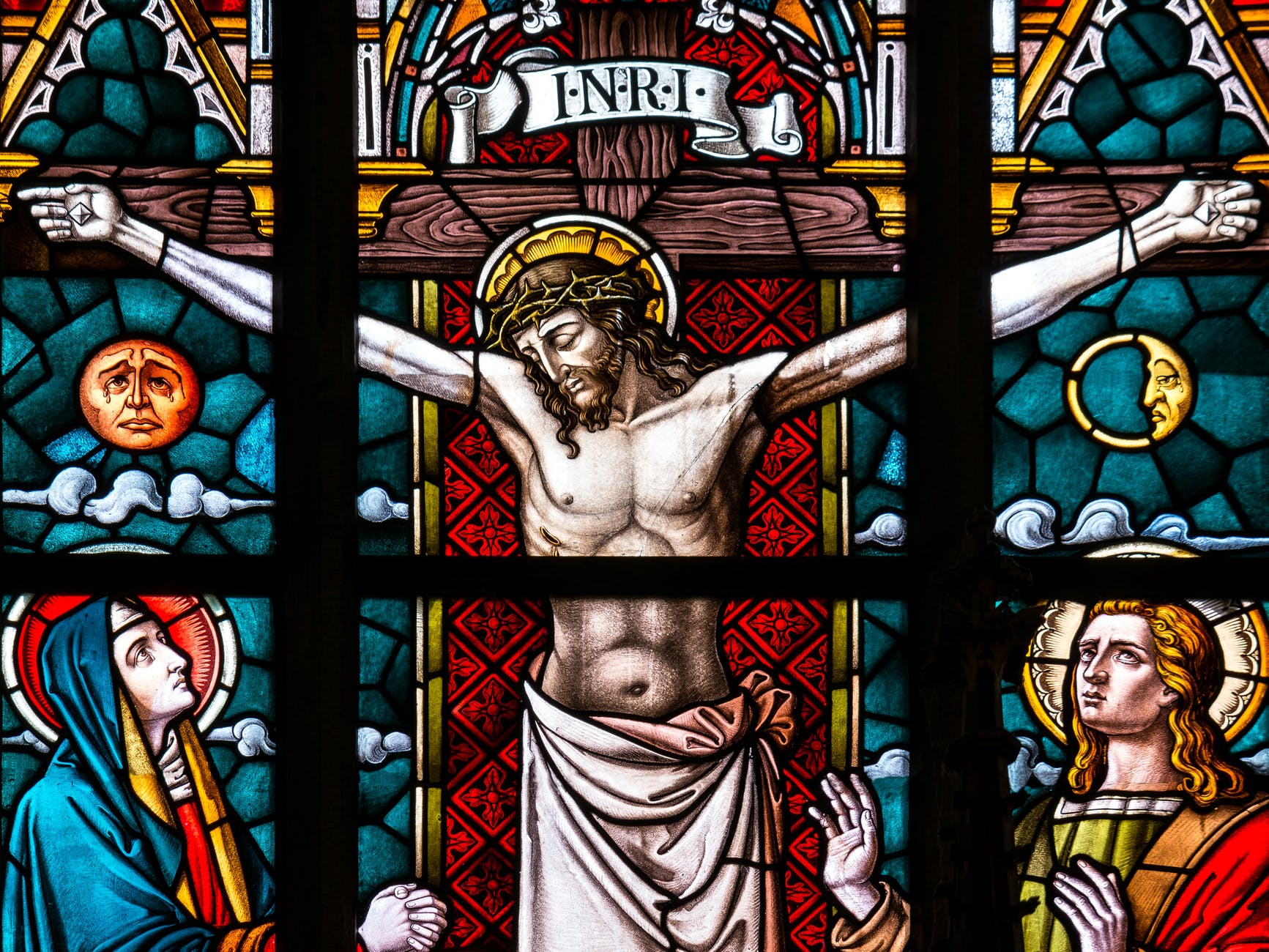
In my opinion, using the Cross to hang a bloody American flag on is an act worse than treason.
In the end, though, it shouldn’t matter which political party you affiliate with. It should only matter that truth be the guiding light in a matter that is almost too polarizing to be so politicized.
“Depression is being colorblind and constantly told how colorful the world is.”
– Atticus, Love Her Wild
Most people know that bipolar disorder is a mental health condition characterized by extreme mood swings. That’s about as much as they know, though; the rest is just assumed. But anyone with bipolar disorder knows the feeling of the crash and comedown that comes after a bout of mania or hypomania. It is a literal crash-and-burn scenario. It’s like falling from the sky and colliding straight into the dirt at warp speed.
But it’s not the crash or the burn that hurts the most. It’s the period after where I feel nothing but loneliness and despair. This is the beginning of a major depressive episode.
I am admittedly hypocritical when it comes to depression. My depression, specifically. I seem to only understand how brutally severe it can be unless I’m in that state of mind. Otherwise, I just don’t get it.
I know, I know. It makes little if any sense coming from someone all too familiar with the affliction. But it’s true. I think that’s partially why it hits so hard. I have no understanding of the intricate design of my depression until it happens.
I sit here now in a “level” state of mind and am wondering why I’m even trying to accurately describe the torture of it. I’ve read other people’s testimonies on depression specifically and can both agree and relate. But there’s still something about my depression I can’t even understand or describe. The words just aren’t there.
So, as I’m sitting here, still in a “level” state of mind, I wonder why I’m even trying to find the “right” words to describe my depression. They can stay missing for as long as they want.
Looking for answers to the wrong questions can be dangerous, and there’s nothing more frightening than getting stuck in one’s head.
“In heaven, all the interesting people are missing.”
–Friedrich Nietzsche
Friedrich Nietzsche said faith is not wanting to know what the truth is. And as a dutiful nihilist, I would be remiss to even try and feign a belief in a Christian God. Having said that, I also suffer from a deep fear that I may be wrong in the belief system I so strongly cling to.
I am extremely conflicted on the issue yet remain steadfast in not believing in the God that most have come to know and ultimately worship.
I do not believe in organized religion at all. I also personally can’t entertain the idea of blind faith leading one to their eternity. Anyone can phone it in in the name of whatever they are chasing, but I can’t bring myself to play along. If I’m going to sell out, the payoff better be worth my time.
So, my question is can I blame my lack of faith and my cynicism surrounding the issue on my disorder?
Yes and no.
The constant back and forth between the highs and lows that accompany this illness can send me into a state of pure hopelessness. This in turn can create a downward spiral of self-doubt that I only get lost in.
I am only putting a spotlight on this issue because I am genuinely curious myself. I don’t mean to sound pessimistic or cold, though even I can see how I may come across.
My illness may not have any effect on which religion I practice or which god I pray to, but it does hinder the process of maintaining such a faith-based belief system. A belief system that takes dedication and commitment.
Dedication and commitment I have no understanding of.
So, does mental illness play a role in my lack of faith, or does it only slow down the process one must go through to reach true faith?
I don’t have answers to any of these questions, just thoughts and opinions. But since I don’t believe one can ever truly reach a state of complete knowledge and awareness, these thoughts and opinions will just have to do.
“For too long we have swept the problems of mental illness under the carpet… and hoped that they would go away.”
– Richard Codey
Whoever said “hope springs eternal” never offered me any sound advice on the mantra.
Despite being someone who operates from a place of hopelessness, hope seems to be all I have at times.
Though it’s always been the case, I’m finding it harder and harder to accept. I don’t feel like I could ever know what “true” hope is without being phony on a level I could never be okay with.
No known cause. No existing cure. Just managing the in-between areas of the highs and lows. The aesthetics of the situation are dull, even repulsive at times.
That being said…there do seem to be more “easy” days than not. I’m doing my best to hold out hope that that remains to be.
As a husband and a father, I continue to hold out hope just for hope’s sake.
Even in times of sheer hopelessness, there is always some sliver of something, I’ve learned. If not hope then a mild form of something similar, and I’ll take it.
So, even when the darkness seems to be all encompassing, I’ll at least try to stay aware that hope exists somewhere outside the scope of my current field of “vision”.
I truly do hope that mantra is more than just an acquired confidence. But if not, it’s one I hope to acquire.
As I’ve mentioned before, there is no one, direct cause when it comes to bipolar disorder. However, it is known that approximately 80% of the cause has been traced back to genetics. And with the heritability rate of bipolar disorder being off the charts, it’s only natural for me to wonder who is responsible for passing this on down the line to me.
Right?
It’s a joke, yes, but one that I stumbled upon honestly.
I have been on this journey of “true” self-knowledge for more than 15 years so I’ve learned to pick up on my own cues for the most part. But if a major part of this affliction is hereditary then I feel I deserve to know a little more.
I’m not being facetious in wanting names or anything. I just feel if genetics plays a major role in my particular “predicament” I deserve to have AT LEAST a vague outline of things.
Sometimes…most of the time…I have no idea whether I’m coming or going so a little clarity couldn’t hurt. May not help, either. In fact, it probably wouldn’t so I’d just be happy with another shot in the dark or just some more hope.
Now before I begin to sound any more pretentious or whiny, I know I’m not alone in having to deal with this process of acceptance and self-awareness. At this point, however, I just assumed I was past this part of the process. But as with the bouts of mania and depression, the process of “figuring things out” on a higher level is in of itself a big cycle. A vicious cycle. And one that has enough “lessons” to last a lifetime.
I may never get the answers I want. Or like. We in the bipolar community may have to just get used to it, but it doesn’t mean we have to like it.
I may never learn the direct cause of my bipolar disorder. But I do know there are many effects. These highs and lows are all effects. The way my behavior affects others around me is an effect. But so is my fight onward.
Cause and effect. There’s a cause to every effect. I just ask that, for the sake of myself and millions of others, you don’t take the effect and make it the cause.
You hear it at the beginning of every year. “New year, new me.” It hardly ever seems to work out that way but it’s a nice thought. If you are one of the lucky ones, though, then good for you. I say that with no condescension. Honest. But for approximately 5.7 million Americans it may not be so black and white.
New year, new me. For me, part of that expression has always been just the opposite. The expression “New year, SAME me” is a little more on the spot. And “SAME me” is not someone I have always been proud of.
To break it down even further, “SAME me” is not always the “same” me. Sounds complicated, right?
Let me try and clarify.
Those who do not suffer from bipolar disorder may not understand exactly what I mean by that, but I’m sure anyone with the disease can relate.
The extreme highs and lows accompanied by the bouts of mania and the depression all play a role in what kind of “person” I, we, come across as.
So, dramatic? Maybe. Inaccurate? Not entirely.
I wish I had the complete ability of control and awareness when in the moment, but it’s usually not until later when I realize how my behavior caused me to look and come across as.
I was once told by a family member that they didn’t reach out to me more often because they never knew how I was going to “react”. I wasn’t angry after hearing this, surprisingly. Not at all. I was embarrassed. It put a spotlight on something I wish would’ve remained hidden in darkness.
I know enough to know (even if a little too late at times) that I am not always the way this particular family member was referring to when making that comment, one that was perfectly honest and harmless.
Despite it being innocent enough, the comment offered me more perspective than I ever had on the matter. Once again, I became aware of my behavior and attitude just a little too late.
Awareness.
Being aware. Being aware and staying in control of one’s faculties at the same time. I’ve always described bipolar disorder as knowing completely and fully the difference between right and wrong yet having no control over how you react no matter the situation.
According to the Mental Health Foundation, nine out of ten people with mental illnesses say that stigma and discrimination have a negative effect on their lives. With that being said, this fear and shame makes it harder for one to be in control of the “person” who is coming across.
Unfortunately, those with bipolar disorder will undoubtedly encounter someone who will judge or determine their character based off of their interaction with them. Or off just their diagnosis alone.
An APA report shows that a majority of Americans believe that mental health is just as important as any other health concern. According to the report, 87% of Americans said having a mental illness is nothing to be ashamed of. 86% of Americans said people with mental health conditions can get better.
Which is great to see in 2022. Yet the stigma still exists and also plays, I believe, a subconscious role into how one with a mental illness reacts in any social situation.
So, new year, new me? I don’t know. New year, SAME me? I sure hope not. But here’s to putting my first foot forward every day, 2022. That’s my resolution.
Just remember: one day at a time. Even if it is only the first.
“Though I am often in the depths of misery, there is still calmness, pure harmony and music inside me. I see paintings or drawings in the poorest cottages, in the dirtiest corners. And my mind is driven towards these things with an irresistible momentum.“
– Vincent Van Gogh
I’ve mentioned before in this blog the possible link between creativity and bipolar disorder and the first person who comes to mind when thinking about this theory is Vincent Van Gogh.
Of course, there was no one “official” diagnosis given while Van Gogh was living. However, it is historically accepted the artist suffered from the disorder. In fact, World Bipolar Day is on March 30th because it is Van Gogh’s birthday.
According to The Van Gogh Gallery, his extreme enthusiasm combined with his amazingly excessive output suggested mania was a big fixture in Van Gogh’s life. But these periods of mania were also accompanied or followed by periods of depression.
A 2020 article in the International Journal of Bipolar Disorders lays out the idea of Van Gogh having bipolar disorder based off of alleged rapid mood swings along with periods of both mania and depression. Van Gogh’s brother even said it was as if he was made up of two different personalities, “the one marvellously gifted, sensitive and gentle, and the other self-loving and unfeeling”.
Vincent Van Gogh was born on March 30, 1853 in Holland. The son of a pastor, Van Gogh believed his true calling was to preach. It wasn’t until later he discovered his true passion as an artist.
Perhaps the most infamous moment in both Van Gogh’s personal life is the “ear incident”. In December 1888, the artist cut off one of his ears with a razor during part of a mental breakdown. He gave the severed ear to a cleaner at a local brothel and would spend the majority of the next two years in hospitals and asylums.
From Lilacs to The Starry Night, Van Gogh painted some of his most well-known masterpieces while hospitalized for his nervous temperament. The Starry Night was inspired by a view from one of Van Gogh’s rooms in an asylum. Most of the artist’s finest and well-known paintings were done in the last two years of his life.
Van Gogh’s death is shadowed in some mystery yet still is officially regarded as a suicide. He died on July 29, 1890 — two days after a self-inflicted gunshot wound to the chest. According to his brother, Vincent’s last words were, “The sadness will last forever.”
Van Gogh was not a critical or commercial success in his lifetime, having sold only one painting. He never wavered in his conviction as an artist, however, painting consistently, even in his darkest periods of life.
Even with a reputation of mental instability it was clear Van Gogh had true artistic strengths and creativity. And with a talent beyond measure, Van Gogh is considered to be one of the most influential artists in history.
Despite his mental illness, Van Gogh is credited with helping create the foundation of what we know as modern art.
“I’m so happy because today I found my friends, they’re in my head.”
– Nirvana, Lithium
There are dozens of different medications available on the market for the treatment of bipolar disorder, yet one has remained the main go-to for nearly a century.
I’m talking about lithium. For more than 70 years, lithium has been the “gold standard” drug usually prescribed after getting one’s initial diagnosis. After all this time it is still considered to be one of the most effective medications for the disorder. But like everything else concerning this disease, the benefits can always come at a cost.
It was then discovered lithium was a good treatment for episodes of both mania and depression, but particularly mania. It has been used as a treatment for such ailments since the 1870s.
However, it was Australian psychiatrist John Cade, who in 1949 wrote one of the first papers on lithium as a treatment for mania, in turn making it a more widely prescribed medication.
Although used regularly since Cade’s discovery, the FDA didn’t approve the drug until 1970. Despite being one of the main drugs prescribed for the treatment of bipolar disorder, lithium, like any other drug, still has many possible side effects including:
nausea
shaking
dry mouth
frequent urination
diarrhea
weight gain
increased thirst
loss of appetite
kidney trouble
lowered activity
fatigue
emotional numbness or a dull feeling
There are, however, more serious side effects from taking lithium than those listed above. It is important to stay hydrated and get regular lab work done to monitor and prevent lithium toxicity in the blood.
Signs of lithium toxicity include:
trouble concentrating
confusion
fatigue
vomiting and diarrhea
poor coordination
muscle weakness, twitching, and tremors
an abnormal heart rhythm
seizures
Doctors will also check creatine levels to monitor kidney function. This is another long-term effect of the use of lithium. If creatine levels are too high this may be a sign of improper kidney function and can cause kidney disease.
It is still not completely known why lithium is so helpful in the treatment of bipolar disorder since a decreased level of lithium in the body doesn’t increase one’s chances of developing bipolar disorder. It is known, however, that lithium positively interacts with a number of neurons and neurotransmitters in brain cells.
Described in one 2017 study as “an oldie but a goodie”, lithium continues to be one of the more reliable mood stabilizers used for the treatment of bipolar disorder.
“Life is like a piano; the white keys represent happiness and the black show sadness. But as you go through life’s journey, remember that the black keys also create music.”
– Ehssan
Although the exact cause of bipolar disorder is still unknown, it is also unclear at times which is more important: finding the root cause of the disorder or determining how to treat the effects and symptoms. One would probably argue the first, but some of this disease’s symptoms and the extremes one can experience can, at times, outweigh the immediate need to know why.
Being a lifelong disorder there are bound to be some effects only noticeable and problematic over time. I have already addressed many of the general statistics relating to bipolar disorder in this blog so I’m not going to be focusing on those here.
Time takes its toll on everything, and the main changes bipolar disorder affects involve the brain. Research shows bipolar disorder damages the brain over time and can affect one’s memory, attention and ability to concentrate, and impulse control.
More research is needed, of course, but it is believed those with bipolar disorder have a higher likelihood of developing dementia later on in life. One study also showed bipolar disorder may cause progressive brain damage due to a lowered level of amino acids occurring over time in the brain.
Another study suggested a long-term effect is the frequency and severity of both manic and depressive episodes. The research showed the more time spent in a depressive state increased the likelihood of staying ill longer. The research showed those who spent more time in a manic state had increased chances of hospitalizations.
Research has also shown bipolar disorder can reduce gray matter in the brain over time. Gray matter helps you process information and thoughts, have better impulse control, and overall better cognitive and motor skill function. The greatest deficits found were in the frontal and temporal lobes, the regions of the brain responsible for cognitive function and thought process.
Interestingly, the results of a 2016 study suggested the blood of bipolar patients is toxic tobrain cells, seriously affecting the connectivity ability of neurons.
Another major reason bipolar disorder can wreak havoc on one’s body isn’t because of the disease itself, but the medication used to fight the symptoms and stave off both manic and depressive episodes. There are a variety of types of medication prescribed for bipolar disorder including:
mood stabilizers
antipsychotics
antidepressants
combination antidepressant-antipsychotics
antianxiety medications
All medications cause side effects of some sort, but those acquired by lifelong use can be different and more serious.
Lithium is the main go-to medication prescribed for bipolar disorder and one I myself take. It is a mood stabilizer and can be extremely effective for those with bipolar disorder yet damaging to the kidneys over time.
Other medications prescribed can have less serious side effects, but still be damaging in various ways over time.
Those with bipolar disorder also have an increased risk for developing the following illnesses:
thyroid disease
migraines
heart disease
chronic pain
diabetes
obesity
It is also important to note that any type of bipolar disorder left untreated is dangerous and detrimental to one’s overall health.
A disease with lifelong effects like bipolar disorder requires lifelong management, usually involving a medication regimen and some sort of therapy. Although no one has all of the answers, those of us with bipolar disorder can still apply what is known to our lives in hopes of managing our illness in the best way we can.
“Anxiety does not empty tomorrow of its sorrows, but only empties today of its strength.”
Charles Spurgeon
It goes without saying those dealing with bipolar disorder have to handle themselves on a day-to-day basis. Second-to-second, at time. Although I wouldn’t have began the day describing it that way, I could sense the resolve of Christmas and the weekend happening at the same time and knew there would surely be some major, stressful shift in my life. Had to be.
Of course, naturally, there was already a shift of some sort happening in everybody’s lives: the Christmas holidays were ending, bring on the new year. But I knew lingering on this type of thinking could be a trigger for me. A trigger for something a little more grandiose.
It usually begins to manifest itself in the form of worrying. Extreme worrying. Worrying and anxiety that I have never been able to accurately describe.
As the day went on though, I sort of just stayed “hidden” from the idea of something happening. It was genuinely like I was playing hide-and-seek with just the notion of something possibly happening. I was handling myself fine, but I still felt like I was barely getting by. It’s the emotional equivalent of having too much toast and not enough butter: less serious than you can imagine but deathly worrisome, and in the worst way.
I was beginning to feel like this was one of those days I should’ve stayed in bed. My silent worrying was turning into silent paranoia, and I wasn’t sure if it was showing or not. I was really just trying to stay hidden, hoping I was protected from this day’s unpredictable bullshit by some sort of cosmic invisibility.
However, that was not the case and I knew it. But I also had no idea of what I was trying to keep at bay. My worrying and anxiety, of course, but more so from where it was coming from. Which was where?
I was trying to keep whatever dread was going on just below the surface, though. And I did. A true shift of the paradigm. I made it through the silent chaos in my brain.
I always do, but that doesn’t mean each time isn’t just as difficult as the last. What exactly did I do anyway? Stress about something that even I knew wasn’t real?
That’s how it goes, though. But the main takeaway was that I caught the trigger before it got pulled. I spent the day worried and anxious over an invisible fear, but I did not let it turn into something more personally destructive.
Sometimes I feel like I’m headed for a hopeless destination. And if life is the journey then why I even be on it? You’re getting nowhere fast. And where you are going is worse than the route you took.
But I conquered the day and was able to get into my bed and hide under the covers, feeling safe and accomplished.
Yet already dreading tomorrow to see what little tricks I could pull on myself if I played my cards just right.
Even so, it’s a day-to-day journey and you can’t skip ahead any. And why would you want to? There’s no point. Stress and anxiety, mania and depression, they don’t have to follow you; they know exactly where you are at all times. But we must push through. It’s all we can do.
Plato once said, “Nothing in the affairs of men is worthy of great anxiety.”
“I grew up in this kind of fishbowl existence and I figured, if people were going to say it about me, then I was going to say it first and I was going to say it better. It’s my way of trying to own a situation.”
– Carrie Fisher
I couldn’t have said it better myself and I won’t sit here and try to pretend I can.
My personal battle with the big, bad bipolar disorder has been a long one. Seventeen years, in fact. I was 15 when I was first diagnosed. I was 17 when I was diagnosed for the second time. But it wasn’t until I was 24 that I first started to seek out treatment. And by then enough damage had been done.
I love the above quote because it was with a similar attitude that I initially approached my openness about my disorder. I didn’t care. Everyone else seemed to know I was bipolar before me and it didn’t appear to be bothering them too much. So why should I care now? Why should I try and change anything now?
I, to my sad misfortune would later learn, was first diagnosed with bipolar disorder as a teenager — a prime time for such a discovery to be made! And then, for some reason, I found myself content just sitting in the soup for the next ten years.
I was “diagnosed” for the first time at 15. My parents and the doctor were not in agreeance, however. So, at 17 my when my parents kicked me out, I was diagnosed again. Two years had passed, though, and I no longer cared how my behavior affected anyone else. Not even myself. It’s not that I was angry or acting out of defiance or anything. I truly didn’t care what people thought about me, which at the time seemed like a good thing.
Looking back now, not so much.
Someone once told me that not caring what people thought about me was one of my best, and worst, qualities. Once I became aware of that, however, it became a game to me. I went out of my way to make people feel uncomfortable when they were around me.
This went on for years with me thinking the feelings and behaviors I was exhibiting was just an inherent part of who I was.
Which, in a way, I guess ended up being somewhat true.
Carrie Fisher said it best, though: own your situation, don’t let it own you.
“Where would the memoir be without bipolar writers? I mean,…I’m not accusing every memoirist of being bipolar. But I think in a way it’s kind of a gift.”
– Ayelet Waldman
Jimi Hendrix. Vincent Van Gogh. Jean-Claude Van Damme. Kurt Cobain. Carrie Fisher. Winston Churchill.
Throughout history there have been innumerable artists, musicians, and other creative powerhouses who have suffered from bipolar disorder. So many, in fact, it has raised the question of whether or not a link exists between bipolar disorder and creativity. New research suggests that might just be the case.
In a 2010 study researchers found those diagnosed with bipolar disorder dominated in the arts and humanities professions. Of the 1,000 subjects who were analyzed many were poets, musicians, and artists. According to this study, the likelihood of those suffering from bipolar disorder was 10 times higher than that of the general population. The study was able to show that “there is broad evidence that creativity and psychopathology are correlated.”
A 2019 pilot study of a small group of people with bipolar disorder found they scored higher on the Barron-Welsh Art Scale, a scientific test that measures creativity. Results of this study suggested “bipolar disorder is associated with creativity, but not necessarily creative accomplishment.”
Excellence in language and/or music was directly aligned with an increased risk for developing bipolar disorder, according to one 2010 study.
Another study even suggested that poets are 30% more likely to have bipolar disorder than someone in the general population.
What is known for sure, however, is that there is a huge genetic factor associated with having bipolar disorder. Researchers are now trying to determine if those same genes may produce heightened creativity levels, intellectual awareness, and productive output.
People with bipolar disorder have a certain brain chemistry and structure that allows for many of the boundaries in a “typical” brain to not exist in the brain of a bipolar person.
People with bipolar disorder have unique experiences which they feel at different levels than the “typical” person. Those with bipolar disorder have different emotional and intellectual perspectives that may play a role in the likelihood of having a high creativity level.
Although there does indeed appear to be a clear genetic correlation between creativity and bipolar disorder, not everybody with bipolar disorder will be overly creative.
Many artists and writers choose not to take medication for the sole purpose of maintaining a heightened level of awareness. On that same note, the perils of the disorder should still be heeded. Untreated bipolar disorder can be dangerous, even life-threatening, and is not worth the risk of being intensely creative.
More research and information is needed to fully make the connection, but current data does show people who are genetically predisposed to bipolar disorder tend to function at a more intense level of creativity and increased overall productivity.
“I hate when I tell someone I have bipolar and see a look of terror in their eyes.”
– Christine Kirtin
For me, coping skills are, for lack of a better phrase, a bunch of bullshit. I have no concept of any sort of coping skills, especially in the moments I need these supposed skills to cope.
Coping skills have always been, for me, a piece of paper with bullet points on it, handed to me by a doctor or therapist of some sort.
A list.
Take a walk. Journal. Practice your breathing. Count to 100.
It’s aways a list, and one that has never been applicable to bipolar disorder.
For me, anyway.
But there are many triggers that can be identified for bipolar mood swings and the most common ones for are:
Stress from major life events, both positive and negative
Learn the warning signs of a manic episode and get early treatment to avoid disruption in your life.
Take medicines as instructed by your doctor to help reduce the number of manic episodes.
To help prevent a manic episode, avoid triggers such as to caffeine, alcohol or drug use, and stress.
Exercise, eat a balanced diet, get a good night’s sleep, and keep a consistent schedule. This can help reduce minor mood swings that can lead to more severe episodes of mania.
Have an action plan in place so that if you do have a manic episode, those who support you can follow the plan and keep you safe.
And here is a list of general coping skills for people with bipolar disorder:
breathing deeply from the diaphragm
repeating calming words or phrases
visualizing a relaxing experience
reframing a situation logically
listening actively to another person
making an action plan
using humor to defuse a situation
taking time out alone
going for a run or walk to redirect energy
Just another standard list of what should be considered common sense, yet one that I can’t use or doesn’t apply to me when I’m having an episode.
I don’t mean to sound pretentious. Hell, I wish I could find a way to cope or a way to handle things better. It just seems most “coping skills” for bipolar disorder are more for preventative measures and do not include something I can use during an episode.
This isn’t meant to be an educational post and I know everyone and every situation is unique, but after everything, I still haven’t found any coping strategies that work for me.
The holidays can be a tricky time of year for someone with bipolar disorder. “Doom, gloom, and dread” often take the place of “peace, love, and joy”, creating a brand new can of worms that no one looks forward to. Not only are you not the life of the party, you might very well be its death knell.
Why are the holidays so hard for people who suffer from bipolar disorder? Doctors and research point to a variety of factors.
Buying into the build-up: It may be the “most wonderful time of the year”, but you couldn’t feel more alone and depressed.
Cycling with the seasons: Many bipolar people tend to feel more down and depressed in the winter months due to the time change.
Schedule changes: People with bipolar disorder like and depend on their routine.
Substance use/abuse: The temptation to drink or use drugs may come up during the holidays for a variety of reasons.
Too much, too fast: Shopping here, stopping there…It can take its toll on anybody, of course, but it can be a trigger for someone with bipolar disorder.
Overspending: This can already be a bad idea for someone with bipolar disorder. But with a reason it can be a disaster.
Missing medication: As busy and hectic as the holidays get it’s easy to miss a dose of medication without even realizing it.
Social anxiety: Not all family gatherings are pleasant and they can be even less so when anxiety is rearing its ugly head.
To tell a person suffering from bipolar disorder there are ways around these factors is similar to telling a circle to be a square: it’s a waste of time. However, there are some coping strategies that can be used to help avoid certain triggers.
Be open and honest: Let your friends and family know you may just not be up to all the festivities this year.
Keep a schedule: Make a schedule and stick to it.
Just say “no”: Avoid the illicit use of any drugs and/or alcohol.
Stick to a budget: Avoid overspending by creating and sticking to a budget.
Shop online: Avoid the stores and any other unnecessary social situations.
Avoid excessive stimulation: Stay away from things that could be a trigger of any sort for you.
Prepare: It’s hard to do, but try and remain aware of what is on the schedule.
Most importantly, remember that it’s okay to be selfish when it comes to your health and self-care. Even during the holidays.
Bipolar disorder is a mental illness that features extremes between manic states and depressive states. That’s your basic, textbook definition, anyway. What gets lost in translation is the fact that there is more than just one type of bipolar disorder. Whether it be from just a lack of knowledge or from all the convoluted hearsay surrounding mental illness in general, all things “bipolar” get lumped into one category. However, there are four different types and each one is different.
Bipolar I: Bipolar I is probably the most “well-known” type. With this specific type of the disorder, one must have one or more manic episodes lasting at least 7 days, often times requiring hospitalization. One might experience less severe hypomanic and depressive states, as well. However, these are not necessary for a diagnosis.
Bipolar II: This type of the disorder is characterized by having both hypomanic and depressive states. One must not have ever experienced a full-blown manic episode to be diagnosed with type II. Depression is more prevalent in bipolar II than in bipolar I, but those with bipolar II will experience hypomania, which is shorter spurts of mania.
Cyclothymic disorder: Cyclothymia is a milder, yet chronic form of bipolar disorder. In cyclothymia, the severity of the manic and depressive states are not as intense, but the symptoms of the cycles one experiences remain constant. These symptoms must be present in the patient for at least two years with no symptom-free period of time.
Unspecified bipolar disorder (NOS): This type of bipolar disorder is diagnosed when one exhibits both manic and depressive symptoms that do not meet the criteria for either bipolar I or bipolar II. One may rapidly cycle between extremes or feel both manic and depressed at the same time.
Just as there four types of bipolar disorder, there are different phases that characterize the illness in general, as well.
Mania: A stage of bipolar I set apart by irritability and energetic activity. Other symptoms might include less need for sleep, racing thoughts, engaging in risk-taking behavior like spending binges, sexual activity and substance use.
Hypomania: Hypomania is similar to mania, only not as severe. One experiencing hypomania may experience the same symptoms of mania, however these episodes are marked in shorter spurts than full-blown mania.
Depression: Depression is characterized by extreme melancholy and sorrow. Symptoms include sadness, loneliness, worthlessness, guilt, and hopelessness. One may have sleep issues, issues with appetite, sluggishness, and problems with concentration and focus.
Some people even experience what are called mixed episodes or rapid cycling.
Mixed Episodes: Mixed episodes refer to the existence of the symptoms related to mania, hypomania, and depression either at the same time or one after the other. During this phase, a major depressive state may be directly followed by a period of mania or hypomania.
Rapid Cycling: Rapid cycling refers to someone who experiences four or more phases of mania, hypomania, depression, and mixed episodes over a period of 12 months. This phase is not an uncommon one, but episodes are more random in both severity and duration.
Getting a diagnosis of bipolar disorder, no matter which type, can be scary. Initially, shame and fear may play a big role in one’s next steps forward. Living with the disorder can be challenging, frustrating, and present one with a slew of hardships that can make daily living near impossible at times.
Although there is no cure, all types of bipolar disorder are manageable with the right treatment plan, usually consisting of a combination of medication and psychotherapy.
Anyone experiencing any of the above-stated symptoms or feel they may be bipolar should contact a mental health professional immediately.
In finding some forgiveness of loneliness, and with a strange acceptance of suffering, I can now look back on it all with a dim understanding. It happened at a time when creativity existed within me at an exhausting level. There was a maddening frenzy in the way things came out of me, pouring with sympathy, yet offering nothing.
It was a late spring day, like any other. The afternoon sun hung in the sky, low and domineering, and the confused aromas of the season were in full force. Spring, a season with a natural thickness of rebirth in the air that creates its own swelter, is a season I’ve come to both love and hate.
I could sense the onset of the stifling evening, and the heat wasn’t even a factor. There was something else in the air contributing to my restless unease. Little did I know that day would be the end of an innocence I can now only barely remember.
***
We lived on a hill just below the county hospital, with a deep jungle of ditch lines in our backyard. On the other side of the ditch lived another family: a woman named Vanessa, her son, Allen, and her boyfriend Mike. As time passed my family formed some sort of relationship with “our neighbors to the south,” as they jokingly became known. We would have cookouts and pool parties. We’d all even go fishing from time to time. So we became friends. At the very least we were friendly.
Although our families had become rather close, no one noticed the shift in Mike’s behavior in the beginning.
That may have been because there wasn’t much of a difference in his behavior; it was more of a slight, unexplainable change in his attitude. He had always been a naturally happy-go-lucky kind of guy who, out of nowhere it seemed, started acting like a totally different person, like a mean drunk.
When the “change” in Mike did become somewhat noticeable, the people around him chalked it up to being nothing but a man going through a hard time, probably because of his job. Mike was a professional tree trimmer, and in that profession, it seems like you’re either raking it in or getting raked over.
Mike wasn’t just your average tree trimmer, though. This man would tackle a tree, be hundreds of feet in the air, and be anything and everything but scared or nervous. He had these great big spikes that he would attach to the bottom of his boots, allowing him to scale any size of tree with nothing but a few ropes and his chainsaw. I had the chance to see him work a few times and would watch, sometimes in awe and others in fear. I had respect for him for that reason alone; he was one of the bests at what he did, no doubt about that.
Little did anyone know, however, Mike was struggling with more than just a lack of work or with problems at home. Mike, along with my father, was a big drinker, mostly beer but an occasional bottle got passed around. My father and Mike both could become rambunctious, even hard to handle at times, but it was mostly innocent.
There’s that word again.
But then the occasional bottle turned into a steady supply. Still, though, no one was quite sure what caused this change in Mike. And no one asked. I think my family really believed it was troubles at work or home. I didn’t have any real opinion.
All I can say now is that it was much more serious than work troubles.
***
So as the stifling afternoon turned into an even more suffocating evening, I was eating dinner with my parents when the familiar red and blue flashes of police lights became noticeable through our dining room window. Usually none of us would have cared, let alone moved, but my dad jumped up when he realized which house the cops had gone to.
Mike’s.
We all ran outside to try to find out what was going on. But before we could cross the ditch line, I saw a light even brighter than the cops’ lights (there were several squad cars at the house by this time). I got across the ditch and discovered the bright light I was seeing was a spotlight, pointed up and shining into one of the tallest trees in Mike’s yard.
And what I saw next turned my full-on sprint into a disoriented jog. The light the police were using was shining on Mike, who had climbed as high as he could in the tree behind his house and appeared to be wearing a homemade noose around his neck.
At first, I couldn’t be sure if what I was seeing was real. This had all happened so fast. There was just too much going on. Too many people shuffling around and talking. Too many voices coming from first responders, unsure of what to do.
Too many lights.
And Mike…
The sight of Mike in that tree, standing on a branch with a noose around his neck…
I was in shock.
Mike started shouting down from the branch he was standing on. He wanted “everyone to leave and to just be left alone.” He was crying, yet somehow remained stoic as he continued his demands. My dad tried to talk to him, and Mike stopped yelling long enough to listen and say something I’ll never forget.
“Just get out of here. It’s too late.”
Before my dad could respond, a fire truck pulled into the yard. Immediately, Mike threatened to jump if it didn’t leave.
As this scary scene continued to unfold I noticed the big spike boots I had seen him wear before. Wow, I remember thinking, he’s serious. He’s beyond serious.
He was so high in that tree I wasn’t sure if the ladder on the fire truck could even reach him. If it even came to that.
No one seemed to be in any big hurry. I didn’t understand then, but I do now. Any sudden or dramatic actions could, and most likely would have, provoked Mike to jump.
No question about that.
As the fire truck pulled in and parked in the yard as close to the tree as necessary, a “crisis team” from an area counseling center showed up. My backyard had become some sort of neon nightmare with all the lights flashing across the sky, across the night throughout the neighborhood.
I wasn’t sure how this was going to play out by this point and honestly had become beyond fearful. It was an emotion I didn’t recognize at first, but yes, fear was what it was.
This was real.
By this time, of course, there was already a crowd of onlookers outside, steadily growing. I could hear police talking about the “tactics” they were undoubtedly trained for in these “types of situations.”
I may not have been alone in my concern for this man, but it sure was starting to feel like it.
The noise continued but through it all, through all the yelling and commotion, what I could hear most clearly was Mike, crying.
An officer approached my dad and I, apparently noticing the only person Mike would carry some sort of rapport with was my dad. They talked in voices I couldn’t hear, frankly not wanting to. But I didn’t want to leave either, which is what happened next. A desk-type cop barked at me to go back to my house and my dad made sure I did just that.
My dad rushed me across the ditch line and told me to go inside. I wasn’t happy with his demand, but I didn’t argue; this wasn’t the time or place. Before I could comply, though, my dad was gone, across the ditch and back over in Mike’s backyard.
But by the time he got back, it was too late.
By the time he got back Mike’s patience and belligerence had run its course, which were the only things keeping his feet on that tree branch he had climbed up to.
What was keeping his neck inside that homemade noose before he jumped I’m afraid we’ll never know.
But in one last bout of gusto, it was all over. Mike shouted something I couldn’t make out and jumped off of the tree branch.
And I wish there was something more to say.
***
Mike’s body hung in that tree for more than six hours after he killed himself. I’m sure the police and investigators would have some sort of explanation about “proper procedures and protocol.” But it didn’t make much sense to me, not then or now.
I remember as I woke up for school the next day (if I had even slept at all) there were still police in Mike’s backyard. Mike’s body had just been cut and lowered from the tree after dangling all night.
I stood in my backyard as Mike’s sheeted body was being loaded up. Seeing that made me realize I hadn’t yet processed any of this. There had been no tears, no time for tears. Tears were not part of the “proper procedures and protocol,” not for these “types of situations,” anyway.
My dad was outside, too, and came up to me. We looked at each other, the silence between us almost comforting. Exhaustion had become him, and I could tell that he hadn’t had any time for tears either.
I could see the morning sun shining through the trees, perched up in the sky as if being held up by the wood line and nothing else. It was as if the sun was even sad.
My dad wiped a single tear from his left eye and stood up. All of the police and emergency vehicles were gone at this point.
“They left the rope,” my dad said, pointing up to the tree.
And they had. I didn’t see it at first, but they had. Most of the thick, blue rope Mike had used to hang himself with was still up in the tree.
“Can you believe that? They left the rope.”
No time for tears, no time for questions.
We stood there in the backyard in silence for a long time. My dad finally spoke, telling me it was time for him to get ready for work for me to get ready for school.
School? How could I go to school just hours after seeing a man hang himself in my backyard practically?
My apprehension must’ve been on display on my face because my dad began one of his familiar speeches.
When my dad finished, he hugged me and sent me back into the house, and again told me it was time to get ready for school.
We as humans sometimes forget the damage our words can inflict. So, without being self-righteous, here are some things one should try to avoid saying to someone with bipolar disorder:
1. “I thought you were taking your medication.”
Although it’s not uncommon for someone with this illness to stop taking their medication once they feel they’re “better”, it’s usually not a topic of conversation that most people with bipolar disorder want to have or be accused of.
2. “You know he’s “bipolar,” don’t you?”
A comment like this can end up being counterproductive and even destructive. People with bipolar disorder don’t like to be reduced to their diagnosis.
3. “Everyone Is a Little Bipolar Sometimes”
This one can come across as really insensitive and is dismissive of a person’s experiences with this illness.
4. “We used to have high hopes for you.”
I mean, come on. It is NEVER a good idea to kill someone else’s dreams by being rude because one may have a mental illness.
5. “It doesn’t take much to set you off!”
Now this is a comment that clearly might set one off. Tearing someone down who may need you could trigger a bipolar episode, manic or depressive.
6. “Why can’t you just be happy?”
Oh, believe me, we try (and are still trying), but having a mood disorder defined by such highs and lows could quite possibly hinder someone’s happiness and overall mood.
7. “Everyone Is Bipolar Sometimes”
A turn of phrase that ends up coming across in an insensitive and dismissive way. Don’t generalize someone’s condition to try to make them feel better.
8. “You Don’t Seem Like You’re Bipolar”
The highs and lows associated with bipolar disorder come in cycles or episodes so there are periods of “normalcy” and being leveled out. Never assume that someone is okay because their symptoms aren’t obvious to you.
And now for my favorite…
10. You’re bipolar?
This comment can take the wind right out of my sails. Sometimes you feel comfortable and open enough to talk about your illness. But then you realize your family and friends are basing every action and reaction on your illness. Or is that my personal paranoia? That’s why that specific question/comment has always been hurtful and offensive.
Here is a list of 8 things from the article one should say to someone they know is suffering from bipolar disorder.
1. “This is a medical illness and it is not your fault.”
2. “I am here. We’ll make it through this together.”
3. “You and your life are important to me.”
4. “Tell me how I can help.”
5. “I might not know how you feel, but I’m here to support you.”
6. “Whenever you feel like giving up, tell yourself to hold on for another minute, hour, day — whatever you feel you can do.”
7.”You’re not alone.”
8. “Your illness doesn’t define who you are. You are still you, with hopes and dreams you can attain.”
Sticks and stones, right? Words can sometimes cause more damage than we intend, though. And this isn’t any kind of guilt trip; I only mean to help.
Be the positive, encouraging friend or family member to your loved one who is suffering from this disorder. There is no cure and there is no true recovery. There is only management.
“Recovery” is a word most often used in the realm of drugs and addiction, a descriptor of those who are abstaining from the use of addictive substances. This same ideology simply doesn’t apply to bipolar disorder, however. People with bipolar disorder never recover in the same sense as an addict might. We don’t recover, we manage.
Now, I know the old familiar adage of “once an addict, always an addict”, but we have to look at both ideas in context here. If one is an addict and is always an addict, then one must always be in recovery, according to that ideology. It’s not necessarily the same concept when it comes to having a mental illness, in particular bipolar disorder. One does not make the choice to develop a chemical imbalance as one makes the choice of using drugs and/or alcohol. It’s all relative, of course, but not really.
So, after all the semantics, does bipolar disorder get better for those afflicted by the illness?
Yes and no.
Scary, huh? Only make of it what you will, though. This is where finding the right treatment plan comes into play.
Yes, yes, like I said, it’s all relative. We, alongside those in recovery battling addiction, must get to our own breaking point. The definition of “rock bottom” is different for everybody, and everybody has to have their moment. When I say “breaking point” I’m referring to the moment that brings one the clarity needed to see that something is and has been wrong. Unfortunately, that moment of clarity is usually brought on by some potentially disastrous behaviors.
Although people suffering from bipolar disorder share similar stepping stones as someone dealing with addiction on their journey forward, “recovery” is still not an applicable term for those with this illness. Granted, there are just as many variables that come into play regarding both addiction and mental illness when seeking help.
Can someone with bipolar disorder have a normal relationship? Although it’s a question that is as ignorant as it sounds, I can, to some extent, see how it could raise some red flags for someone on the other side. But if your loved one has bipolar disorder, it is possible to have a “normal” relationship.
Okay. I can admit that I’m probably not always the easiest person to live with. I can concede that. But I was never so aware of how many “bipolar bullet points” I was checking off the list until my wife and I had a truly candid conversation about my condition.
She knows how I hate the stereotypical things one hears about bipolar disorder, such as phrases like “walking on eggshells”, etc. But once the conversation began, it was clear there was no way back from where we were going. I was the cancer, I was the cure.
I must be thankful the conversation came about the way it did, however, because A) it was organic, and B) I wasn’t experiencing any signs of mania or depression. Just curiosity. And from what I had heard it had killed the cat.
But ignorance is not always bliss and I decided that this was one of those situations in which that was true.
It’s strange how, like bipolar disorder itself and those who suffer from it, the “symptoms” a spouse or partner of someone with it may exhibit are similar.
Similar in the fact that they can’t be cured, only managed. And even that is a stretch at times.
When my wife began to tell me about some of my “extreme” moments and how she would handle them, I felt microscopic in size. Not in the “oh, woe is me” sense, but in the “how could I allow myself to make her feel that way” sense. When I asked how she was able to handle all of my behavior without leaving or going crazy, she told me she could tell the difference between me and the disease. She had taken the time to educate herself on what bipolar disorder is and had listened at all my appointments.
She also said it was important to communicate, when it was the right time to communicate. Again, I normally would’ve taken this negatively, like I was too fragile to handle a conversation. But because we were able to have the conversation, we continued.
She reminded me that no matter what the situation, we had always worked through it. Even if it’s one where I may not be totally aware that is going on; even being manic and/or depressed at times, I still contributed and offered value. She told me she watched for my “triggers” and kept an eye on certain behaviors.
What I wondered was how I could be so blind or, even worse, careless as to what my wife experienced or how she felt during one of my episodes. How is she still here? WHY is she still here?
She told me. And then she explained it to me. And then explained to me how I wouldn’t understand so not to worry about it. She said it’s just like any other relationship when it comes to honesty and transparency, communication and trust. They’re all “must-haves” no matter the circumstances.
Regardless, however, it was a conversation and/or situation that could have been handled or dealt with negatively and it wasn’t. And those are the types of situations one should put themselves into any time they get the chance. I plan to fully from this moment on.
And remember, if you can take it without lashing out or getting sad, then take it. Those are the feelings you need to feel.
The general stigma surrounding mental illness, and in particular bipolar disorder, has created a balloon of misinformation that has only increased people’s fear of seeking treatment. So what we are left with is convoluted beliefs regarding mental illness in general.
In turn, many myths have been created around bipolar disorder and the facts have been twisted or swept under the rug.
So let’s talk about some of the facts and myths associated with bipolar disorder, according to the National Alliance of Mental Illness.
Myth: People with bipolar disorder are just moody.
Fact: The extreme highs and lows of bipolar disorder are vastly different from mood swings.
Myth: Bipolar disorder is mostly mania.
Fact: Bipolar disorder features a wide range of disturbances, including mania, hypomania, and depression.
Myth: Mania is always fun and exciting.
Fact: When someone is manic, they may feel good and have lots of energy. However, mania can also be an unpleasant experience, marked by irritability, restlessness, impulsivity, and loss of self control.
Myth: People can stop taking their medication once their bipolar disorder is under control.
Fact: People with bipolar disorder take medications that also act preventively to help stave off future manic or depressive episodes
Myth: Bipolar disorder is super rare.
Fact: Bipolar disorder is more common than one may think. Approximately 7 million U.S. adults have experienced bipolar disorder in the past year.
Myth: The highs and lows happen in regular cycles.
Fact: Bipolar disorder can be unpredictable. Some people may feel manic and depressed at the same time and not on any certain schedule.
Myth: There is a test that can be done to diagnose someone with bipolar disorder.
Fact: There is no single test that shows for sure one might have bipolar disorder. One would have to see a doctor and a psychiatrist regularly, combined with lab work and said person’s medical history.
Myth: There’s no way to treat bipolar disorder.
Fact: Although there is no cure for bipolar disorder, it can be treated and managed with medication and psychotherapy.
Myth: Stress isn’t a factor.
Fact: Stress is one of the biggest triggers for a bipolar episode or symptoms.
If you have bipolar disorder, it’s important to know the effects of the disorder. Separate facts from fantasy regarding an illness that is already shrouded in so much myth and mystery.
The stigma surrounding mental illness can be so overwhelming that it can cause many people who are truly suffering to be too scared or ashamed to seek out help. The statistics are even scarier. I touched on quite a few in my last post, but I feel this is information that bears repeating.
According to the National Institute of Mental Health, about 2.7% of the U.S. population suffers from bipolar disorder. Of the population that is affected by this particular disorder, 82.9% will suffer from severe impairments, more so than with any other mood disorder.
The National Alliance on Mental Illness has discovered similar facts through extensive research. Although there is no one particular cause of bipolar disorder, researchers and doctors posit that a number of factors could play a role. Those with a close relative with the disorder, especially a parent, are more likely to develop this disorder. Trauma can sometimes be a trigger for the disorder to manifest itself. The abuse of drugs and/or alcohol can also possibly be a trigger.
People with bipolar disorder have a 9.2% less life expectancy, making the average age for people with the disorder between 55-66. This is partly due to the high suicide rates of people suffering from bipolar disorder.
Approximately 19% of people with the disorder will commit suicide. This is one of those facts that bears repeating.
That in of itself should be alarming to anyone and everyone.
Suicide is the second leading cause of death among people aged 10-34, according to NAMI. The suicide death of a person with bipolar disorder accounts for approximately 12% of all suicides.
There is an article written by Michael G. Pipich, entitled “Bipolar Disorder and Suicide: What 12,000 Lives Can Teach Us”. Pipich, a Licensed Marital and Family Therapist (LMFT) with a Master’s Degree, also suffers from bipolar disorder. However, he makes a great point when it comes to this specific issue.
The article focused on the need “to learn the lessons of poor bipolar care before it’s too late.” Approximately 12,000 people with bipolar disorder commit suicide every year. Again, just another shocking reality.
He also touched upon the shame and fear of treatment a person has due to the stigma around the illness. In fact, he said that may be the main cause of the enormous amount of suicides we see every year. 12,000 people out of a “group” of nearly 7 million kill themselves every year. Every year. That’s insane. And it’s insane that people who don’t have a mental illness don’t recognize the serious need for proper treatment for those that do.
Winston Churchill, Vincent Van Gogh, and Kurt Cobain walk into a bar…
Yeah, it sounds like the beginning of a bad joke, but the punchline is far from funny.
One of them led Great Britain stoically during WWII. One of them is responsible for some of the most well-known and adored pieces of art work in the world. One is a musical icon who tragically ended his life too soon. So, you may be wondering, what do these three people have in common?
All of them suffered from bipolar disorder.
And so do I.
And now a joke: My friend who suffers from bipolar disorder called from the lobby. He said, “Hey, I’m feeling great today. You want to do something?” I said, “Sure, I’ll be down in a minute.” He said, “That makes two of us.”
No, it’s not a funny joke (nor an original one), but the subject is no laughing matter either. The stigma surrounding bipolar disorder is not only sad, it’s dangerous and deadly. There are approximately 5.7 million adults in the United States suffering from the mood disorder. Of those diagnosed with the disorder, 40%-60% of people will attempt suicide at least one time. Even scarier, approximately 19%, or 1.14 million people out of approximately 5.7 million with the disorder, will commit suicide. Bipolar disorder accounts for 3%-14% of all suicides, making it quite possibly the deadliest mental illness.
So, if you’re one of the people who liked the aforementioned joke, are you still laughing now?
I’m 31 now and was first diagnosed at 15. Then again at 17. Then again at 25, which is when I finally sought out help. For 10 years I lived in a constant state of shame and embarrassment. For many reasons.
But before I get anymore ahead of myself let’s get a basic idea of what bipolar disorder is. Bipolar disorder is a mood disorder characterized by extreme highs and lows, mood swings, and can affect many other areas of everyday life, as well. It is quite possible there are more people with the disorder for various reasons, whether it be from being misdiagnosed to being personally ashamed.
The stigma surrounding bipolar disorder is extreme compared to most other mental health issues. It is insidious and wreaks havoc on the person with the illness as well as those around them. Family, friends, and other loved ones often feel like they have to (and I love this phrase) “walk on eggshells” so as not to trigger or cause an episode in someone with bipolar disorder.
I hope to continue to share my story and my personal journey through this maze in my mind as I go on.
All I ask is for you to not try and understand me, and I won’t try to understand how my behavior affects those around me.






















 Mirrored Madness: The Monster In Me